How to Improve the Quality of Your Packaged Products
Inconsistent fills, crooked labels, loose caps, and leaking seals don't just frustrate customers — they erode trust, trigger returns, and eat into your margins. If you package liquids, powders, or granular products, the quality of your finished goods depends heavily on the equipment and processes behind every bottle, jar, pouch, or bag that leaves your facility.
This guide walks you through the most impactful steps you can take to raise packaged-product quality, from dialling in your machinery to building a culture of continuous improvement on the production floor.
Why Packaged-Product Quality Matters More Than Ever
Product defects often trace back to the manufacturing and packaging process itself. Flawed raw-material sourcing, poorly monitored lines, rushed schedules, and lax quality checks are common culprits. When poor quality becomes systemic, the consequences compound — costly waste and rework, recalls, and damaged brand reputation can follow.
Consider the numbers: median first-pass-yield rates at manufacturing plants sit around 90 percent, and roughly a quarter of plants report yield rates below 80 percent. Meanwhile, warranty costs as a percentage of sales hover near 7 percent at the median, with some manufacturers exceeding 15 percent. Even small quality problems can drive up production costs and alienate customers.
Step 1 — Audit Your Current Packaging Line
Before you improve anything, you need to understand what's actually happening on the floor. Start by reviewing your existing manufacturing and packaging processes with these questions:
- Where do defects occur most often — filling, capping, labeling, or sealing?
- What quality benchmarks do you hope to achieve for each product?
- Which stations generate the most rework or scrap?
- Are changeovers introducing variability between product runs?
Improving quality requires understanding the problem, whether it relates to the quality of work on the production floor or the quality of the product leaving the facility. Understanding critical problem areas gives you a starting point for setting goals and KPIs.
Step 2 — Invest in the Right Packaging Equipment
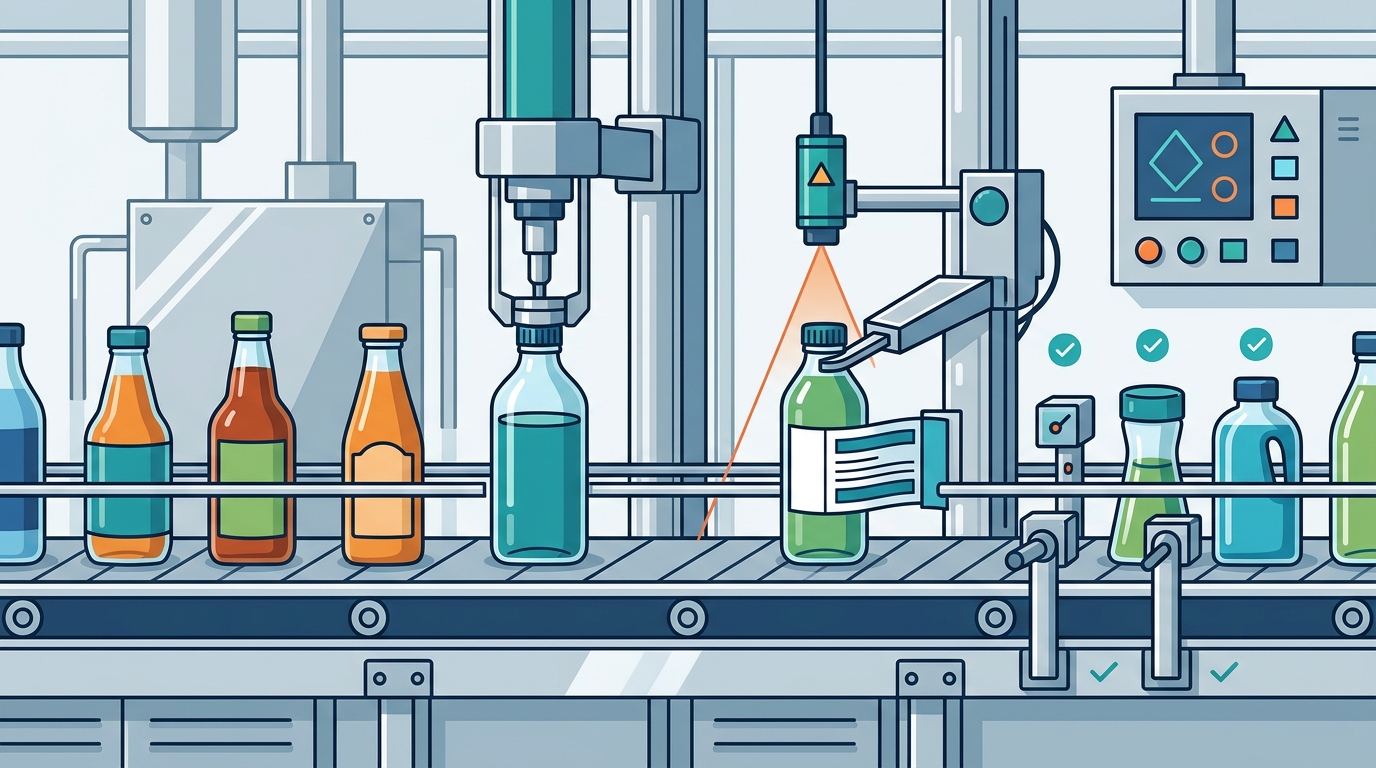
Packaging machinery is the backbone of product quality. The right filling machine ensures every bottle contains the correct volume. A properly calibrated capping machine prevents leaks and ensures tamper evidence. A precision labeler eliminates the crooked, bubbled, or missing labels that make products look unprofessional on the shelf.
Key Equipment Categories That Impact Quality
| Equipment Type | Quality Impact | What to Look For |
|---|---|---|
| Fillers (liquid, powder, weigh) | Accurate, consistent fill levels; minimizes product giveaway and underfills | Servo-driven nozzles, drip-free shut-off, quick-change parts |
| Cappers (spindle, chuck, snap) | Proper torque prevents leaks, ensures tamper evidence | Adjustable torque settings, automatic torque monitoring |
| Labelers (wrap, front-back, top) | Precise label placement builds shelf appeal and brand trust | Servo-driven dispensing, vision-system integration |
| Sealers (induction, band, impulse) | Airtight seals preserve freshness and prevent contamination | Consistent heat/pressure control, reject mechanisms |
| Conveyors | Smooth product flow reduces jams, tipping, and downstream errors | Variable speed drives, gentle-handling guides |
A packaging equipment partner like JDA Progress Industries can help you match the right machines to your specific products. Their showroom in Vaughan, Ontario, lets you run test demos with your actual containers and products before you commit — a practical way to verify quality performance before purchase.
Step 3 — Standardize Processes and SOPs
Establishing standardized processes and work procedures prevents the variations that result in quality issues. Tools such as job instruction sheets ensure that frontline associates know precisely what to do and how to do it. When you pilot improvements in a model area of your facility and then replicate proven standards across other areas, you build consistency plant-wide.
Practical SOP Checklist for a Packaging Line
- Machine setup: Document fill volumes, torque specs, label positions, and seal temperatures for every SKU.
- Changeover procedure: Step-by-step instructions with photos to minimize errors between product runs.
- In-line inspection points: Define where operators check fill height, cap tightness, label alignment, and seal integrity.
- Reject handling: Specify what happens to out-of-spec products — quarantine, rework, or scrap.
- End-of-run verification: Final QC sample pull and sign-off before product moves to warehouse.
Step 4 — Train and Empower Frontline Operators
Your frontline workforce is your most critical line of defense against poor quality. Workers on the floor are effectively a human sensor in the packaging process — they can readily identify issues that need to be addressed. But they can only act on problems they understand.
Investing in training and development is a game-changer for companies looking to improve production quality. Provide operators with hands-on training on every machine they touch, teach them root-cause analysis basics (like the 5 Whys method), and give them the authority to stop the line when they spot a defect.
Zero defects starts with educated, engaged, and empowered production employees. Every operator can prevent poor-quality product from moving beyond their workstation — but only if they know what constitutes poor quality and have the skills to assess why a problem occurred and how to fix it.
Step 5 — Implement a Quality Management System (QMS)
A quality management system is a formal program that sets the rules of the road for your operation. It turns your company's definition of quality into rules and operating procedures that govern how you create and deliver products. A QMS provides a systematic and structured approach to quality control, ensuring all aspects of the packaging process adhere to established standards.
What a QMS Gives You
- Documented procedures for every critical process
- Traceability from raw materials through finished goods
- Non-conformance tracking and corrective/preventive action (CAPA) workflows
- Audit readiness for ISO 9001, GMP, or industry-specific standards
- Data-driven decision-making on where to focus improvement efforts
Adherence to a quality management system such as ISO 9001 provides routine tracking and documentation to ensure that quality parameters are met throughout production and that goods comply with regulatory and customer requirements.
Step 6 — Use Data and Feedback Loops
Gathering data is useless unless you organize it and act on it. A focused set of KPIs ties quality outcomes to business strategy. Common quality metrics include first-pass yield, scrap rates, rework rates, warranty trends, and customer complaints. These metrics should be shared across engineering, production, and operations teams to guide decisions.
Build a Closed-Loop Feedback System
- Collect: Log defects at every packaging station — type, frequency, time of day, operator, and SKU.
- Analyze: Use Pareto charts and statistical process control (SPC) to find the vital few causes behind the majority of defects.
- Act: Implement corrective actions — machine adjustments, material changes, or retraining.
- Verify: Monitor the same KPIs to confirm improvements hold over time.
- Incorporate customer feedback: Use surveys, product reviews, and NPS scores to catch quality issues that escape internal checks.
Companies can use targeted surveys, product ratings, and reviews to get a clear picture of customer satisfaction as it relates to quality, then use that data to track success over time.
Step 7 — Maintain Equipment Proactively
A filling machine that drifts out of calibration or a capping head with worn clutch pads will quietly degrade product quality long before a catastrophic failure. Preventive and predictive maintenance programs keep equipment running within spec and catch problems early.
Maintenance Best Practices for Packaging Lines
- Follow the manufacturer's recommended service intervals for every machine.
- Keep spare wear parts (nozzle tips, capper clutches, label-sensor lenses) on hand to minimize downtime.
- Calibrate filling and torque systems on a documented schedule.
- Train operators to perform basic daily maintenance tasks — cleaning, lubrication, and visual inspections.
- Work with your equipment supplier's service team for annual tune-ups. JDA Progress, for example, provides ongoing service and parts support to keep your line running at peak performance.
Key Takeaways
- Start with an audit: You can't improve what you haven't measured. Map defects to specific stations and root causes.
- Equipment is foundational: Accurate fillers, consistent cappers, and precise labelers prevent the most common packaged-product defects.
- Standardize everything: SOPs for setup, changeover, inspection, and reject handling reduce human variability.
- People make the difference: Trained, empowered operators catch and prevent defects that machines alone cannot.
- Systematize quality: A QMS turns good intentions into repeatable, auditable processes.
- Close the loop: Collect data, analyze trends, act on findings, and verify results — then repeat.
- Maintain proactively: Scheduled maintenance protects both equipment longevity and product quality.
Frequently Asked Questions
What is the most common cause of poor quality in packaged products?
Product defects can often be traced back to issues in the manufacturing and packaging process, including flawed sourcing of raw materials, poorly monitored assembly or packaging lines, rushed production schedules, and insufficient quality checks. On a packaging line specifically, inconsistent fill levels, improper torque on caps, misaligned labels, and weak seals are the most frequent issues.
How does packaging equipment affect product quality?
Packaging equipment directly determines fill accuracy, seal integrity, cap torque, and label placement. A precision filling machine eliminates underfills and overfills. A well-calibrated capper applies the right torque every time, preventing leaks. Labelers with servo-driven dispensing ensure straight, bubble-free labels. Choosing the right equipment — and maintaining it — is one of the single biggest levers you have for improving finished-product quality.
What quality metrics should I track on a packaging line?
Key metrics include first-pass yield (percentage of units packaged correctly without rework), scrap rate, customer return and complaint rates, overall equipment effectiveness (OEE), and supplier quality index. Track these at the station level to pinpoint exactly where quality breaks down.
Do I need ISO 9001 certification to improve quality?
Formal ISO 9001 certification is not required, but implementing the principles behind it — documented procedures, traceability, CAPA workflows, and management review — will significantly raise your quality floor. Many customers and retailers require or prefer suppliers with ISO certification, so it can also open market opportunities.
How often should packaging equipment be calibrated?
Calibration frequency depends on the equipment type and production volume. As a general rule, filling machines and torque-monitoring systems should be verified at the start of every production run and formally calibrated on a monthly or quarterly schedule. Always follow the equipment manufacturer's recommendations and document every calibration event.
Where can I test packaging machines before buying?
JDA Progress Industries operates a test and demo centre in Vaughan, Ontario, where you can see dozens of packaging machines in action and run demonstrations using your own products and containers. This hands-on approach helps ensure the equipment you choose will meet your quality standards before you invest.