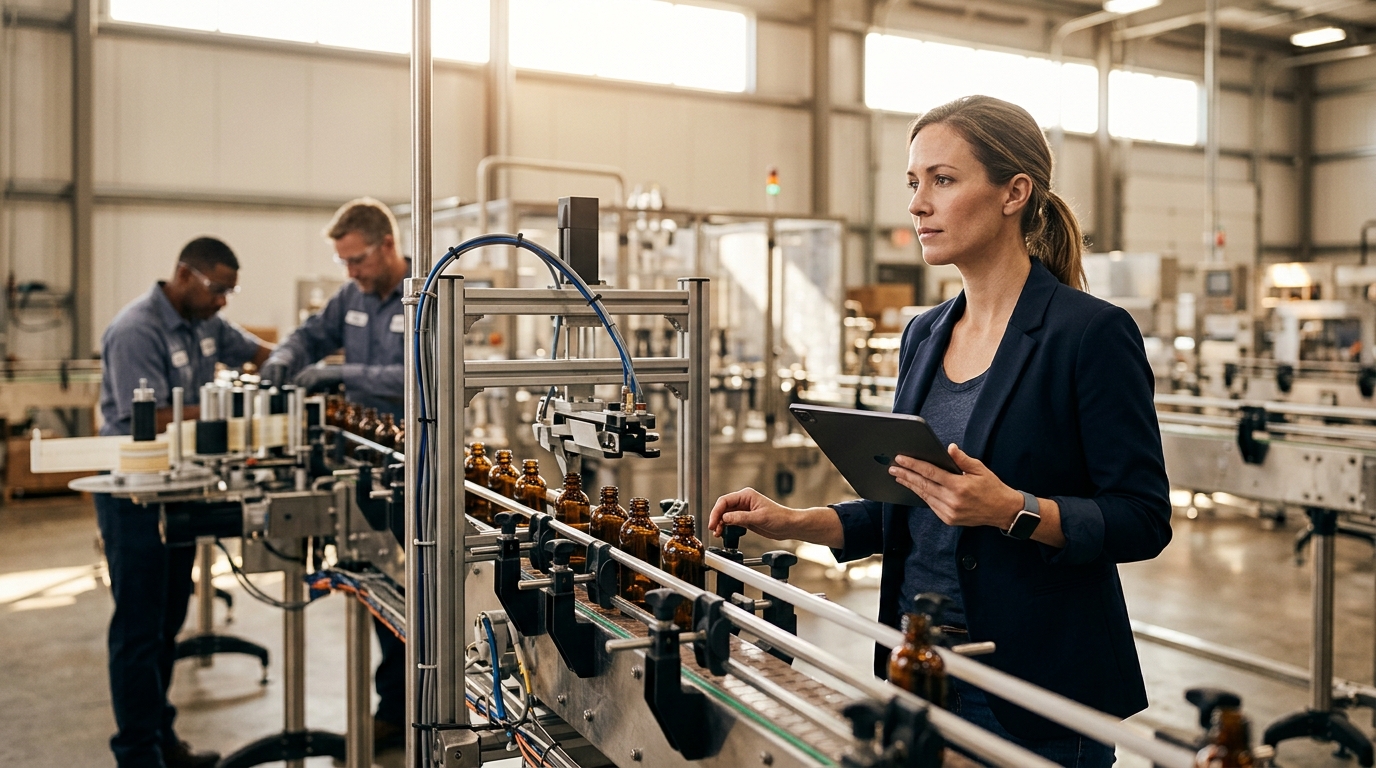
Whether you are filling bottles, sealing pouches, or labeling jars, the question every operations manager asks first is the same: how much will this cost? The honest answer is that packaging automation costs vary enormously — and understanding the variables is the only way to budget accurately.
This guide breaks down real-world pricing tiers, the hidden expenses that catch buyers off guard, ROI timelines backed by industry data, and a practical framework for deciding where to invest first.
The Packaging Automation Market in 2026: Context That Shapes Pricing
Before diving into dollar figures, it helps to understand the market forces driving costs up — and the efficiency gains pushing total cost of ownership down.
- The global packaging automation market was valued at approximately $78–$81 billion in 2025 and is projected to reach $84–$87 billion in 2026, growing at a CAGR of roughly 7–8%.
- New U.S. tariffs introduced in 2025 on imported automation components have altered supply chains and cost structures, prompting companies to diversify suppliers and increase nearshoring.
- Labor shortages remain a primary driver — roughly 66% of consumer packaged goods companies have already implemented some form of packaging automation.
Packaging Automation Cost Tiers: From Entry-Level to Full-Line Systems
There is no single price for packaging automation. The table below reflects typical 2025–2026 ranges based on industry data and equipment manufacturer pricing.
| Tier | Price Range | Typical Equipment | Best For |
|---|---|---|---|
| Entry-Level / Semi-Automatic | $10,000–$40,000 | Foot-pedal baggers, manual-assist fillers, basic sealers, tabletop cap tighteners | Startups, craft producers, single-process automation |
| Mid-Range Automatic | $40,000–$150,000 | Automatic inline fillers, label applicators, single-head VFFS machines, inline cappers | Small to mid-size manufacturers scaling production |
| Integrated Production Lines | $150,000–$500,000 | Complete bottling lines (filler + capper + labeler + conveyor), multi-head VFFS systems | Mid-size to large operations seeking end-to-end automation |
| High-Speed / Custom-Engineered | $500,000–$2,000,000+ | Servo-driven high-speed lines, robotic palletizers, custom multi-lane systems with vision inspection | High-volume CPG, pharmaceutical, and industrial manufacturers |
Entry-level semi-automatic systems in the $10,000–$40,000 range automate a single process step — such as filling or sealing — while keeping one operator productive without requiring full line integration. Mid-range automatic equipment like standalone VFFS baggers, auger fillers, or label applicators typically falls in the $40,000–$150,000 bracket, depending on speed and features. Fully integrated lines that combine filling, capping, labeling, and conveying push into six figures and above.
The Seven Cost Components Most Buyers Overlook
Many buyers focus solely on the sticker price of equipment, overlooking costs that can reshape the economics of the entire project. Here is the full cost picture:
- Equipment Purchase Price — The base machine cost, which varies by automation level, throughput, and material construction (e.g., food-grade stainless steel carries a substantial premium over painted steel).
- Installation and Integration — Connecting new machinery to existing operations, including electrical work, compressed air lines, software configuration, and physical layout changes. This can add 10–20% to the equipment cost.
- Operator Training and Onboarding — A well-planned onboarding process reduces ramp-up time and accelerates early productivity gains. Budget for initial training plus refresher sessions.
- Facility Modifications — Inadequate utilities, floor space, or workflow alignment can delay ROI significantly. Ensure your facility can support the power, air, and drainage requirements before ordering.
- Spare Parts Inventory — Sealing bars, film rollers, sensors, and wear components should be stocked on-site to minimize unplanned downtime.
- Annual Preventive Maintenance — Budget 3–5% of CAPEX annually for scheduled maintenance. Emergency repairs can cost 3–5× more and create $5,000–$10,000 per hour in downtime losses.
- Consumables and Changeover Tooling — Packaging film, labels, caps, and changeover kits for different product sizes are ongoing operational expenses that affect your per-unit cost.
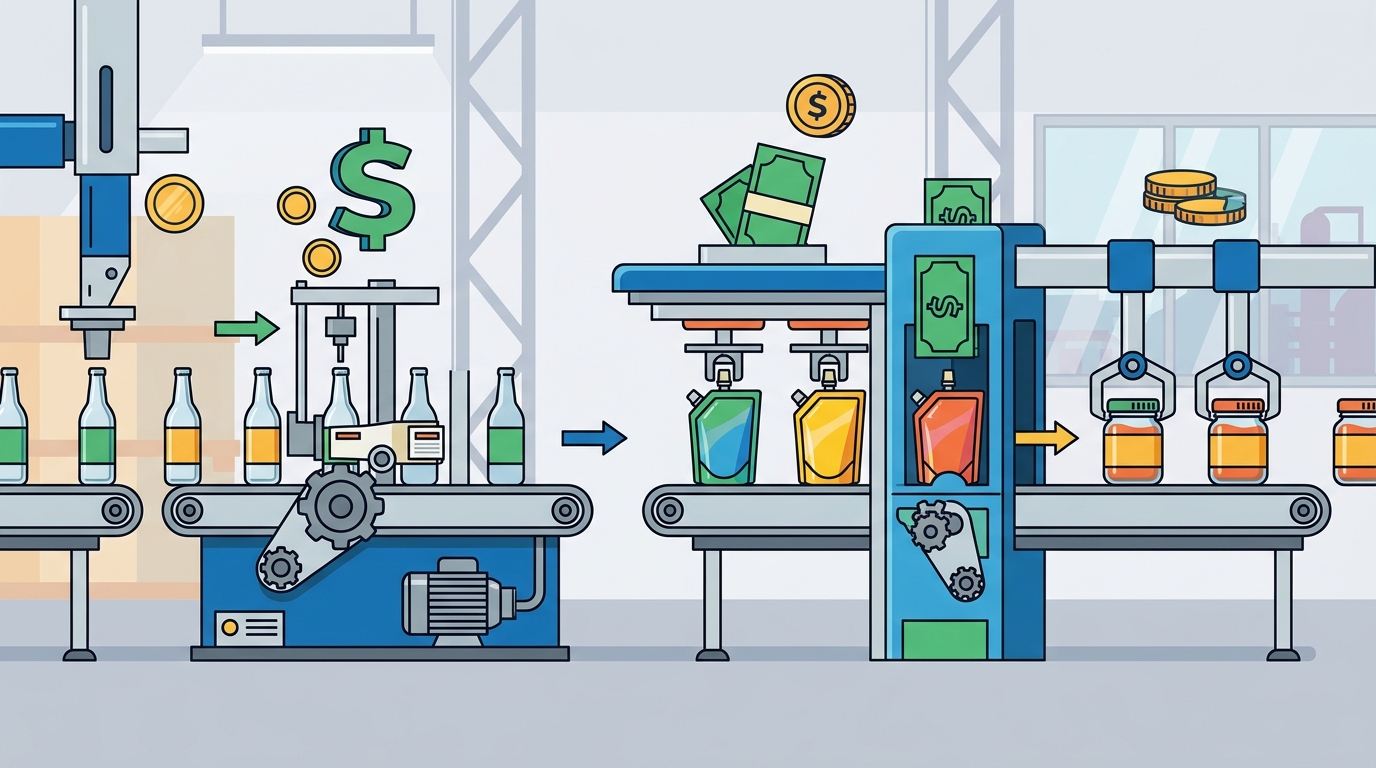
Key Factors That Drive Packaging Automation Costs Up or Down
1. Degree of Automation
The degree of automation — from manual-assist to semi-automatic to fully automated — is the single biggest cost variable. Fully automatic systems with servo motors, HMI touchscreens, and feedback sensors carry higher upfront costs but offer superior precision and lower total cost of ownership compared to pneumatic systems that require continuous compressed air and more frequent maintenance.
2. Production Speed Requirements
Required output — bags per minute, bottles per hour, cycles per shift — drives both machine sizing and price. A filler rated at 20 bottles per minute costs a fraction of one rated at 200 BPM.
3. Product Characteristics
The product being packaged affects equipment design, material selection, and price. Abrasive materials require hardened contact surfaces. Corrosive chemicals demand 304 or 316 stainless steel. Food-grade sanitary design with smooth welds and CIP capability adds significant manufacturing hours and material costs.
4. Customization vs. Standard Catalog Equipment
Standard catalog equipment is lower cost but may not fit specific bag sizes, fill weights, or facility layouts. Custom-engineered systems are designed to specification for your exact application — and priced accordingly.
5. Tariffs and Supply Chain Shifts
The 2025 introduction of new U.S. tariffs on imported automation components has altered global supply chains. Companies are mitigating these effects through strategic sourcing, supplier diversification, and nearshoring within tariff-exempt regions. These shifts require careful cost-benefit evaluation when comparing domestic and imported equipment.
Real-World Cost Examples by Application
Bottling Line for Liquid Products
A complete automated bottling system integrating fillers, cappers, labelers, and conveyors can range from $80,000 for a basic low-speed line to $500,000+ for a high-speed, multi-lane configuration. JDA Progress, for example, specializes in crafting efficient and automated bottling systems tailored to businesses of all sizes — from small startups to established operations requiring high-capacity liquid packaging lines.
VFFS Bagging System for Powders and Granules
Vertical form fill seal machines that automatically form bags from a roll of film, fill them with product, and seal them in one continuous process typically range from $35,000 for a basic single-lane unit to $250,000+ for multi-head systems with gas flush, zipper applicators, and integrated checkweighers. Modular designs allow you to upgrade features like angled hoppers, dust control, or specialty sealing jaws without replacing the entire unit.
Labeling and Capping Stations
Individual automatic labeling machines and capping systems offer a cost-effective entry point for phased automation. Inline label applicators and bottle capping machines are available in both automatic and semi-automatic configurations, typically ranging from $8,000 to $60,000 per station depending on speed and complexity.
ROI and Payback Periods: What the Data Shows
Understanding cost is only half the equation. The more important question is: how quickly does this investment pay for itself?
Typical Payback Timelines
| System Type | Typical Payback Period |
|---|---|
| Semi-automatic machines | 12–18 months |
| Fully automatic machines | 12–24 months |
| High-speed industrial lines | 18–30 months |
Most companies see a return on their packaging automation investment within 6 months to 2 years. High-volume operations using significant manual labor might achieve payback in as little as 6–12 months, while more complex systems or lower-volume lines might take closer to two years.
Where the Savings Come From
- Labor reduction: Automation typically reduces packaging labor requirements by 40–60%. Labor costs account for up to 60% of total packaging costs in manual operations.
- Waste reduction: Product giveaway drops from 5–6% to 1–2% with precision filling and dosing equipment.
- Quality improvement: Defect rates can drop by up to 90% with consistent, machine-controlled processes.
- Throughput gains: Automated lines run faster and more consistently, distributing fixed costs across more units produced.
- Downtime reduction: IoT-enabled systems facilitate real-time monitoring and predictive maintenance, reducing unplanned stoppages.
The ROI Formula
Use this straightforward calculation to estimate your payback:
ROI (%) = (Annual Net Savings ÷ Total Investment Cost) × 100
Payback Period = Total Investment ÷ Annual Net Savings
Be sure to include all savings categories — labor, waste, quality, throughput, and energy — not just the most obvious one. Companies tracking ROI over 5+ years demonstrate 50–70% total cost reduction versus manual operations.
A Phased Approach: How to Spread Costs and Validate ROI
You do not need to automate everything at once. Phased automation spreads capital over time while validating ROI at each stage. Here is a practical sequence many manufacturers follow:
- Phase 1 — Automate the Bottleneck: Identify the single process step that limits throughput (often filling) and automate it first. This delivers the fastest payback and frees up labor for other tasks.
- Phase 2 — Add Downstream Automation: Once filling is automated, the next constraint usually moves to capping or labeling. Add inline cappers and label applicators to match your new filling speed.
- Phase 3 — Integrate Conveyors and Material Handling: Connect stations with automated conveyors to eliminate manual product transfer between machines, creating a continuous production flow.
- Phase 4 — End-of-Line Automation: Add case packing, palletizing, and stretch wrapping to complete the automated line from product infeed to pallet-ready shipment.
This approach lets you prove value at each step and build a data-backed business case for the next investment.
How to Get an Accurate Quote
Pricing for packaging automation is application-specific. To get accurate quotes rather than ballpark figures, prepare the following information before contacting equipment suppliers:
- Product type, consistency, and any special handling requirements (dusty, corrosive, food-grade)
- Target production speed (units per minute or per hour)
- Container or pouch sizes and materials
- Current manual labor headcount and fully loaded hourly cost
- Available floor space and utility capacity
- Whether you need a single machine or an integrated line
- Timeline for installation and production start
Reputable manufacturers like JDA Progress offer free product demonstrations, allowing you to see machines running your actual product before committing. Their 15,000-square-foot showroom in Vaughan, Ontario gives buyers hands-on interaction with bottling, capping, labeling, and bagging equipment — ensuring you make an informed decision about your packaging investment.
Key Takeaways
- Entry-level packaging automation starts around $10,000–$40,000; integrated production lines range from $150,000 to $500,000+; and high-speed custom systems can exceed $1 million.
- The machine price is only part of the cost — installation, training, facility prep, maintenance, and consumables can add 20–40% to total investment.
- Most operations achieve payback in 6–24 months through labor savings of 40–60%, waste reduction, and throughput gains.
- Phased automation lets you start small, validate ROI, and scale with confidence.
- Product characteristics, production speed, automation level, and material construction are the primary cost drivers.
- New tariffs and supply chain shifts in 2025–2026 make domestic sourcing and supplier diversification more important than ever.
- Always request demos with your actual product and prepare detailed specs to get accurate, apples-to-apples quotes.
Frequently Asked Questions
How much does a packaging automation system cost?
Costs range from $10,000–$40,000 for entry-level semi-automatic equipment up to $250,000–$500,000+ for fully integrated high-speed lines. Custom-engineered systems and turnkey bottling lines can exceed these ranges depending on throughput, product type, and facility requirements.
What is the typical payback period for packaging automation?
Most companies see a return within 6 months to 2 years. High-volume operations often achieve payback in 6–12 months, while more complex or lower-volume systems may take closer to 24 months.
What hidden costs should I budget for beyond the machine price?
Budget for installation and integration (10–20% of equipment cost), operator training, facility modifications, spare parts inventory, annual preventive maintenance (3–5% of CAPEX), and ongoing consumables such as packaging film, labels, and sealing components.
Can I automate my packaging line in phases?
Yes. Phased automation spreads capital over time while validating ROI at each stage. Many manufacturers start by automating the biggest bottleneck — such as filling or labeling — then expand to capping, conveying, and palletizing as savings are proven.
How do I calculate ROI on packaging equipment?
Use the formula: ROI (%) = (Annual Net Savings ÷ Total Investment Cost) × 100. For the payback period, divide Total Investment by Annual Net Savings. Include labor reduction, waste savings, throughput gains, and reduced downtime in your net savings figure.
Is it better to buy domestic or imported packaging equipment?
With 2025 U.S. tariffs affecting imported automation components, domestic equipment can offer advantages in lead time, service support, and total landed cost. Evaluate total cost of ownership — including freight, duties, installation support, and spare parts availability — rather than comparing sticker prices alone.