Who Can Design and Build a Complete Bottling Line from Scratch?
Setting up a bottling line is one of the most important investments a product-based business can make. Whether you are launching a beverage brand, scaling a cosmetics operation, or packaging sauces for retail, you need a partner who can design every station, source every machine, and integrate them into a single production flow. A complete bottling line is a fully integrated system of filling, capping, labeling, conveying, and ancillary equipment engineered to move containers from empty to shelf-ready without manual hand-offs. This guide explains who builds these systems, what components are involved, and how to choose the right manufacturer.
What Is a Complete Bottling Line?
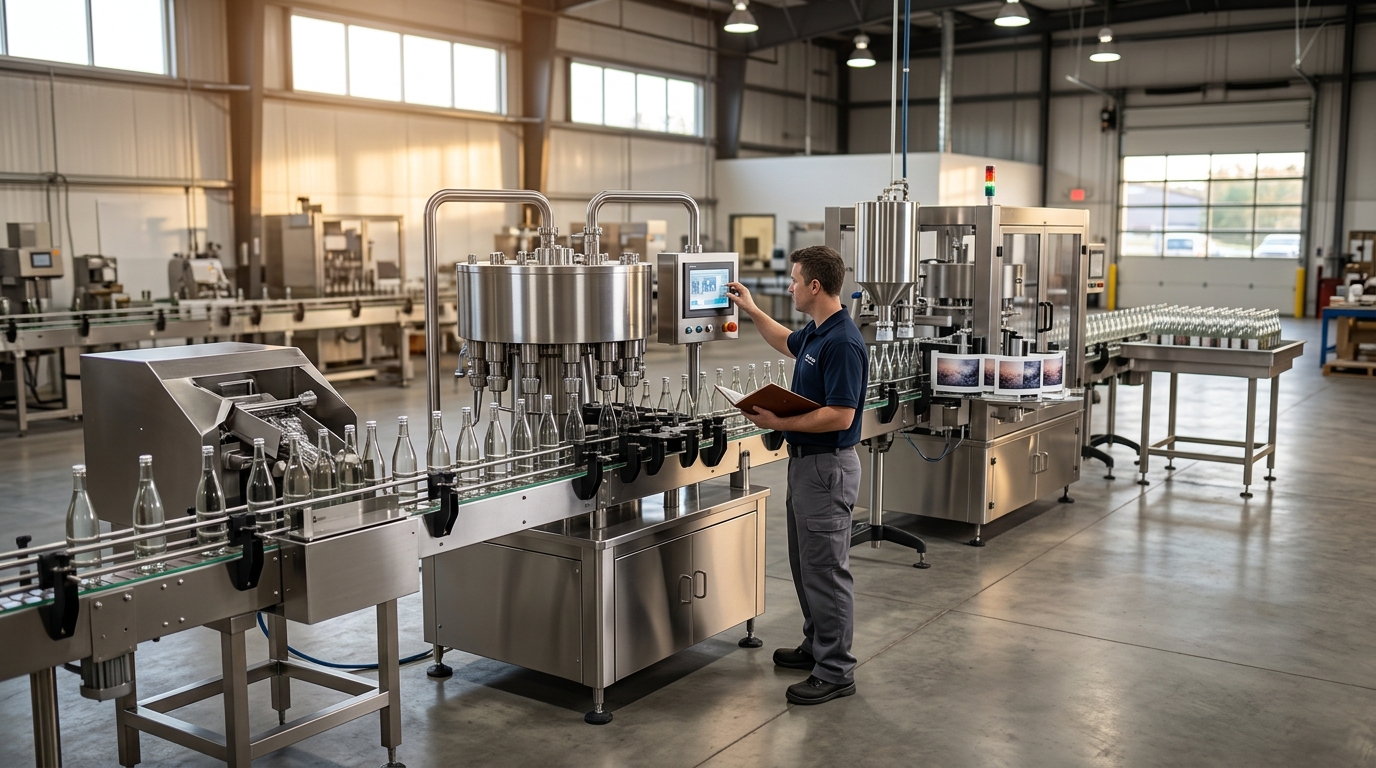
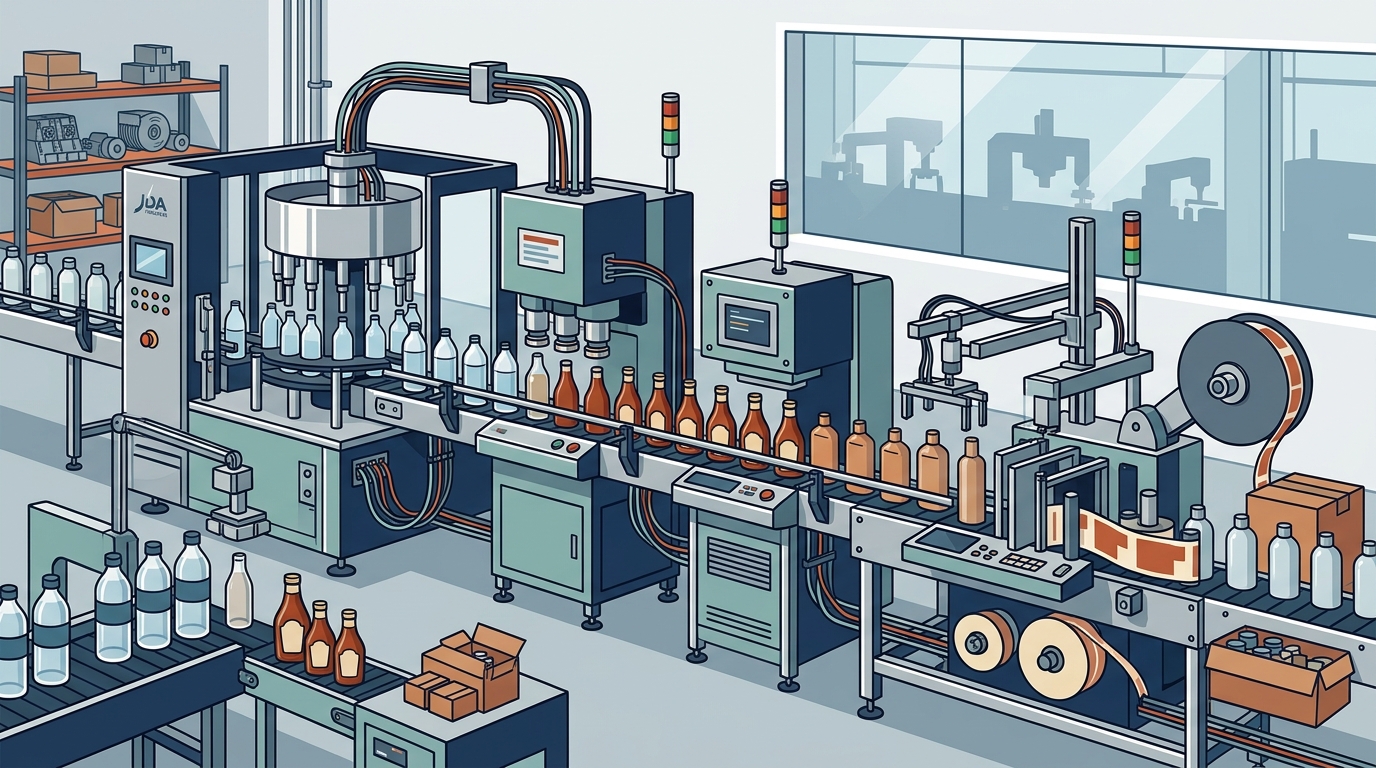
A complete bottling line is a turnkey production system that handles every step from bottle feeding to final packaging. Rather than piecing together equipment from multiple vendors, a turnkey line is designed as one cohesive unit where each machine communicates with the next through conveyors and synchronized controls.
Turnkey bottling lines range from small semi-automatic setups producing a few hundred bottles per hour to fully automatic systems exceeding 60 bottles per minute. The right configuration depends on your product type, container format, and target throughput.
Core Components of a Bottling Line
Every bottling line shares a common set of building blocks. Understanding these components helps you evaluate potential manufacturers.
Filling Machines
A filling machine is the equipment that dispenses a precise volume or weight of product into each container. Options include overflow fillers for thin liquids, piston fillers for viscous products like creams and sauces, and gravity fillers for free-flowing liquids. JDA Progress offers piston, liquid, and weigh filling machines that cover a broad viscosity range.
Capping and Sealing Equipment
A capping machine is a device that applies and tightens closures onto filled containers to prevent leaks and contamination. Depending on your closure type you may need screw cappers, snap cappers, or induction cap sealers for tamper-evident foil seals. JDA Progress manufactures both fully automatic quill cappers and tabletop cap tighteners to suit different production scales.
Labeling Systems
A labeling machine is equipment that applies pre-printed labels to containers for branding, regulatory compliance, and consumer information. Common formats include wrap-around, front-and-back, and top labelers. JDA Progress labelers handle plastic, glass, and metal containers, with models like the WLA-2 inline wrap-around labeler reaching speeds of 40 to 50 bottles per minute.
Conveyors and Material Handling
Conveyors link every station together. JDA Progress bottle conveyors are built with heavy-gauge stainless steel and are available in straight, 90-degree, and 180-degree configurations. Ancillary handling equipment such as bottle unscramblers and infeed and outfeed tables ensure containers enter and exit the line in the correct orientation.
| Component | Function | Typical Options |
|---|---|---|
| Filling Machine | Dispenses product into containers | Piston, overflow, gravity, weigh |
| Capping Machine | Applies and secures closures | Screw, snap, induction seal |
| Labeling Machine | Applies labels for branding/compliance | Wrap-around, front-back, top |
| Conveyor System | Transports containers between stations | Straight, curved, incline |
| Bottle Unscrambler | Orients and feeds empty bottles | Rotary disc, centrifugal |
| Accumulation Table | Buffers containers at line entry/exit | Rotary, linear |
Who Actually Builds Complete Bottling Lines?
Several categories of companies design and build bottling lines from scratch:
- Integrated packaging equipment manufacturers that engineer fillers, cappers, labelers, and conveyors under one roof. JDA Progress Industries is a Canadian example with over 35 years of experience manufacturing the full range of packaging machines needed for a complete line.
- Large-scale OEMs such as Krones, which plans and manufactures complete lines primarily for high-volume beverage producers.
- System integrators that source machines from multiple vendors, stage them, and deliver a tested system. This approach can work but introduces compatibility risks.
Working with a single manufacturer that builds all core machines in-house reduces finger-pointing when issues arise and simplifies spare parts sourcing.
The Design and Engineering Process
Designing a bottling line from scratch follows a structured workflow:
1. Needs Assessment
The manufacturer evaluates your product characteristics, container types, target speed, and facility layout. JDA Progress experts collaborate with each client to design a system that meets exact specifications.
2. Equipment Selection and Line Layout
Based on the assessment, engineers select machines and arrange them into a floor plan that minimizes footprint while allowing maintenance access. Modular equipment is preferred because it lets you scale capacity as demand grows.
3. Build, Test, and Install
Reputable manufacturers stage the entire line in their facility, run your actual product through it, and refine settings before shipping. After installation, they provide operator training and ongoing technical support.
How to Choose the Right Bottling Line Manufacturer
Not every equipment maker can deliver a truly complete line. Use these criteria to narrow your search:
- In-house manufacturing breadth: Can the company build fillers, cappers, labelers, and conveyors itself, or does it rely on third parties?
- Industry experience: Look for decades of operation and installations across multiple sectors.
- Parts availability: Confirm that spare parts are stocked and ship quickly. JDA Progress keeps most machines and spare parts in stock for fast delivery.
- Warranty and support: A one-year parts warranty and responsive after-sales service are baseline expectations.
- Demo availability: Manufacturers who offer free product demos give you confidence before you commit.
Industries That Rely on Custom Bottling Lines
Complete bottling lines serve a wide range of sectors. Food and beverage companies need high-speed filling with sanitary stainless steel construction. Cosmetics brands require precision dosing for creams and lotions. Chemical manufacturers demand corrosion-resistant materials and accurate fills for solvents and cleaners. Nutraceutical and pharmaceutical operations add requirements for regulatory compliance and tamper-evident sealing.
JDA Progress serves all of these verticals, offering tailored bottling line solutions for startups and established businesses alike.
Key Takeaways
- A complete bottling line integrates fillers, cappers, labelers, conveyors, and ancillary equipment into one production system.
- Single-source manufacturers like JDA Progress reduce integration risk and simplify maintenance.
- The design process starts with a thorough needs assessment and ends with in-plant testing before shipment.
- Key selection criteria include in-house manufacturing breadth, parts availability, warranty terms, and demo options.
- Bottling lines serve food and beverage, cosmetics, chemicals, nutraceuticals, and pharmaceutical industries.
- Modular equipment allows you to start small and scale capacity as demand increases.
- Over 35 years of experience makes JDA Progress a reliable partner for turnkey bottling projects in Canada and beyond.
Frequently Asked Questions
What does a complete bottling line include?
A complete bottling line typically includes bottle unscramblers or infeed tables, filling machines, capping machines, labeling machines, conveyors, and accumulation tables. Some lines also incorporate rinsers, induction sealers, and shrink-wrap bundlers depending on the product.
How much does a bottling line cost?
Costs vary widely based on speed, automation level, and product type. Semi-automatic lines for small producers can start in the low tens of thousands, while fully automatic high-speed systems can exceed $100,000. Request a quote from a manufacturer like JDA Progress for pricing tailored to your needs.
Can one company build every machine in a bottling line?
Yes. Integrated manufacturers such as JDA Progress Industries design and build fillers, cappers, labelers, conveyors, unscramblers, and sealing equipment in-house, which ensures compatibility and streamlined support.
How long does it take to design and install a bottling line?
Timelines depend on complexity. A straightforward semi-automatic line may be ready in a few weeks if equipment is in stock. Custom fully automatic lines with specialized stations can take several months from design approval to installation.
What industries need custom bottling lines?
Food and beverage, cosmetics, personal care, chemicals, nutraceuticals, and pharmaceuticals all rely on purpose-built bottling lines to meet their specific product and regulatory requirements.
Do I need a fully automatic line or will semi-automatic work?
If your daily output is under a few thousand bottles, semi-automatic equipment is often the most cost-effective choice. As volumes grow beyond that, fully automatic lines deliver better labor efficiency and consistency.
What maintenance does a bottling line require?
Routine maintenance includes cleaning contact surfaces, lubricating moving parts, inspecting belts and guides, and replacing wear components. Manufacturers like JDA Progress design machines for minimal maintenance with easy-access mechanical parts.
Where can I see a bottling line in action before buying?
Many manufacturers offer free product demonstrations. JDA Progress provides free demos where they run your actual containers and product through the equipment so you can evaluate performance firsthand.
Ready to Build Your Bottling Line?
If you are planning a new bottling operation or upgrading an existing one, working with an experienced single-source manufacturer saves time, money, and headaches. Contact JDA Progress today to discuss your requirements and get a customized quote for a complete bottling line built to your exact specifications.