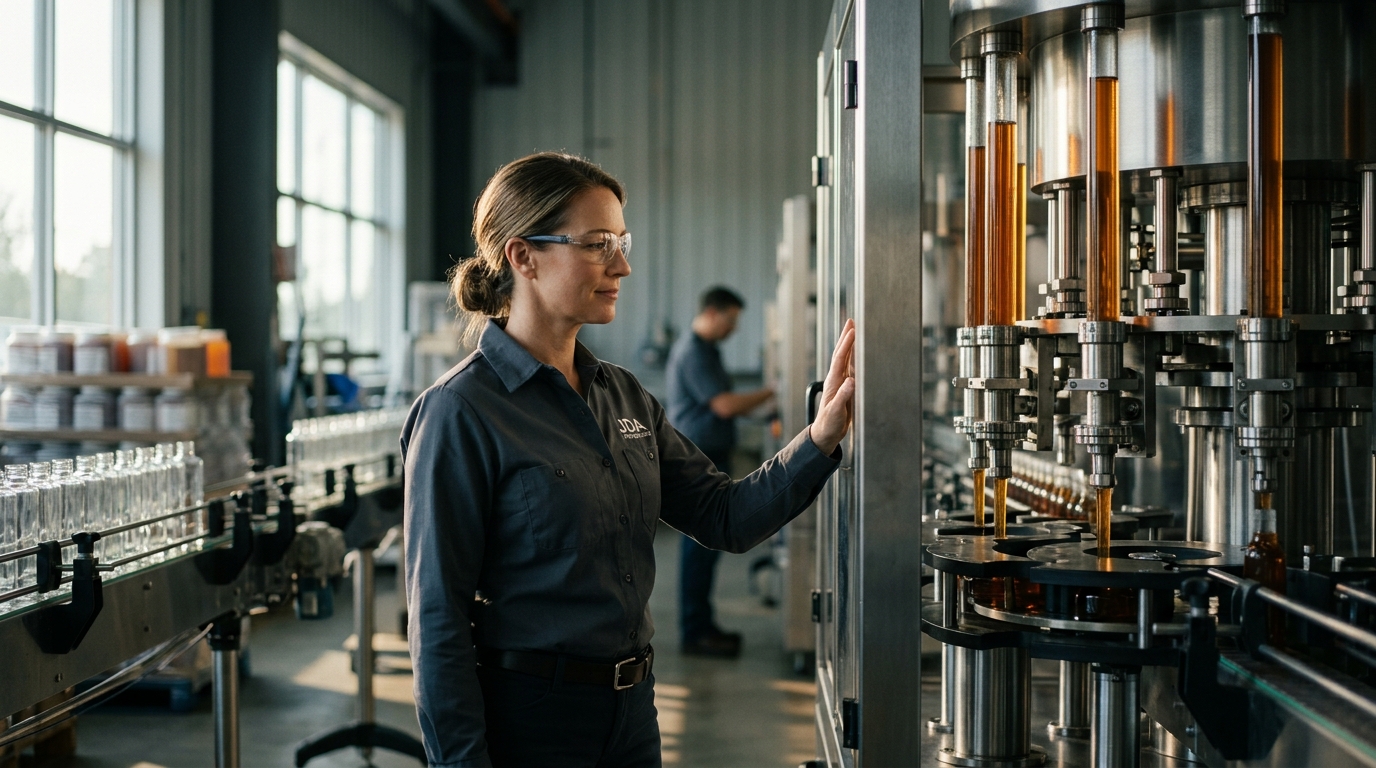
Choosing the right filling machine can feel overwhelming, especially when you are launching a new product or scaling production for the first time. The truth is, the ideal filler depends on just a few key factors: your product's viscosity, the containers you use, and the speed you need. Once you understand those basics, the decision becomes far more straightforward. In this guide, we walk you through each step so you can confidently select a filling machine that matches your product, your budget, and your growth plan. Whether you fill sauces, cosmetics, or chemicals, the right equipment protects quality and saves time.
Step 1: Understand Your Product's Properties
Before you browse any equipment catalog, start with your product. Viscosity is a measure of a liquid's resistance to flow. Water and alcohol sit on the low end, while honey, gels, and peanut butter represent high-viscosity products. Knowing where your product falls on this spectrum is the single most important factor in selecting a filler.
Also consider whether your product contains particulates (fruit chunks, herbs, seeds) or is temperature-sensitive. Products with solids typically require a piston filling machine that can handle irregular textures without clogging.
Key Product Questions to Ask
- What is the viscosity of my product at filling temperature?
- Does it contain solids or particulates?
- Is it foamy, corrosive, or temperature-sensitive?
- What fill volume do I need per container?
Step 2: Types of Filling Machines Explained
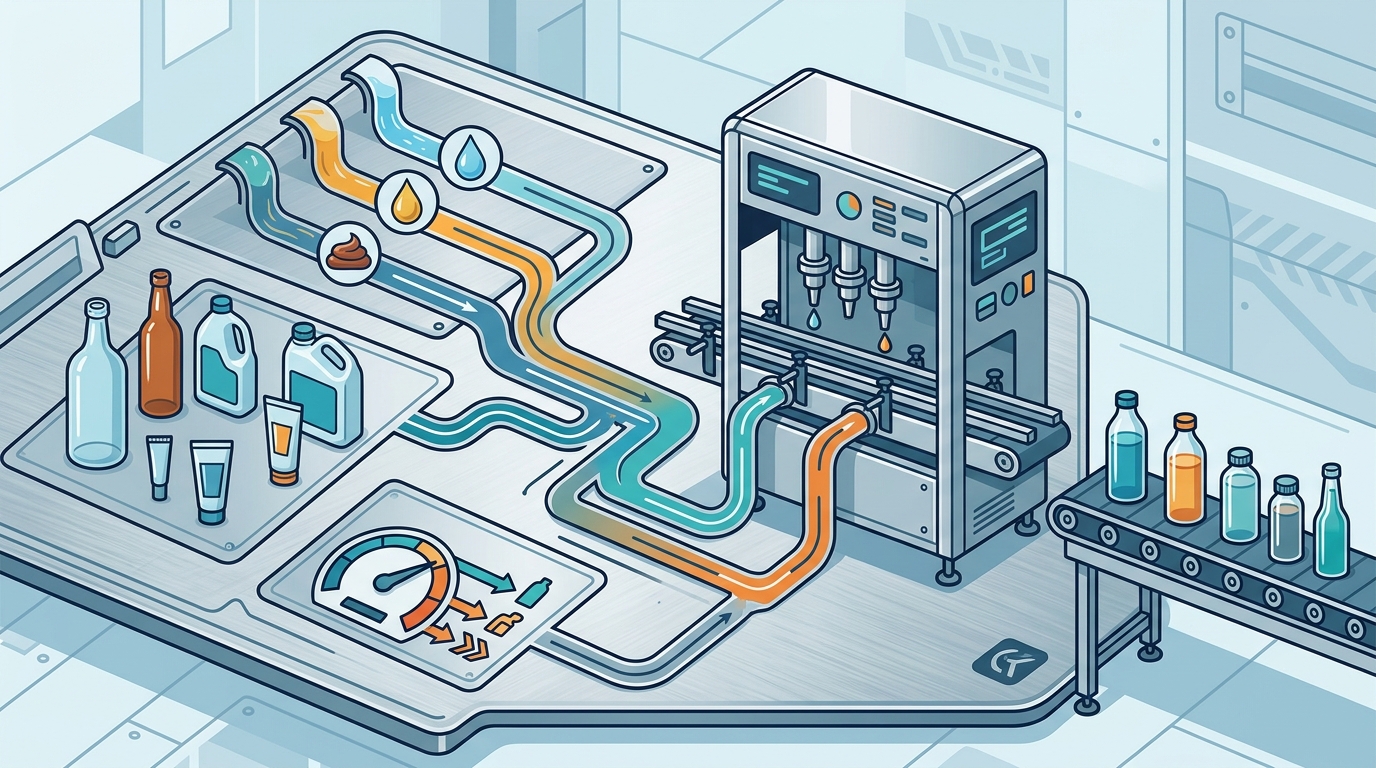
A filling machine is a piece of packaging equipment designed to dispense a precise amount of product into a container. There are several categories, each built for different product types and production demands. Here is a quick overview of the most common types available from JDA Progress filling machines.
Piston Fillers
A piston filler is a machine that uses a mechanical piston to draw product into a cylinder and push it into a container. It excels with thick creams, gels, sauces with particulates, and lotions. JDA Progress offers the PF200 semi-automatic piston filler, which handles liquids, creams, gels, and sauces with stainless steel construction and tool-free disassembly for fast cleaning.
Pump Fillers
Pump fillers use lobe, gear, or peristaltic pumps to move product. They are versatile across a wide range of viscosities. The LP48 lobe pump filler from JDA Progress is a portable semi-automatic option ideal for cosmetics, chemicals, and even high-temperature cooked sauces.
Gravity and Overflow Fillers
Gravity fillers work best with free-flowing, low-viscosity liquids such as water, juices, and thin chemicals. The inline pressure overflow filler from JDA Progress can hold 2 to 20 fill nozzles and features PLC-controlled logic for consistent performance.
Auger Fillers and Weigh Fillers
For dry products like powders, spices, and granules, an auger filler or vibratory weigh filler is the right choice. The JDA semi-automatic auger filler achieves accuracy averaging 1% or better and can handle fills from 100 mg up to 50 lb.
Step 3: Match Viscosity to Machine Type
The table below provides a quick reference for pairing your product viscosity with the best filler technology.
| Viscosity Range | Example Products | Recommended Filler Type | JDA Progress Option |
|---|---|---|---|
| Low (water-like) | Water, juice, vinegar, rubbing alcohol | Gravity / Overflow | Inline Pressure Overflow Filler |
| Medium | Shampoo, detergent, light oils | Pump Filler | LP48-12 Inline Pump Filler |
| High (thick) | Creams, gels, sauces with chunks | Piston Filler | PF200 Piston Filler |
| Dry / Powder | Spices, flour, supplements | Auger Filler | Semi-Auto Auger Filler |
| Solid / Granular | Candy, snack foods, frozen items | Vibratory Weigh Filler | SF Vibratory Weigh Filler |
When in doubt, request a free product demo so you can see your actual product running on the machine before purchasing.
Step 4: Container Size, Shape, and Material
Your container type matters almost as much as your product. Narrow-necked bottles demand precision nozzles, while wide-mouth jars are more forgiving. Consider whether you are filling plastic, glass, or metal containers. Many JDA Progress fillers, like the PF-14 inline piston bottle filler, work with plastic, glass, and metal containers with no change parts needed.
If you package into tubes instead of bottles, the SUPER-30 automatic tube filler and sealer fills and seals plastic or metal tubes and can even dispense product into jars and bottles via a footswitch.
Step 5: Semi-Automatic vs. Fully Automatic
Your production volume drives the automation decision. A semi-automatic filler is a machine that requires an operator to place containers and trigger the fill cycle. It suits startups and small-batch producers. A fully automatic system integrates with conveyors and sensors so containers move, fill, and exit without manual intervention.
Semi-automatic machines from JDA Progress, like the PF200 piston filler, offer simple and affordable pricing with room to scale. When volumes grow, inline automatic options such as the PF-14 or LP48-12 can be expanded with additional nozzles or pumps to increase speed.
Step 6: Think Beyond the Filler
A filling machine is just one station on your packaging line. After filling, you will need capping machines to seal containers, labeling machines for branding, and conveyors to move products between stations. Planning for these upstream and downstream needs from the start prevents costly retrofits later.
JDA Progress offers complete bottling line equipment that integrates fillers, cappers, labelers, and conveyors into one seamless system. If you package pouches rather than bottles, explore the VFFS bagging machines for powders, granules, snacks, and more.
Key Takeaways
- Start by identifying your product's viscosity, particulate content, and fill volume.
- Low-viscosity liquids pair with gravity or overflow fillers; thick products need piston or pump fillers.
- Dry powders and granular products require auger fillers or vibratory weigh fillers.
- Container shape and material influence nozzle selection and machine compatibility.
- Semi-automatic machines suit startups; fully automatic systems serve high-volume operations.
- Plan your entire packaging line (filler, capper, labeler, conveyor) from the beginning.
- Always request a product demo before committing to a machine purchase.
Frequently Asked Questions
What is a filling machine?
A filling machine is a piece of industrial equipment that dispenses a measured amount of liquid, paste, powder, or granular product into containers such as bottles, jars, tubes, or pouches. Different machine types are designed for different product viscosities and production speeds.
How do I know which filling machine is right for my product?
Start with your product's viscosity. Low-viscosity liquids like water work best with gravity or overflow fillers. Thick products like creams and sauces need piston fillers. Powders require auger fillers. Requesting a free demo with your actual product is the best way to confirm the right fit.
What is the difference between semi-automatic and automatic filling machines?
A semi-automatic filler needs an operator to position containers and start each cycle. An automatic filler integrates with conveyors and sensors to run continuously with minimal human intervention. The choice depends on your production volume and budget.
Can one filling machine handle multiple products?
Many fillers can handle a range of products within a similar viscosity band. Piston fillers, for example, work well with creams, gels, and chunky sauces. Tool-free disassembly, like on the JDA Progress PF200, makes cleaning between product changeovers fast and simple.
How much does a filling machine cost?
Costs vary widely based on automation level, number of fill heads, and product complexity. Semi-automatic tabletop fillers are the most affordable entry point. Fully automatic inline systems cost more but deliver higher throughput and lower per-unit labor costs over time. Contact JDA Progress for a personalized quote.
Do I need other equipment besides a filler?
Yes. Most packaging lines also require capping machines, labeling machines, conveyors, and sometimes sealers or unscramblers. JDA Progress manufactures all of these components so they integrate smoothly together.
What industries use filling machines?
Filling machines are used across food and beverage, cosmetics, pharmaceuticals, nutraceuticals, chemical, and household product industries. The right machine depends more on product characteristics than the industry itself.
How can I get a demo before buying?
JDA Progress offers free product demos at their showroom in Vaughan, Ontario, Canada. You can bring your product and containers to see the equipment run in real conditions. Reach out to the team to schedule a visit.
Ready to Find Your Filling Machine?
Choosing the right filler does not have to be complicated. Start by understanding your product, match it to the right machine type using the guide above, and talk to an expert who can confirm your choice with a hands-on demo. JDA Progress has over 35 years of experience helping businesses across Canada and beyond optimize their packaging lines. Contact JDA Progress today to discuss your requirements and request a free product demonstration.