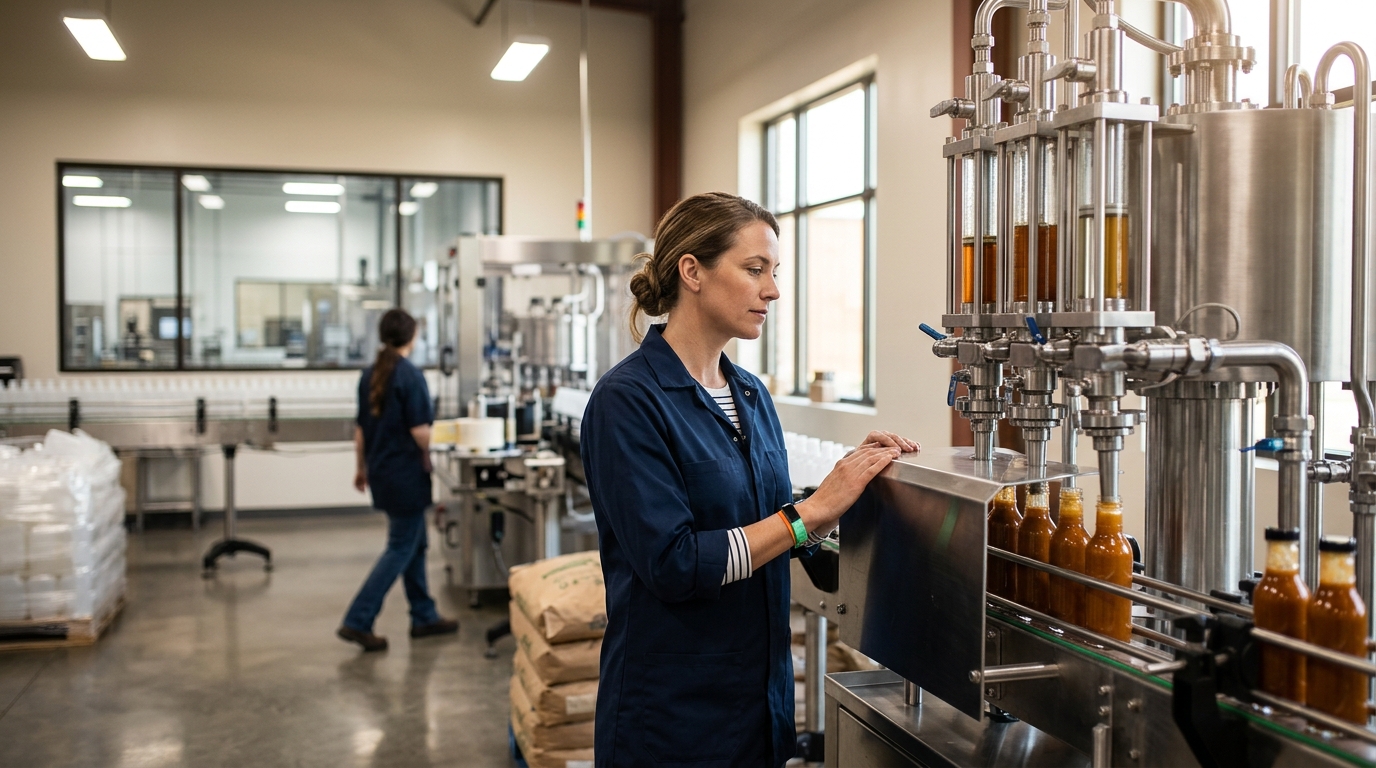
Selecting a filling machine can feel overwhelming when dozens of options exist and every product behaves differently in production. Whether you are packaging hot sauce, face cream, protein powder, or industrial chemicals, the right filler protects your margins, keeps quality consistent, and scales with demand. This guide walks you through the key decisions, from understanding your product's viscosity to matching container types and throughput targets, so you can invest confidently in equipment that fits your operation from day one.
Step 1 – Understand Your Product
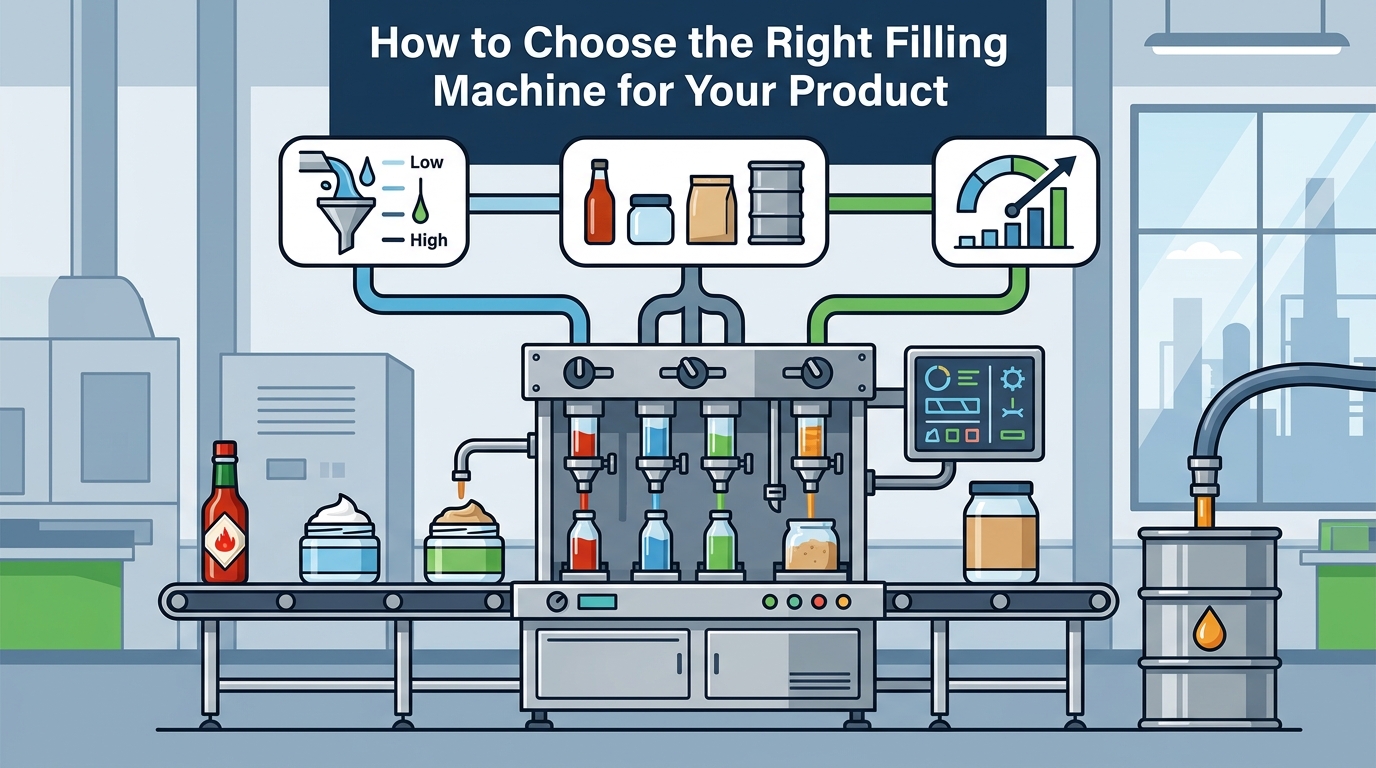
The single most important factor when choosing a filling machine is the product itself. A filling machine is a piece of industrial equipment designed to dispense a precise amount of product into a container. Viscosity, particulate content, temperature, and foaming tendency all influence which technology will work best.
Viscosity Categories
Thin, water-like liquids such as juice or cleaning solutions flow freely and suit pump or overflow fillers. Thicker products like lotions, gels, and sauces with particulates require piston-driven systems. JDA Progress offers piston filling machines designed for creams, gels, sauces, and other viscous materials, making them a strong match for mid-to-high viscosity goods.
Powder and Dry Products
Dry goods introduce unique challenges such as dust, bridging, and density variation. An auger filler is a volumetric machine that uses a rotating screw to dispense powder into containers. For spices, supplements, or chemical powders, the semi-automatic auger powder filler from JDA Progress delivers accuracies that average 1% or better, handling fills from 100 mg up to 50 lb.
Step 2 – Identify Your Container Type
Filling machines are built to work with specific container formats. Bottles, jars, tubes, pouches, and bags each demand different handling. For example, automatic tube fillers and sealers can be equipped to seal plastic or metal tubes, while inline piston or pump fillers handle round, square, or oval bottles with no change parts needed.
If you package into pouches, a vertical form fill seal (VFFS) bagger forms the bag from a roll of film, fills it, and seals it in one operation. Knowing your container narrows the machine list significantly.
Step 3 – Compare Filling Technologies
The table below summarizes the main filling technologies and their ideal use cases.
| Technology | Best For | Fill Accuracy | Speed Range |
|---|---|---|---|
| Piston Filler | Creams, gels, sauces with particulates | ±0.5% | 20–120 BPM |
| Pump (Lobe/Gear) Filler | Shampoo, lotions, chemicals | ±0.5–1% | 15–100 BPM |
| Overflow Filler | Water-like liquids, detergents | Cosmetic level fill | 30–150 BPM |
| Auger Filler | Powders, spices, supplements | ±1% | 10–60 BPM |
| Vibratory Weigh Filler | Snacks, granola, candy, frozen foods | ±0.1–0.5 g | 10–40 BPM |
A pressure overflow filler is a machine that fills containers to a uniform visual level regardless of minor volume differences in the bottles, which is important for transparent packaging. JDA Progress stocks inline pressure overflow fillers that can hold from 2 to 20 fill nozzles, with all logic functions controlled by a PLC.
Step 4 – Semi-Automatic vs. Automatic
Your production volume dictates the automation level. Semi-automatic fillers are ideal for startups and small batch producers running fewer than 30 units per minute. They cost less upfront and require minimal floor space.
Automatic inline fillers integrate with conveyors, cappers, and labelers to form a complete bottling line. If you plan to scale beyond 50 BPM, investing in automatic equipment from the start avoids costly line rebuilds later. According to PMMI (The Association for Packaging and Processing Technologies), automation adoption in packaging grew over 15% between 2020 and 2024, driven by labor shortages and throughput demands.
Step 5 – Consider Accuracy and Compliance
Fill accuracy directly affects your bottom line and regulatory standing. Overfilling by just 2% on a product that ships 10,000 units per day adds up to significant raw material waste over a year. For weight-sensitive products, a vibratory weigh filler provides resolution down to 1/10 of a gram and stores all operating variables in memory, eliminating operator error.
Industries like food, beverage, and pharmaceuticals must comply with standards set by agencies such as the U.S. FDA and Health Canada. Stainless steel construction and sanitary contact surfaces are non-negotiable in these sectors.
Step 6 – Evaluate Total Cost of Ownership
Upfront Cost vs. Lifetime Value
A bargain machine that jams frequently or drifts in accuracy will cost you more in downtime and waste than a well-engineered alternative. Look for manufacturers that include warranties, spare parts availability, and technical support. JDA Progress provides a 1-year warranty on all machines and parts, in-stock equipment for fast delivery, and free product demos so you can test before you buy.
Maintenance and Changeover
Evaluate how quickly operators can disassemble and clean the machine between product runs. Piston fillers with no-tools-required dismantling cut changeover time drastically. Machines that work with plastic, glass, and metal containers without change parts also reduce long-term costs.
After-Sales Support
Reliable technical support matters. JDA Progress, headquartered in Toronto, Canada, has over 35 years of experience and offers unlimited telephone support, video guidance, and in-person commissioning by factory-trained technicians.
Key Takeaways
- Start by classifying your product: liquid viscosity, powder, or solid pieces determine the filler type.
- Match the machine to your container format: bottles, tubes, pouches, and jars each require specific equipment.
- Piston fillers excel with viscous products; overflow fillers deliver cosmetic-level fills for thin liquids.
- Semi-automatic machines suit low-volume operations; automatic lines are better for 50+ BPM throughput.
- Fill accuracy of ±1% or better protects profit margins and keeps you compliant with food and pharma regulations.
- Factor in warranty, spare parts, cleaning ease, and technical support when comparing total cost of ownership.
- Request a free product demo to validate machine performance with your actual product before purchasing.
Frequently Asked Questions
What type of filling machine do I need for thick products like lotion or sauce?
A piston filler is typically the best choice for thick or viscous products. It handles creams, gels, lotions, and sauces with particulates. JDA Progress's PF200 piston filler is purpose-built for these applications.
Can one filling machine handle both liquids and powders?
No. Liquid fillers and powder fillers use fundamentally different dispensing mechanisms. You will need a pump or piston filler for liquids and an auger or vibratory weigh filler for dry products.
How do I know if I need a semi-automatic or automatic filler?
If your production runs fewer than 30 bottles per minute and you have limited floor space, a semi-automatic filler is a practical starting point. For higher volumes or full-line integration with cappers and labelers, choose automatic.
What is an overflow filler used for?
An overflow filler fills every container to the same visual level, making it ideal for clear bottles where a consistent fill line matters to consumers. It works best with thin, water-like liquids.
How accurate are modern filling machines?
Most quality filling machines achieve ±0.5% to ±1% volumetric accuracy. Weigh fillers can achieve even finer precision, with resolution as low as 1/10 of a gram for sensitive applications.
Do filling machines come with a warranty?
Reputable manufacturers include warranties. JDA Progress offers a 1-year warranty on all machines and parts, along with competitive pricing and after-sales support.
Can I test a filling machine with my own product before buying?
Yes. JDA Progress provides free product demos so you can evaluate performance with your actual product. You can visit their Toronto showroom or arrange a remote demonstration.
What materials should a food-grade filling machine be made from?
Food-grade fillers must use stainless steel (typically 304 or 316) for all product-contact surfaces. Sanitary gaskets, Teflon seals, and quick-disconnect parts are also standard in food and cosmetics applications.
Ready to Find Your Ideal Filling Machine?
JDA Progress has helped businesses across food, beverage, cosmetics, and chemical industries select the right packaging equipment for over 35 years. Browse the full filling machine catalog or request a free quote today to get personalized recommendations for your product and production goals.