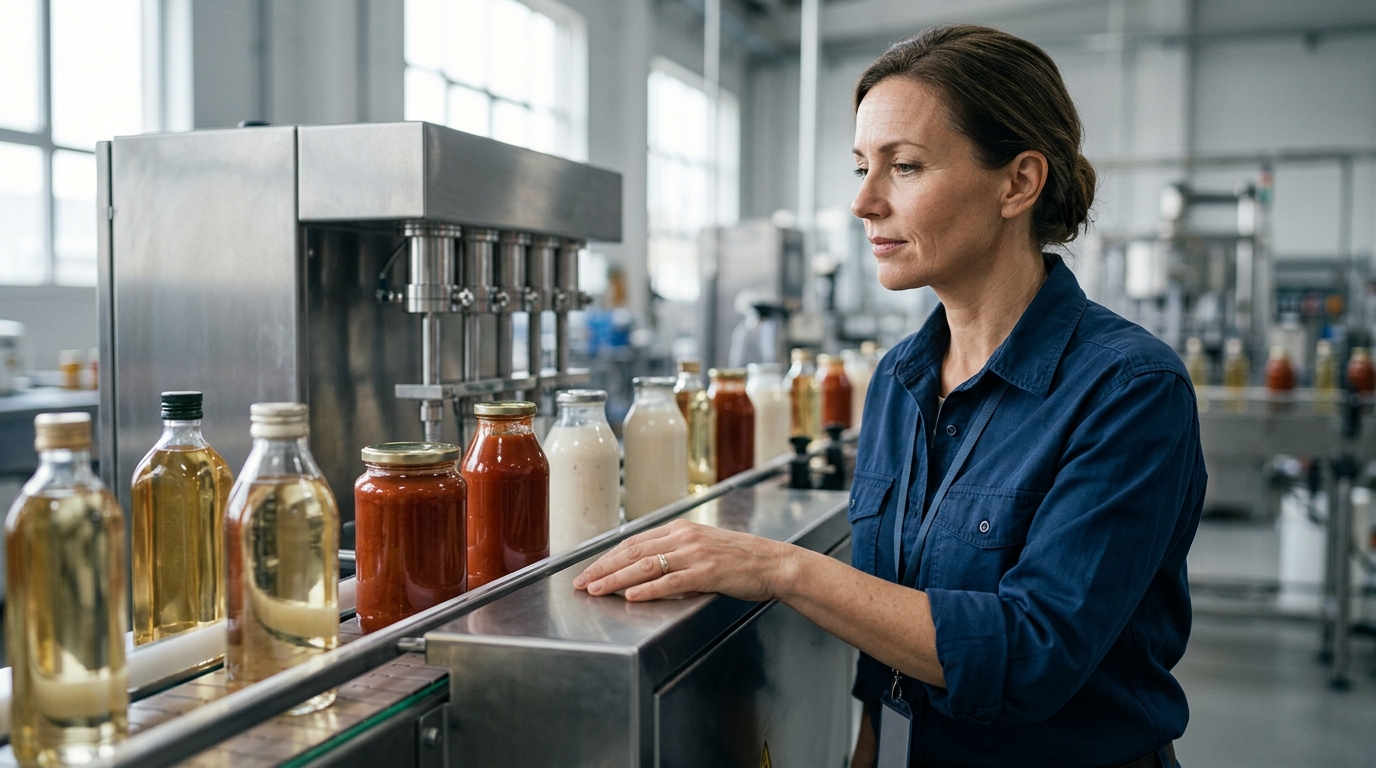
Choosing the right filling machine can feel overwhelming, especially when you are packaging a product for the first time. The type of product you fill, the container you use, and the speed you need all influence which machine is the best fit. With over 35 years of experience, JDA Progress Industries has helped thousands of businesses across food and beverage, cosmetics, pharmaceuticals, and chemical sectors find the perfect filling solution. This guide walks you through every key decision so you can move forward with confidence.
Understand Your Product Type
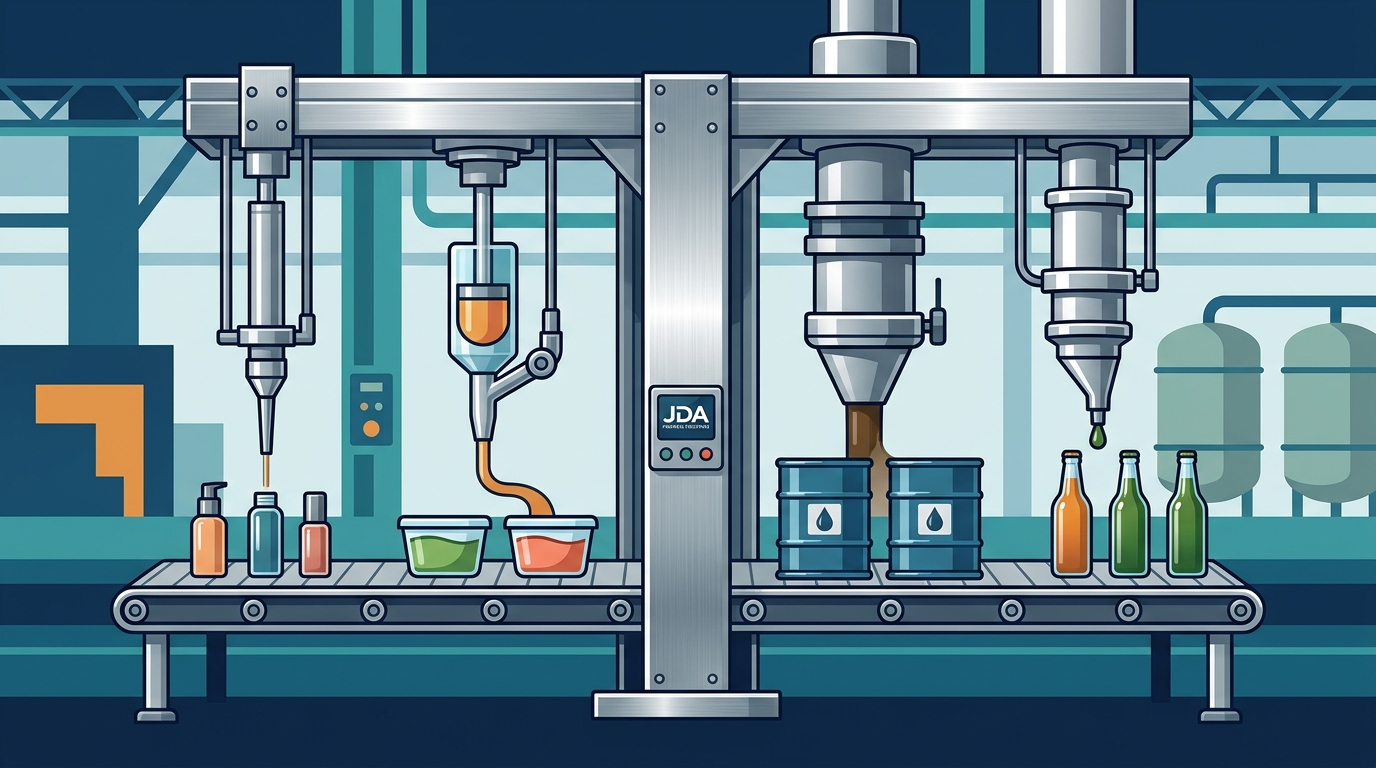
The single most important factor in choosing a filling machine is your product's physical characteristics. A filling machine is a piece of industrial equipment designed to dispense a precise amount of product into a container. Whether you are filling a thin liquid, a thick cream, a dry powder, or a solid granule, the viscosity, density, and particulate content of your product will determine which technology works best.
Liquids and Low-Viscosity Products
Water-like products such as juices, cleaning solutions, shampoos, and detergents flow easily and are well suited to pump-based or pressure overflow fillers. JDA Progress offers an inline pump bottle filling machine that handles sauces, cosmetics, and chemicals with precision.
Creams, Gels, and Viscous Products
Thicker products like lotions, gels, sauces with particulates, and pastes require positive displacement. A piston filling machine draws product directly from a drum or tank into the container, making it ideal for viscous materials. According to the Association for Packaging and Processing Technologies (PMMI), piston fillers remain the most widely used technology for viscous consumer goods.
Powders and Dry Products
For powders, spices, or granular products, volumetric auger fillers or vibratory weigh fillers are the standard. JDA Progress's semi-automatic powder auger filler can handle fills from 100 mg pharmaceutical doses up to 50 lb bulk fills with accuracy averaging 1% or better.
Filling Technologies Explained
A filling technology is the mechanical method a machine uses to measure and dispense product. Understanding these methods helps you match equipment to your specific needs.
Piston fillers use a cylinder and piston to draw and push a measured volume. They excel with thick, chunky, or paste-like products. Pump fillers use gear or lobe pumps to move product through nozzles, making them versatile for a range of viscosities. The lobe pump liquid filler from JDA Progress is portable and handles everything from cosmetics to high-temperature cooked sauces.
Pressure overflow fillers fill containers to a consistent visual level rather than a precise volume, which is ideal for transparent bottles displayed on retail shelves. Auger fillers use a rotating screw inside a funnel to dispense measured doses of powder. Vibratory weigh fillers measure by weight rather than volume, ensuring accuracy for irregular products like snack foods, candy, and frozen items.
Container and Packaging Considerations
Your container type matters almost as much as your product. Bottles, jars, tubes, and pouches each require different handling. For tube packaging, the SUPER-30 automatic tube filler and sealer fills and seals both plastic and metal tubes and can even dispense product into jars and bottles via a footswitch.
If you package into pouches or bags, a vertical form fill seal (VFFS) machine forms the bag from a roll of film, fills it, and seals it in one continuous motion. For standard bottle lines, you will also want to consider complementary equipment such as cappers, labelers, and conveyors to build a complete bottling line.
Semi-Automatic vs. Automatic Filling Machines
An automation level is the degree to which a machine operates without human intervention. Your production volume and budget will guide this decision.
Semi-automatic fillers require an operator to place containers and trigger each fill cycle. They are more affordable, simpler to maintain, and ideal for startups or lower-volume runs. Automatic fillers integrate with conveyors and sensors to run continuously. They are the right choice when you need higher throughput and consistency across thousands of units per shift.
| Factor | Semi-Automatic | Automatic |
|---|---|---|
| Throughput | 10-30 containers/min | 30-120+ containers/min |
| Operator involvement | High (manual placement) | Low (sensor-driven) |
| Initial investment | Lower | Higher |
| Best for | Startups, small batches | High-volume production |
| Changeover time | Minimal | Moderate (tooling swaps) |
Industry-Specific Requirements
Different industries impose unique standards on filling equipment. Food and beverage manufacturers need machines built with food-grade stainless steel contact surfaces and designs that allow thorough sanitation. JDA Progress machines feature stainless steel 304 construction and tool-free disassembly for fast cleaning.
Pharmaceutical and cosmetic producers often require tighter fill accuracy, tamper-evident sealing, and traceability. Chemical manufacturers may need corrosion-resistant materials and explosion-proof controls. Regardless of your sector, always verify that the equipment meets your local regulatory requirements, including FDA food safety guidelines or Health Canada standards as applicable.
Filling Machine Comparison Table
| Machine Type | Best Product Fit | Fill Accuracy | Automation |
|---|---|---|---|
| Piston Filler | Creams, gels, sauces with particulates | High (volumetric) | Semi-auto or auto |
| Pump Filler (Lobe/Gear) | Liquids, shampoos, chemicals | High | Semi-auto or auto |
| Pressure Overflow Filler | Thin liquids in transparent bottles | Level-based | Automatic |
| Auger Filler | Powders, spices, pharmaceuticals | ~1% or better | Semi-auto or auto |
| Vibratory Weigh Filler | Snacks, candy, frozen foods | Weight-based (high) | Semi-auto |
| Tube Filler/Sealer | Cosmetics, ointments, adhesives | Volumetric | Automatic |
Key Takeaways
- Always start by defining your product's viscosity, density, and particulate content before selecting a filling machine.
- Piston fillers are the go-to choice for thick creams, gels, and sauces with chunks.
- Pump and pressure overflow fillers work best for free-flowing liquids and level-fill applications.
- Auger fillers handle powders from milligram pharmaceutical doses to 50 lb bulk fills.
- Semi-automatic machines are ideal for startups; automatic machines pay off at higher production volumes.
- Container type (bottle, tube, pouch) directly determines the filling and sealing equipment you need.
- JDA Progress provides free product demos, a 1-year warranty on all machines, and in-stock equipment for fast delivery.
Frequently Asked Questions
What type of filling machine do I need for thick creams and lotions?
A piston filler is the best choice for thick creams and lotions. It uses positive displacement to handle viscous materials accurately and can draw product directly from a drum or tank into the container.
Can one filling machine handle multiple product types?
Some machines offer versatility. For example, the JDA Progress inline piston bottle filler can be configured for different viscosities and container shapes without requiring change parts for various container types.
How do I fill powders and dry goods accurately?
Auger fillers and vibratory weigh fillers are designed for dry products. Auger fillers measure by volume while weigh fillers measure by weight, with accuracies averaging 1% or better for most applications.
What is a pressure overflow filler used for?
A pressure overflow filler fills containers to a consistent visual level rather than a precise volume. This is ideal for transparent bottles on retail shelves where uniform appearance matters.
Should I choose a semi-automatic or automatic filling machine?
If you produce fewer than 30 containers per minute or are just starting out, a semi-automatic filler is cost-effective and easy to operate. For higher throughput and hands-free operation, an automatic filler integrated with conveyors and sensors is the better investment.
What materials should the filling machine be made of?
For food, beverage, cosmetic, and pharmaceutical applications, look for machines with stainless steel 304 construction and food-grade contact surfaces. Chemical applications may require additional corrosion-resistant coatings.
Does JDA Progress offer product demos before purchase?
Yes. JDA Progress offers free product demos so you can see how the machine performs with your actual product before committing. They also maintain in-stock equipment for fast delivery.
What warranty comes with JDA Progress filling machines?
All JDA Progress machines and parts come with a 1-year warranty, along with ongoing technical support and readily available spare parts from their head office in Toronto, Canada.
Get Started with JDA Progress
Ready to find the right filling machine for your product? Browse the full range of filling machines from JDA Progress or request a free quote today. With over 35 years of packaging expertise, competitive pricing, and a dedicated support team, JDA Progress is ready to help you build the packaging line your business needs.