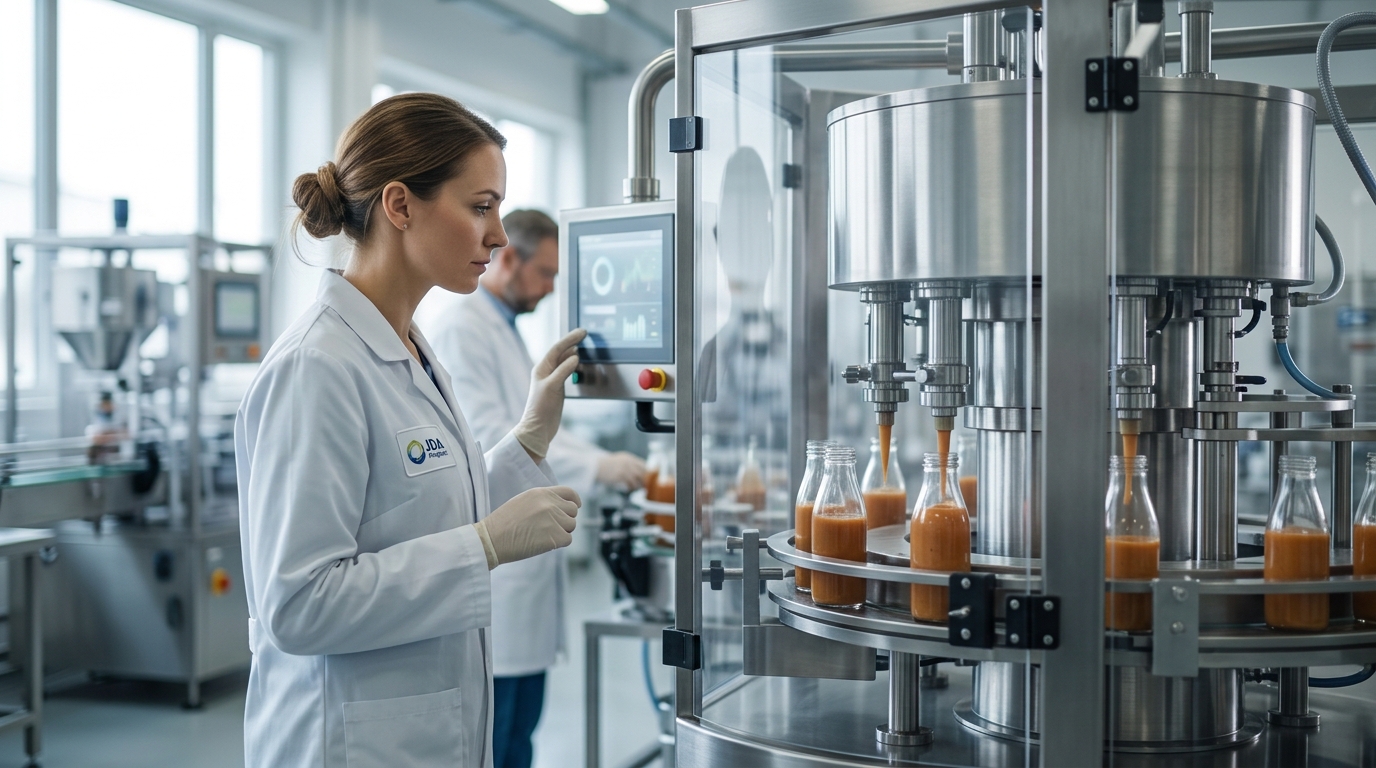
Buying your first filling machine can feel overwhelming. With dozens of machine types, varying automation levels, and product-specific requirements to consider, knowing where to start is half the battle. A filling machine is a piece of packaging equipment designed to dispense a precise amount of product into containers such as bottles, tubes, pouches, or cans. This guide walks you through the key decisions you need to make, from understanding your product's characteristics to selecting the right level of automation, so you can invest confidently in a machine that fits your production goals.
Understand Your Product's Physical Properties
The single most important factor in choosing a filling machine is your product itself. Viscosity is the measure of how easily a liquid flows, and it determines which filling technology will work best. A thin, water-like liquid behaves very differently from a thick cream or a dry powder.
Liquids and Thin Fluids
Products like water, juice, cleaning solutions, and shampoos flow freely and are best handled by pump-based or overflow filling systems. JDA Progress offers an inline pressure overflow filler well suited for water-like liquids, shampoo, lotions, detergents, and lubricants.
Viscous Products and Creams
Thicker products such as creams, lotions, gels, and sauces with particulates require positive-displacement filling. A piston filling machine is designed for liquids, creams, gels, sauces, and other viscous materials, drawing product from a drum or tank directly to the bottle or tube.
Dry Products and Powders
Powders, granules, and solid pieces each demand their own approach. Auger fillers are ideal for fine powders, while vibratory weigh fillers handle items like snack foods, spices, and granola. JDA Progress offers a semi-automatic powder auger filler that can fill both free-flowing and non-free-flowing dry products with accuracies averaging 1% or better.
Identify Your Container Type
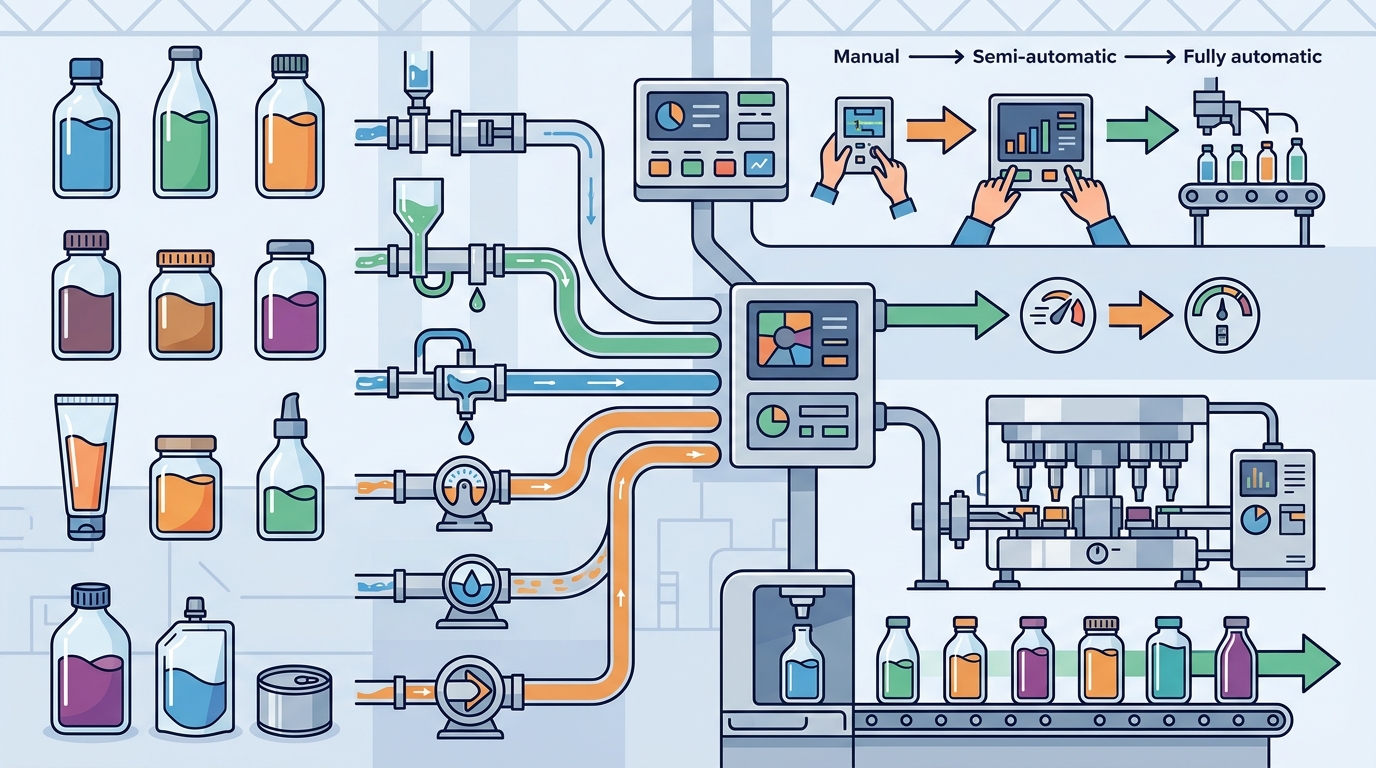
Your container shape and material play a direct role in machine selection. A container type is the specific combination of material (glass, plastic, or metal) and shape (bottle, tube, pouch, or can) that holds your finished product.
Rigid containers like bottles and jars pair naturally with inline filling systems. Flexible containers such as pouches and bags often require vertical form-fill-seal (VFFS) baggers that create, fill, and seal the package in one step. Tubes, common in cosmetics and pharmaceuticals, need a dedicated tube filler-sealer.
| Container Type | Best Filling Method | Common Industries |
|---|---|---|
| Plastic/Glass Bottles | Piston, Pump, or Overflow Filler | Food, Beverage, Chemicals |
| Metal/Plastic Tubes | Automatic Tube Filler-Sealer | Cosmetics, Pharma |
| Pouches/Bags | VFFS or Premade Pouch Bagger | Snacks, Coffee, Pet Food |
| Rigid Cans/Jars | Auger or Weigh Filler | Spices, Powders, Supplements |
Learn the Main Filling Technologies
Each filling technology solves a different problem. Understanding the distinctions helps you narrow your options quickly.
Piston Fillers
Piston fillers use a cylinder-and-piston mechanism to draw and dispense a set volume of product. They excel with thick, viscous products and those containing particulates. JDA Progress offers both inline piston bottle fillers for automated production lines and semi-automatic models for smaller operations.
Pump Fillers
Pump fillers, including lobe pump and gear pump models, move product using rotary displacement. They handle a broad viscosity range and are easy to clean. The lobe pump liquid filler from JDA Progress is a portable machine and a great choice for cosmetics, chemicals, and even high-temperature cooked sauces.
Overflow Fillers
Overflow fillers fill each container to a consistent visual level regardless of minor volume differences between bottles. This makes them ideal for transparent containers where shelf appearance matters. According to the PMMI (The Association for Packaging and Processing Technologies), level filling is one of the most requested methods for consumer-facing beverage products.
Auger and Weigh Fillers
For dry goods, auger fillers deliver product by volume while weigh fillers use a scale-based approach. The vibratory weigh filler from JDA Progress is designed to fill spices, snack foods, chocolate, granola, pet food, and more, with no moving wear parts and no maintenance required.
Choose the Right Automation Level
Your current and projected production volumes should guide whether you invest in semi-automatic or fully automatic equipment. An automation level is the degree to which a filling machine operates independently of human intervention.
Semi-automatic machines require an operator to place and remove containers manually. They are budget-friendly and ideal for startups or small batch production. Fully automatic machines integrate with conveyors, cappers, and labelers to create a complete bottling line with minimal labor.
JDA Progress carries both tiers. For example, the automatic inline powder auger filler can fill powder and granule products at rates up to 60 containers per minute and can be installed alongside JDA capping and labeling machines for a complete line.
Match Machine Speed to Your Output Goals
Before requesting a quote, calculate how many units per minute (UPM) you need. Consider your daily order volume, shift length, and acceptable downtime for changeovers and cleaning.
As a benchmark, semi-automatic fillers typically handle 10 to 30 containers per minute depending on fill size, while inline automatic systems can exceed 60 per minute. The U.S. FDA's Current Good Manufacturing Practices (cGMP) also recommend that equipment speed should not compromise fill accuracy or sanitation standards.
Ask your equipment supplier for real-world throughput data with your specific product. JDA Progress offers free product demos so you can see actual speeds before committing.
Key Takeaways
- Start by classifying your product: liquid, viscous, or dry. Viscosity is the single biggest factor in filler selection.
- Match your container type (bottle, tube, pouch, can) to the appropriate filling technology.
- Piston fillers handle thick creams and particulates; pump and overflow fillers suit thin liquids.
- Auger fillers work for powders; vibratory weigh fillers are best for granules and solid pieces.
- Semi-automatic machines suit startups; fully automatic lines scale for high-volume production.
- Always request a product demo or trial run before purchasing to verify fill accuracy and speed.
- Plan for the full line: filling is just one step alongside capping, labeling, and conveying.
Frequently Asked Questions
What is the best filling machine for liquids?
For thin, free-flowing liquids, a pump filler or overflow filler is typically the best choice. For thicker liquids such as sauces or lotions, a piston filler provides more precise volumetric control.
How much does a filling machine cost?
Prices vary widely based on automation level and throughput. Semi-automatic tabletop models start in the low thousands, while fully automatic inline systems can reach into six figures. Request a quote from a manufacturer like JDA Progress for accurate pricing.
Can one filling machine handle multiple products?
Many filling machines are adjustable for different fill volumes and product types. However, switching between vastly different viscosities (e.g., water versus thick cream) may require different nozzle configurations or a different machine altogether.
What is the difference between semi-automatic and automatic filling machines?
A semi-automatic filler requires an operator to position containers manually, while an automatic filler integrates with a conveyor system and handles container placement, filling, and indexing without manual intervention.
How do I know what fill accuracy to expect?
Quality auger fillers achieve accuracies of 1% or better. Piston fillers are also highly accurate because they dispense a fixed volume per stroke. Always verify accuracy claims with a product demo using your actual product.
Do I need a complete bottling line or just a filler?
If you are scaling production, a complete line with a filler, capper, labeler, and conveyor will dramatically increase throughput and reduce labor. JDA Progress can configure turnkey bottling lines tailored to your needs.
What industries use filling machines?
Filling machines serve food and beverage, cosmetics, pharmaceuticals, chemicals, cannabis, pet food, and many other industries. The right machine depends on your product and regulatory requirements, not just your industry.
Get Started With a Free Consultation
Choosing the right filling machine does not have to be complicated when you work with a manufacturer who has over 35 years of experience. JDA Progress Industries, based in Canada, offers free product demos and in-stock equipment for fast delivery, backed by a 1-year warranty on all machines and parts.
Request a free quote from JDA Progress today and let their packaging experts recommend the ideal filling solution for your product, container, and production volume.