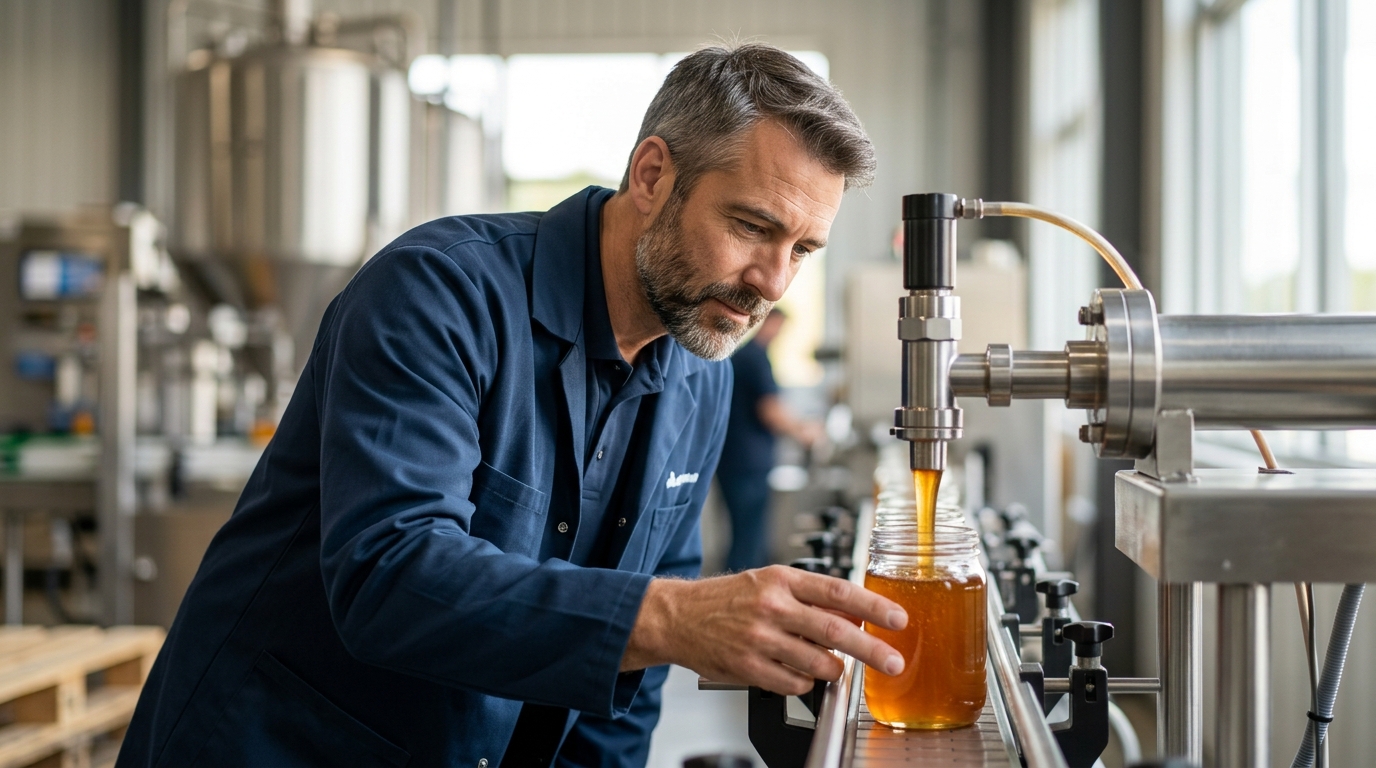
Selecting a filling machine is one of the most important decisions you will make for your packaging line. The right machine boosts throughput, reduces waste, and keeps your product consistent from the first container to the last. But with so many options available, from piston fillers to auger systems and pump-based machines, knowing where to start can feel overwhelming. This guide walks you through every factor you need to consider before investing in a filling machine, so you can match the right technology to your product, container, and production goals.
Step 1: Understand Your Product Characteristics
The single most important factor in choosing a filling machine is the product you plan to fill. Every filling technology is engineered around specific viscosity ranges, particulate sizes, and flow behaviors. Getting this wrong leads to inaccurate fills, messy production, and costly downtime.
Liquids
Thin, free-flowing liquids like water, juices, and cleaning solutions work best with pump-based or overflow filling systems. An inline pressure overflow filler is a strong option for water-like liquids, shampoo, lotions, detergents, and lubricants. Overflow fillers also ensure a consistent visual fill level in transparent containers, which matters for retail shelf appeal.
Viscous Products and Creams
Thicker products such as creams, gels, sauces, and lotions require positive-displacement technology. A piston filling machine is ideal for handling creams, lotions, gels, and sauces with particulates. Piston fillers draw a precise volume into a cylinder and push it into the container, delivering repeatable accuracy even with chunky or sticky formulations.
Powders and Granules
Dry products introduce unique challenges like bridging, dusting, and inconsistent bulk density. An auger filler is a machine that uses a rotating screw inside a tube to dispense measured amounts of powder or granule product. JDA Progress offers a semi-automatic powder auger filler that achieves accuracies averaging 1% or better across fills ranging from 100 mg pharmaceutical doses to 50 lb bulk products.
Step 2: Learn the Main Types of Filling Machines
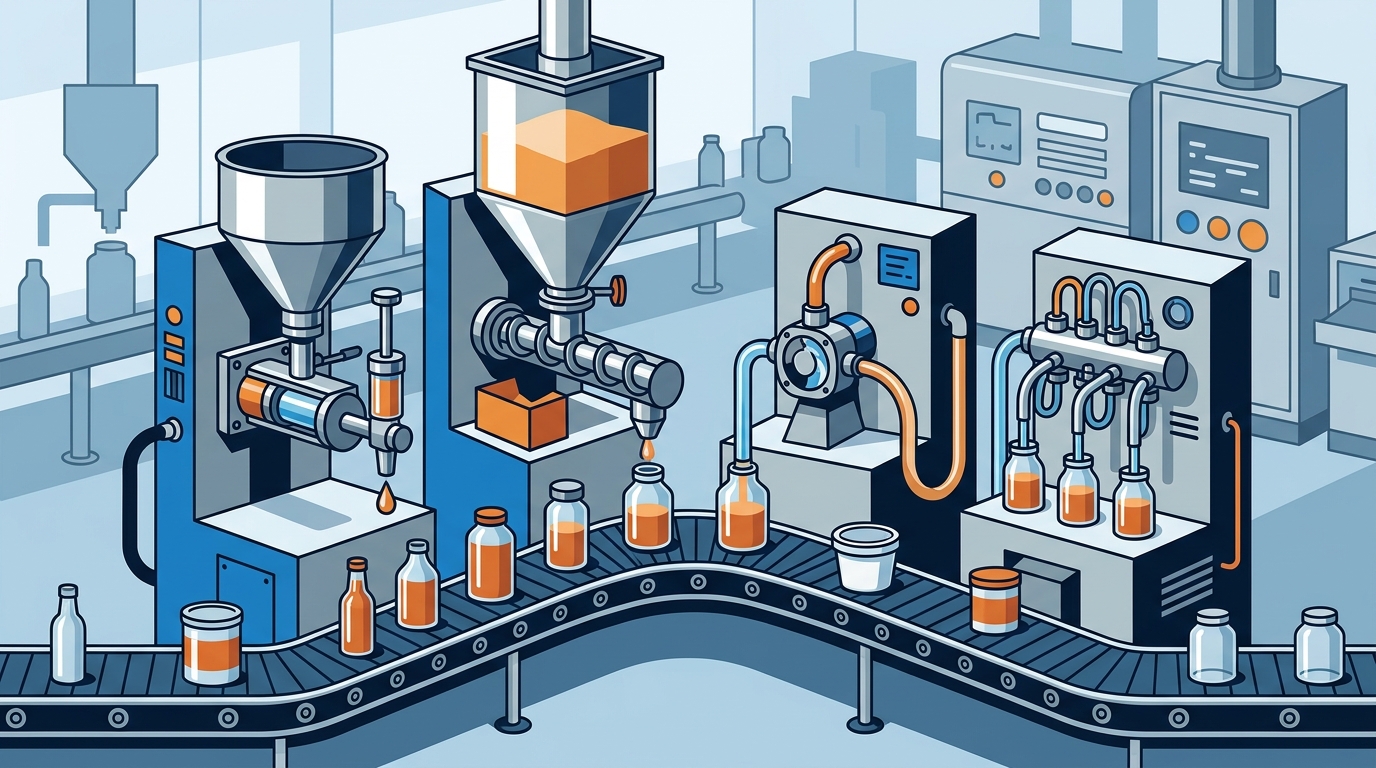
A filling machine is a piece of industrial equipment designed to dispense a precise quantity of product into a container. There are several core types, each suited to different product and production needs.
Piston Fillers
Piston fillers use a cylinder-and-piston mechanism to measure and dispense product volumetrically. They excel with thick, viscous products and can handle particulates without damaging them. JDA Progress offers both semi-automatic and inline automatic piston fillers for scaling production.
Pump Fillers
Pump fillers rely on gear pumps or lobe pumps to move product from a tank to the fill nozzle. A lobe pump filler is a portable, versatile machine well-suited for cosmetics, chemicals, and high-temperature cooked sauces. These machines handle a wide viscosity range and allow quick changeovers between products.
Auger Fillers and Weigh Fillers
For dry products, auger fillers dispense by volume while weigh fillers dispense by weight. A vibratory weigh filler is designed for products like spices, snack foods, candy, granola, pet food, and frozen foods, offering gravimetric accuracy without moving wear parts.
Step 3: Match the Machine to Your Containers
Your container type directly impacts which filler works best. Most industrial filling machines accommodate plastic, glass, and metal containers. Inline pump fillers, for example, work with plastic, glass, and metal containers with no change parts needed for switching between types. If you are filling tubes instead of bottles, a dedicated automatic tube filler and sealer can handle plastic or metal tubes in three different configurations.
Consider container size range as well. Machines with adjustable nozzle spacing and height controls simplify changeovers when you run multiple SKUs on the same line.
Step 4: Determine Your Production Speed and Automation Level
Production volume dictates whether you need a semi-automatic or fully automatic filling system. Semi-automatic machines require an operator to place each container, making them ideal for startups and small-batch producers. Automatic inline systems use conveyors, sensors, and PLCs to run continuously at rates up to 60 containers per minute for powder products.
For high-volume operations, consider building a complete bottling line that integrates filling, capping, labeling, and conveying into one seamless workflow. JDA Progress designs turnkey lines that connect each station for maximum throughput.
Filling Machine Comparison Table
| Machine Type | Best For | Viscosity Range | Automation | Accuracy |
|---|---|---|---|---|
| Piston Filler | Creams, gels, sauces | Medium to high | Semi-auto or inline | Volumetric, high |
| Pump Filler (Lobe/Gear) | Liquids, cosmetics, chemicals | Low to high | Semi-auto or inline | Volumetric, high |
| Overflow Filler | Water-thin liquids | Low | Semi-auto or inline | Level-based |
| Auger Filler | Powders, granules | Dry products | Semi-auto or inline | ~1% volumetric |
| Vibratory Weigh Filler | Snacks, spices, pet food | Dry products | Semi-auto | Gravimetric, high |
| Tube Filler/Sealer | Cosmetics, pharmaceuticals | Medium to high | Automatic rotary | Volumetric |
Step 5: Verify Industry Compliance and Build Quality
Regulatory requirements vary by industry. Food and beverage operations typically need equipment that meets FDA food safety guidelines and uses food-grade stainless steel contact surfaces. Pharmaceutical producers require even tighter controls. Look for machines built with 304 stainless steel frames, sanitary contact parts, and quick-disconnect components for easy cleaning.
JDA Progress builds all filling machines with stainless steel construction and backs them with a 1-year warranty on machines and parts. Their Toronto, Canada headquarters also provides factory-trained technician support and free phone technical assistance.
Key Takeaways
- Start by classifying your product: liquid, viscous, or dry. This single factor narrows your machine options dramatically.
- Piston fillers handle thick, chunky products; pump and overflow fillers suit liquids; auger and weigh fillers manage powders and granules.
- Match the machine to your container type and size range to minimize changeover time.
- Choose semi-automatic for low volumes and startups; go fully automatic for lines running 20 to 60+ containers per minute.
- Always verify that the machine meets your industry's compliance standards, especially for food, cosmetics, and pharmaceuticals.
- Request a product demo before purchasing to confirm fill accuracy and speed with your actual product.
- Consider the full packaging line, including cappers, labelers, and conveyors, not just the filler in isolation.
Frequently Asked Questions
What type of filling machine do I need for liquids?
For thin, water-like liquids, an overflow filler or gear pump filler works best. For thicker liquids like lotions or sauces, a piston filler or lobe pump filler provides the positive displacement needed for accurate fills.
Can one filling machine handle multiple products?
Yes, many filling machines are designed for quick changeovers. Pump fillers and piston fillers with tool-free disassembly allow you to switch between products with minimal downtime, as long as the viscosity range is compatible.
How accurate are powder filling machines?
Auger-based powder fillers typically achieve accuracies of 1% or better. Vibratory weigh fillers offer gravimetric precision and can switch measurement units from grams to pounds to ounces at the touch of a button.
What is the difference between semi-automatic and automatic filling machines?
A semi-automatic filling machine requires an operator to position each container under the nozzle and trigger the fill cycle. An automatic filling machine uses conveyors, sensors, and programmable logic controllers (PLCs) to index, fill, and release containers without manual intervention.
Do I need a complete bottling line or just a filler?
It depends on your current setup. If you are starting from scratch or scaling up significantly, a complete bottling line with integrated filling, capping, and labeling saves labor and increases consistency. JDA Progress offers complete bottling line solutions.
What materials should a filling machine be made of?
For food, beverage, cosmetic, and pharmaceutical applications, look for 304 stainless steel frames and food-grade contact parts. Sanitary construction with quick-disconnect components is essential for fast, thorough cleaning between production runs.
How do I know if a filling machine will work with my product?
Request a free product demo. Reputable manufacturers like JDA Progress offer demos where they test your actual product on their equipment so you can verify fill accuracy, speed, and cleanliness before committing to a purchase.
How much does a filling machine cost?
Pricing varies widely based on automation level, number of fill heads, and product type. Semi-automatic tabletop fillers are the most affordable entry point. Fully automatic inline systems with PLC controls and multi-head nozzles cost more but deliver significantly higher throughput and consistency.
Get Started With JDA Progress
Choosing the right filling machine does not have to be complicated. With over 35 years of experience in packaging equipment, JDA Progress Industries helps businesses across food and beverage, cosmetics, chemicals, and pharmaceuticals find the perfect filling solution. Browse the full range of filling machines or request a free quote today to get personalized recommendations for your product and production goals.