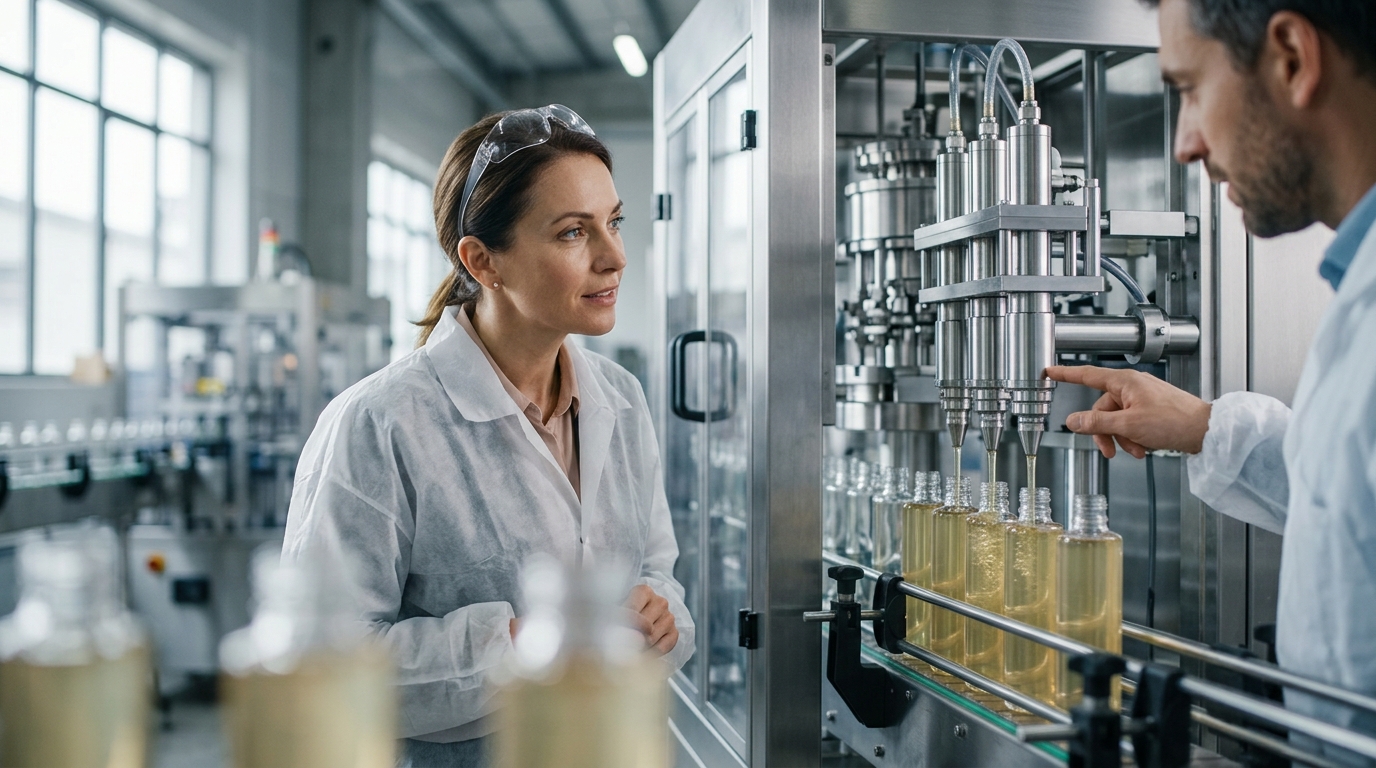
Selecting a filling machine can feel overwhelming, especially when you are packaging a product for the first time. The type of filler you need depends on your product's viscosity, your container format, your target production speed, and your budget. A filling machine is a piece of industrial equipment designed to dispense a precise amount of product into a container such as a bottle, tube, jar, or pouch. With over 35 years of experience, JDA Progress has helped businesses across food and beverage, cosmetics, chemicals, and nutraceuticals find the ideal filling solution. This guide walks you through each decision point so you can invest with confidence.
1. Understand Your Product Characteristics
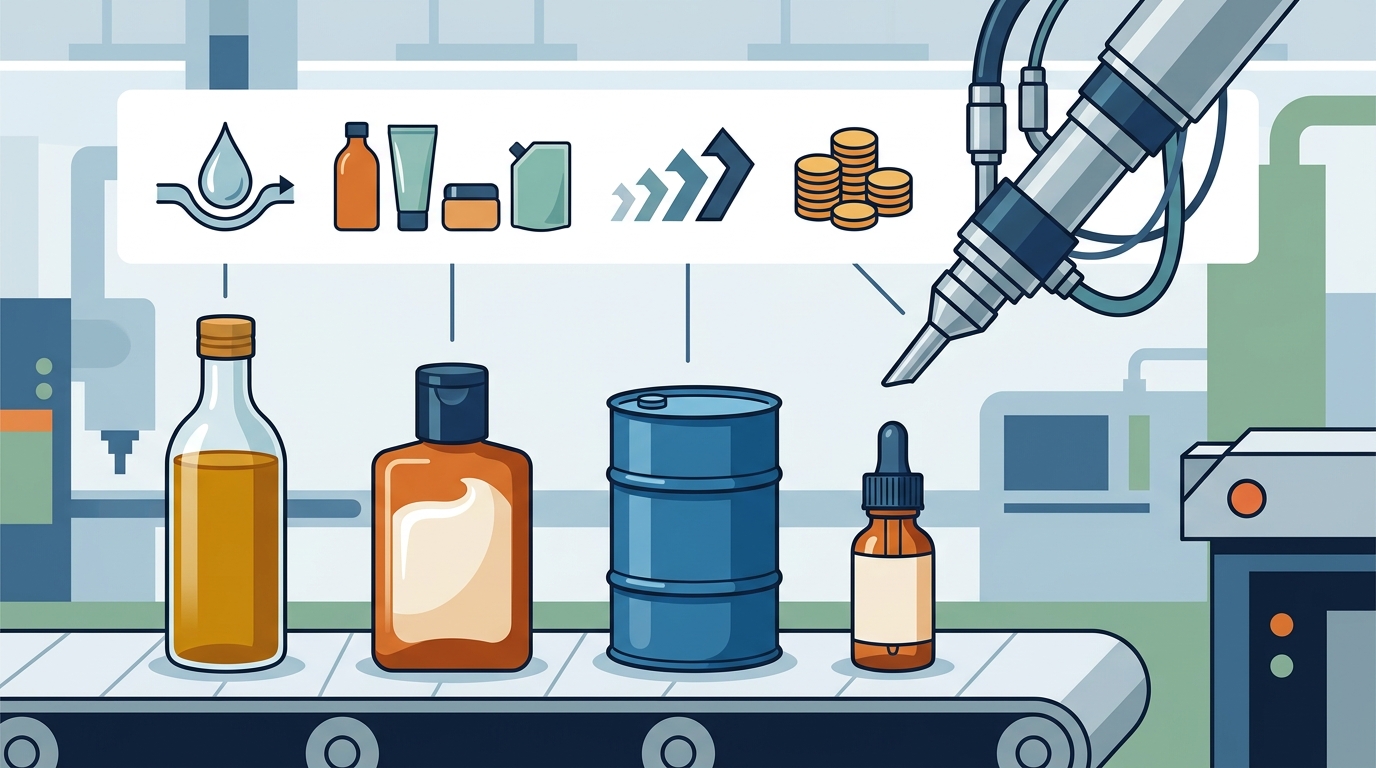
The single most important factor when choosing a filling machine is your product itself. Ask these questions first:
- Viscosity: Is your product thin like water, thick like honey, or somewhere in between?
- Particulates: Does it contain chunks, seeds, or suspended solids?
- Consistency: Is it a liquid, cream, gel, powder, or granule?
- Temperature: Will you fill it hot, cold, or at room temperature?
Viscosity is the measure of a fluid's resistance to flow. It determines whether you need a gravity filler, a pump filler, or a piston filler. Products with particulates, such as salsa or face scrubs, typically require piston-style mechanisms that will not damage the solids.
2. Know the Main Filling Machine Types
Piston Fillers
A piston filler is a volumetric filling machine that uses a cylinder-and-piston mechanism to draw and dispense product. JDA Progress offers the PF200 semi-automatic piston filler, which is designed for liquids, creams, gels, sauces, and other viscous materials. It features stainless steel construction and simple no-tools-required dismantling for fast cleaning.
Pump Fillers
Pump fillers use positive-displacement pumps to move product from a tank into the container. The LP48 lobe pump liquid filler is a portable machine suited for cosmetics, chemicals, and even high-temperature cooked sauces. For higher-volume inline production, the LP48-12 inline pump bottle filler is an excellent choice that works with plastic, glass, and metal containers.
Auger Fillers (Powder and Granule)
An auger filler is a machine that uses a rotating screw inside a funnel to dispense dry products by volume. The semi-automatic auger filler from JDA Progress can handle fills from 100 mg pharmaceutical doses up to 50 lb bulk fills, with accuracies averaging 1% or better. For fully automatic operation, the automatic inline auger powder filler fills rigid containers at rates up to 60 per minute.
3. Filling Machine Comparison Table
| Filler Type | Best For | Product Examples | Automation Level |
|---|---|---|---|
| Piston Filler | Viscous liquids with or without particulates | Creams, sauces, gels, lotions | Semi-automatic |
| Lobe Pump Filler | Medium to thick liquids, hot-fill capable | Cosmetics, chemicals, cooked sauces | Semi-automatic |
| Inline Pump Filler | High-volume liquid production | Sauces, chemicals, cosmetics | Automatic |
| Overflow Pressure Filler | Thin, free-flowing liquids needing level fill | Water, shampoo, detergent, lubricants | Automatic |
| Auger Filler | Dry powders and granules | Spices, supplements, flour, coffee | Semi-auto or automatic |
| Vibratory Weigh Filler | Gravity-fed solids by weight | Candy, snacks, pet food, cannabis | Semi-automatic |
| Tube Filler & Sealer | Tube packaging | Toothpaste, ointments, adhesives | Automatic |
4. Match the Machine to Your Container Format
Your container type narrows your filler options significantly. Bottles and jars work with most liquid and powder fillers. Tubes require a dedicated tube filler and sealer like the JDA SUPER-30, which is available in three configurations and can seal both plastic and metal tubes. Pouches and bags call for a vertical form fill seal (VFFS) machine that forms, fills, and seals in one continuous motion.
According to the PMMI (The Association for Packaging and Processing Technologies), matching the filler to the container is one of the top factors that reduces changeover time and waste on a packaging line.
5. Semi-Automatic vs. Automatic Filling Machines
Semi-automatic machines require an operator to place and remove containers. They are ideal for startups, small batches, and contract packers with varied product runs. Automatic machines integrate with conveyors, sensors, and PLCs for hands-free operation at higher speeds.
If you are producing fewer than 30 units per minute or running many SKUs, a semi-automatic filler often delivers the best return on investment. Once your volumes justify the investment, upgrading to an automatic inline system, such as the inline pressure overflow filler with 2 to 20 nozzles, keeps your throughput competitive.
6. Think Beyond the Filler: Building a Complete Line
A filling machine rarely works in isolation. Most production floors pair fillers with capping machines, labelers, conveyors, and bottle unscramblers. JDA Progress offers fully integrated bottling lines that combine fillers, cappers, labelers, and conveyors for smoother production. Planning for a complete line from the start prevents expensive retrofits later.
JDA Progress also provides training sessions, after-sales support, and a one-year warranty on all machines, so your team is never left guessing.
7. Key Takeaways
- Start by defining your product's viscosity, particulates, and fill temperature before shopping for a machine.
- Piston fillers handle thick products with particulates; pump fillers suit medium-viscosity liquids and hot fills.
- Auger fillers and vibratory weigh fillers cover the dry-product spectrum from fine powders to chunky snacks.
- Match the filler to your container type: bottles, tubes, or pouches each require different equipment.
- Semi-automatic machines work best for low volumes or varied SKUs; automatic machines boost high-volume throughput.
- Plan your full packaging line (filler, capper, labeler, conveyor) from the start to avoid costly retrofits.
- Request a free product demo from JDA Progress to see the machine run with your actual product.
8. Frequently Asked Questions
What filling machine do I need for thick products like creams or sauces?
A piston filler is typically the best choice for thick, viscous products. The JDA Progress PF200 is designed for liquids, creams, gels, and sauces with particulates and features stainless steel construction for easy cleaning.
Can one filling machine handle both liquids and powders?
Generally, no. Liquid fillers and powder auger fillers use fundamentally different dispensing mechanisms. You will need a separate machine for each product type, though both can often share the same conveyor system.
How fast can an automatic filling machine run?
Speeds vary by model. The JDA automatic inline auger powder filler handles up to 60 containers per minute, while the inline pressure overflow filler supports 2 to 20 nozzles for scalable liquid throughput.
What is the difference between a volumetric filler and a gravimetric filler?
A volumetric filler dispenses a set volume of product per cycle, while a gravimetric filler (or weigh filler) dispenses by weight. Gravimetric fillers offer higher accuracy for products sold by weight, such as snacks or spices.
Do I need a fully automatic filler for a startup?
Not necessarily. Semi-automatic fillers offer lower upfront costs and greater flexibility for small batches. Many startups begin with a semi-automatic piston or pump filler and upgrade to an inline automatic system as demand grows.
What containers work with JDA Progress filling machines?
JDA fillers work with plastic, glass, and metal containers of varying shapes and sizes. Dedicated tube fillers handle plastic and metal tubes, and VFFS machines produce sealed pouches from roll stock film.
Does JDA Progress offer product demos?
Yes. JDA Progress offers free product demos so you can see the machine filling your actual product before you buy. They also have dozens of machines on display in their Vaughan showroom.
What kind of after-sales support does JDA Progress provide?
JDA Progress provides training sessions, video demonstrations, phone support, and a one-year warranty on all machines and parts. Most spare parts are in stock for fast delivery.
9. Get Started Today
Choosing the right filling machine does not have to be complicated. Define your product, pick your container, and decide on your target speed. Then explore the full range of JDA Progress packaging machines or contact our team to request a free demo with your actual product. Our engineers will help you build a solution that fits your goals and your budget.