
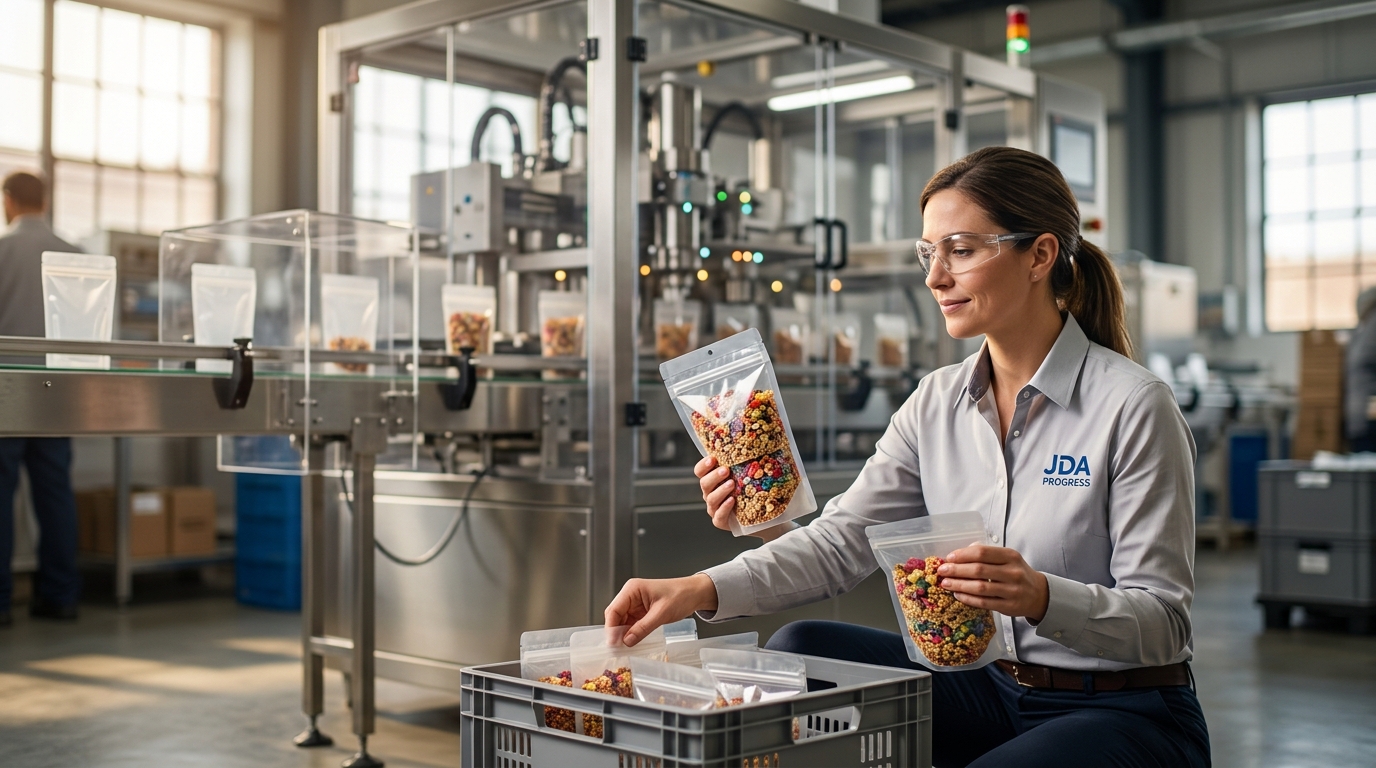
Best Automatic Filling Machine for Premade Standup Doy Pouches
Standup doy pouches — sometimes called doypacks or SUP bags — have become one of the most popular flexible packaging formats in food, beverage, pet care, and consumer goods. Their shelf presence, resealable zippers, and lightweight construction make them a favourite among brands and consumers alike. But choosing the right automatic filling machine for premade doy pouches is not straightforward. Product type, production speed, pouch dimensions, and integration needs all influence the decision.
This guide walks you through everything you need to know — machine architectures, filler types, key selection criteria, and practical tips — so you can invest with confidence.
What Is a Premade Doy Pouch Filling Machine?
A premade doy pouch filling machine is a piece of automated packaging equipment that picks up a pre-formed standup pouch from a magazine or hopper, opens it, fills it with product, and seals it — all in a single integrated process. Unlike vertical form-fill-seal (VFFS) machines that form bags from a roll of film, premade pouch fillers work with bags that are already manufactured to final shape, giving you higher-quality graphics and more complex pouch structures such as zippers, spouts, and gussets.
These machines are used across a wide variety of markets. Products commonly filled in doy pouches include snack foods, powders, spices, coffee, confections, pet food, frozen foods, liquids, hardware, and even pharmaceuticals.
Two Main Machine Architectures: Rotary vs. Linear
The first major decision when selecting a doy pouch filler is the machine architecture. There are two dominant designs:
Rotary Premade Pouch Machines
Rotary machines use a carousel with multiple stations — typically six, eight, or more — arranged in a circle. Each station performs a specific function (bag pick-up, opening, filling, sealing, discharge) as the carousel indexes. Rotary designs are generally preferred for higher-speed applications. Some models can reach dry cycle speeds of up to 60 pouches per minute, and they fill and seal doy bags, three-sided seal pouches, flat pouches, and zippered bags.
Rotary machines also tend to have a smaller footprint relative to their output, because the circular layout packs many stations into a compact space.
Linear (Straight-Line) Premade Pouch Machines
Linear machines move pouches along a straight path from one station to the next. They are typically easier for a single operator to monitor because the entire bag opening, filling, and sealing process is visible without moving around the machine. Linear designs are often chosen for small-to-medium production volumes or where floor space allows a longer line.
Some linear machines occupy as little as ten square feet of floor space, making them an excellent entry point for businesses transitioning from manual pouch filling to automation.
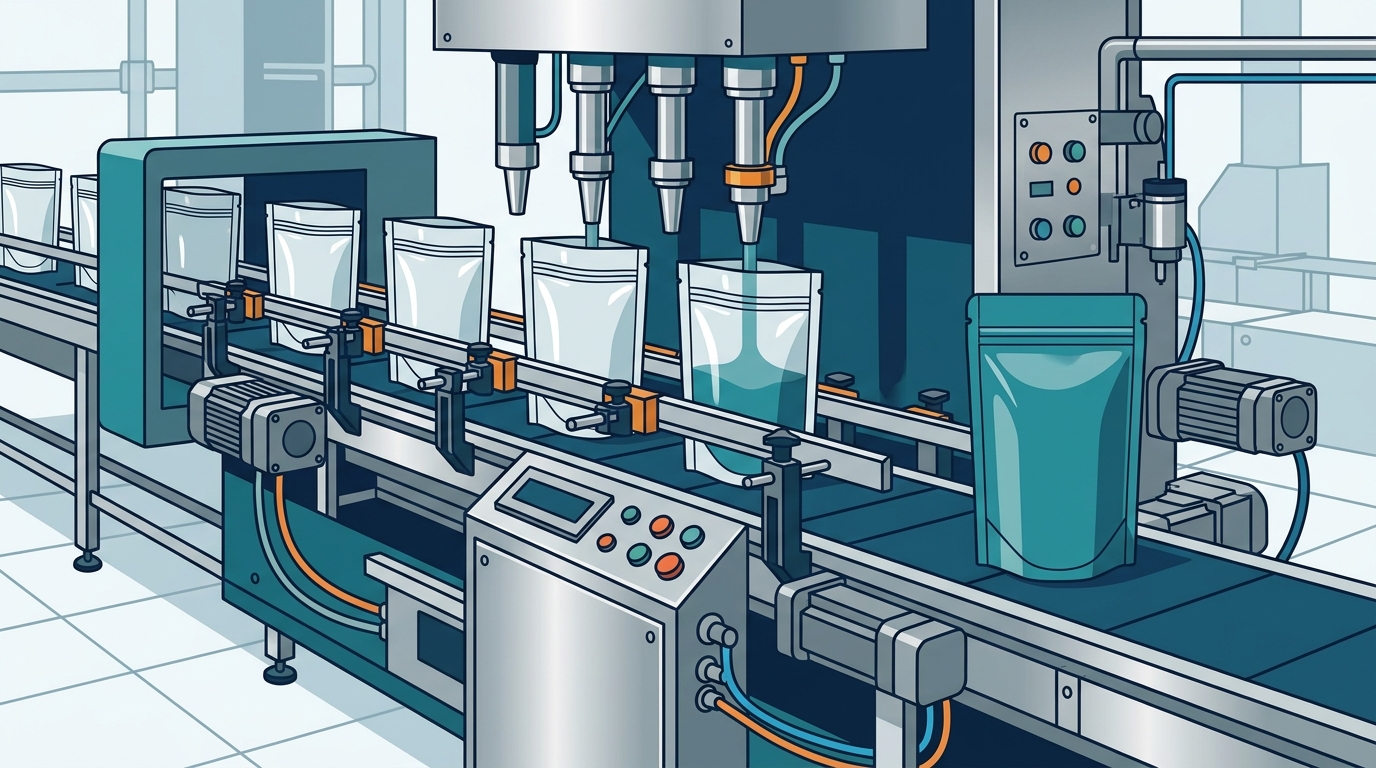
Choosing the Right Filler Type for Your Product
The filling head mounted above (or alongside) the pouch machine must match your product's physical characteristics. Here are the most common filler types paired with doy pouch machines:
| Filler Type | Best For | Examples |
|---|---|---|
| Multi-Head Weigher | Free-flowing granules and irregularly shaped pieces | Nuts, candy, snack mixes, dried fruit, pet food |
| Auger Filler | Fine and non-free-flowing powders | Coffee grounds, spices, protein powder, flour |
| Volumetric Cup Filler | Uniform granules | Salt, sugar, rice, seeds |
| Linear Net Weigher | Larger or fragile pieces needing gentle handling | Jerky, baked goods, crackers |
| Piston Pump Filler | Liquids, pastes, and viscous products | Sauces, ketchup, honey, shampoo |
| Tablet / Counting Filler | Discrete unit products | Gummies, capsules, hardware pieces |
Matching the correct filler to your product is arguably more important than the pouch machine itself, since fill accuracy directly impacts giveaway costs and compliance.
Key Features to Look for in a Doy Pouch Filler
- Automatic zipper opening device — essential for resealable SUP and doy pouches to ensure the zipper is fully open before product drops in.
- No-bag-no-fill sensor — prevents product waste by stopping the fill cycle if a pouch fails to open or is absent from the station.
- Bag shaker / vibration station — levels the product inside the pouch before sealing, which improves seal integrity and shelf appearance.
- Quick changeover tooling — if you run multiple pouch sizes, look for handle-adjustable or tool-free size changes.
- Stainless steel construction — a must for food-grade environments, easy cleaning, and long equipment life.
- PLC with colour touchscreen — simplifies recipe storage, diagnostics, and operator training.
- Vacuum or gas-flush capability — extends shelf life for perishable products by removing oxygen or replacing it with inert gas.
- Integrated exit conveyor — streamlines the transition to downstream processes like check-weighing, case packing, or labeling.
Production Speed: Matching Throughput to Your Needs
Premade doy pouch filling machines are available across a wide range of speeds:
- Entry-level / compact machines: up to approximately 900 bags per hour. Ideal for startups, co-packers running short runs, or contract manufacturers handling specialty products.
- Mid-range machines: roughly 1,200–2,400 bags per hour. Suitable for established brands scaling production without investing in full high-speed lines.
- High-speed machines: 2,700 bags per hour and above (some rotary models reach 3,600 pouches per hour). Designed for large-scale CPG operations running multiple shifts.
Keep in mind that mechanical speed ratings are estimates based on ideal conditions. Actual performance depends on final bag size, bag type, film structure, product characteristics, and application specifics.
Pouch Compatibility: What Styles Can These Machines Handle?
Most modern premade pouch fillers are designed to handle multiple pouch formats beyond the classic doypack. Common compatible styles include:
- Stand-up pouches (SUP, SURP, DOY)
- Pillow pouches
- Gusseted bags
- Quad-seal bags
- Flat / three-sided seal pouches
- Carry-handle pouches
- Spout pouches (for liquids)
- Kraft paper pouches
This versatility means you can often run several product lines on the same machine with minimal changeover — a significant advantage for growing businesses or co-packers.
How JDA Progress Fits Into Your Pouch Packaging Line
While the pouch filler is the centrepiece, a complete doy pouch packaging line often requires upstream and downstream equipment. JDA Progress manufactures a comprehensive range of complementary packaging machines that can integrate with your premade pouch filling system:
- Filling machines: JDA Progress offers piston fillers for creams, lotions, gels, and sauces; liquid fillers for viscous products; and powder fillers — each designed for a specific product type.
- Pouch labelers: The JDA Progress TLA series applies labels to the top of pouches with precision and speed, perfect for adding promotional stickers, batch codes, or regulatory information after the pouch is sealed.
- Incline conveyors: Purpose-built to transport sealed pouches from ground-level filling stations up to table height for inspection, case packing, or secondary packaging.
- Premade pouch filling: JDA Progress builds premade pouch filling machine models that pick, open, and load pouches with high precision, along with VFFS machines for businesses that prefer forming bags from roll stock.
With over 35 years of experience in industrial packaging equipment and a showroom in Vaughan, Ontario, JDA Progress provides hands-on demos, a one-year warranty on all machines and parts, and ongoing after-sales support.
Practical Tips for Buying a Doy Pouch Filling Machine
1. Run Product Trials Before You Buy
Every product behaves differently during filling. A free-flowing granola and a sticky gummy bear require completely different handling. Request a trial run with your actual product and your actual pouches before committing to a purchase.
2. Think Beyond the Machine — Think System
A pouch filler on its own is only one link in the chain. Plan for weighing or dosing equipment upstream, and check-weighing, labeling, and case packing downstream. Buying from a manufacturer that offers a broad range of packaging equipment simplifies integration and support.
3. Factor in Changeover Time
If you run more than one SKU, changeover time can eat into your uptime. Machines with tool-free adjustments and stored recipes on the PLC can cut changeover from 30+ minutes down to under 10.
4. Consider Total Cost of Ownership
The purchase price is only part of the equation. Evaluate consumable costs (jaws, heaters, gaskets), maintenance requirements, energy consumption, and the availability of spare parts. Stainless steel frames and food-grade contact parts may cost more upfront but save money in sanitation labour and equipment longevity.
5. Evaluate Supplier Support
A machine is only as good as the support behind it. Look for manufacturers that offer in-stock spare parts, training, installation assistance, and responsive technical service. A one-year warranty on machines and parts is a solid benchmark.
Key Takeaways
- Premade doy pouch filling machines automatically pick, open, fill, and seal pre-formed standup pouches in a single integrated process.
- Rotary machines offer higher speeds and compact footprints; linear machines provide easier visibility and simpler operation.
- The filler type (multi-head weigher, auger, piston, etc.) must match your product's characteristics for accurate, efficient dosing.
- Essential features include no-bag-no-fill sensors, automatic zipper openers, bag shakers, stainless steel construction, and PLC-based controls.
- Speed ratings are mechanical estimates — always validate with real product trials.
- JDA Progress offers a full ecosystem of complementary packaging equipment (fillers, labelers, conveyors, sealers) that integrates with premade pouch lines, backed by 35+ years of experience and a one-year warranty.
Frequently Asked Questions
What is a doy pouch?
A doy pouch (or doypack) is a flexible standup pouch with a sealed bottom gusset that allows it to stand upright on retail shelves. It is named after its inventor, Louis Doyen. Doy pouches are commonly available with zippers, spouts, or tear notches and are used across food, beverage, pet care, and personal care markets.
Can the same machine fill both liquids and dry products into doy pouches?
The pouch-handling machine itself (the opener, holder, and sealer) can often handle both, but the filler head must change. For example, you would swap an auger filler for a piston pump filler when switching from a powder to a liquid. Some manufacturers offer multi-filler integration so both heads can be mounted and switched quickly.
How fast can an automatic doy pouch filler run?
Entry-level compact machines typically run up to about 900 bags per hour, mid-range models reach 1,200–2,400 bags per hour, and high-speed rotary machines can exceed 3,600 bags per hour. Actual throughput depends on pouch size, product type, and fill weight.
What pouch sizes can these machines handle?
Most premade pouch fillers support a wide range of widths — commonly from about 80 mm up to 350 mm or more — and can be adjusted for varying heights and gusset depths. Quick-change tooling makes it practical to switch between sizes during production.
Does JDA Progress sell premade doy pouch filling machines?
Yes. JDA Progress manufactures premade pouch filling machine models that pick, open, and load pouches with high precision. They also offer VFFS baggers, complementary filling equipment (liquid, piston, and powder fillers), pouch labelers, conveyors, and sealers. Contact their team in Vaughan, Ontario for a demo or consultation.
What maintenance does a pouch filling machine require?
Routine maintenance includes inspecting and replacing heat-seal jaws and gaskets, lubricating moving parts, cleaning product-contact surfaces, calibrating fill weights, and checking vacuum generators and sensors. Machines built with stainless steel frames and food-grade parts are easier to clean and more durable over time.