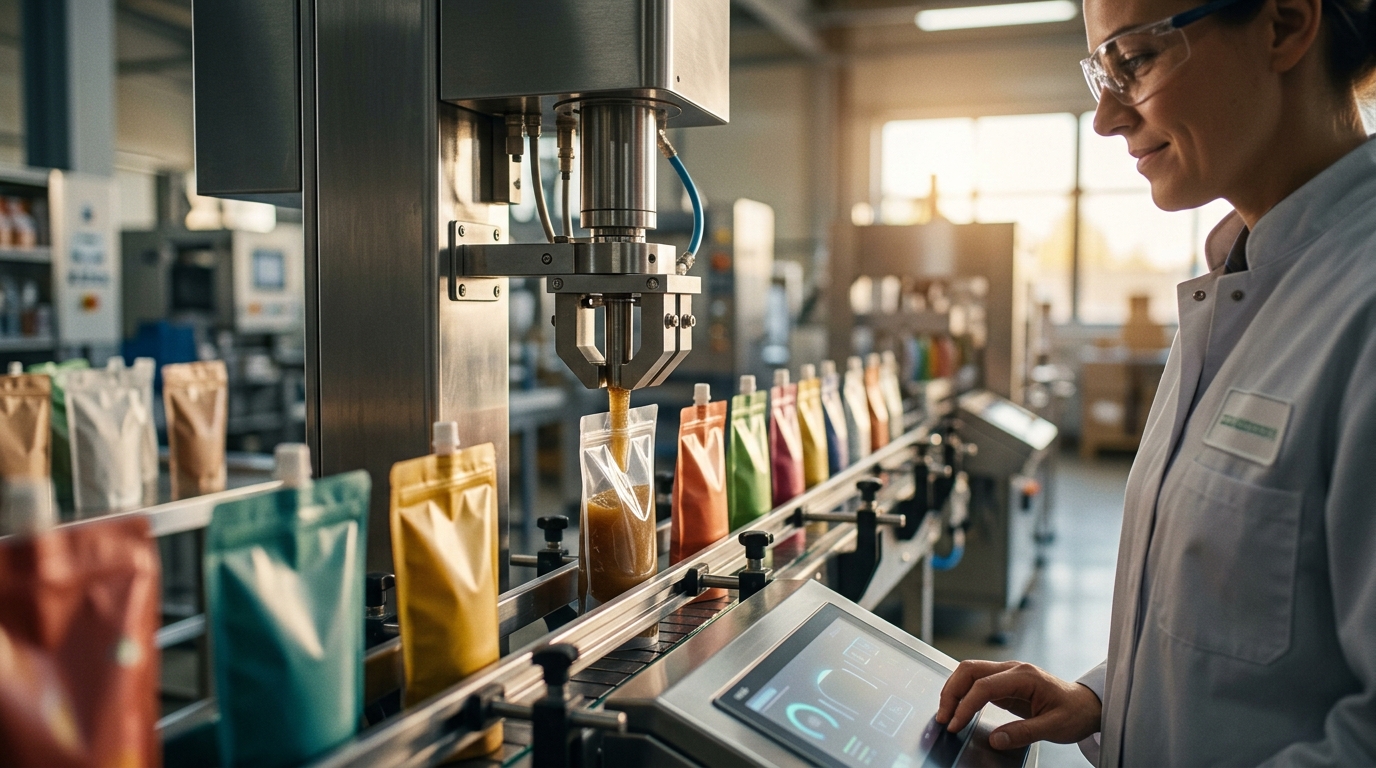
Standup doy pouches are one of the fastest-growing packaging formats in the world, and choosing the right automatic filling machine for them can make or break your production efficiency. The global stand-up pouch market was valued at USD 35.64 billion in 2025 and is projected to reach USD 78.01 billion by 2035, growing at a CAGR of 8.15%. With demand surging across food, beverage, pet food, and personal care sectors, manufacturers need reliable premade pouch filling equipment that delivers speed, accuracy, and flexibility. This guide covers everything you need to know to pick the best machine for your operation.
What Is a Doy Pouch?
A doy pouch is a flexible packaging format with a gusseted bottom that allows it to stand upright on retail shelves. Also known as a doypack or standup pouch (SUP), this format protects contents from moisture, air, and light while maximizing shelf visibility. The name comes from Louis Doyen, the French inventor who patented the design in the 1960s.
Doy pouches are widely used across food and beverage, pet food, pharmaceuticals, and personal care industries. Their lightweight construction reduces shipping costs compared to rigid containers like jars and cans, making them a preferred choice for brands seeking both cost efficiency and shelf appeal.
Why Use Premade Pouches Instead of Form-Fill-Seal?
A premade pouch filling machine is a system that picks, opens, fills, and seals pre-formed pouches rather than forming them from roll stock. This approach offers several advantages for businesses packaging into doy pouches.
Superior Print Quality
Premade pouches are printed before they arrive at your facility, so you get high-resolution graphics, matte finishes, and special effects that are difficult to achieve on form-fill-seal equipment. For brands selling in competitive retail environments, this visual edge matters.
Faster Changeovers
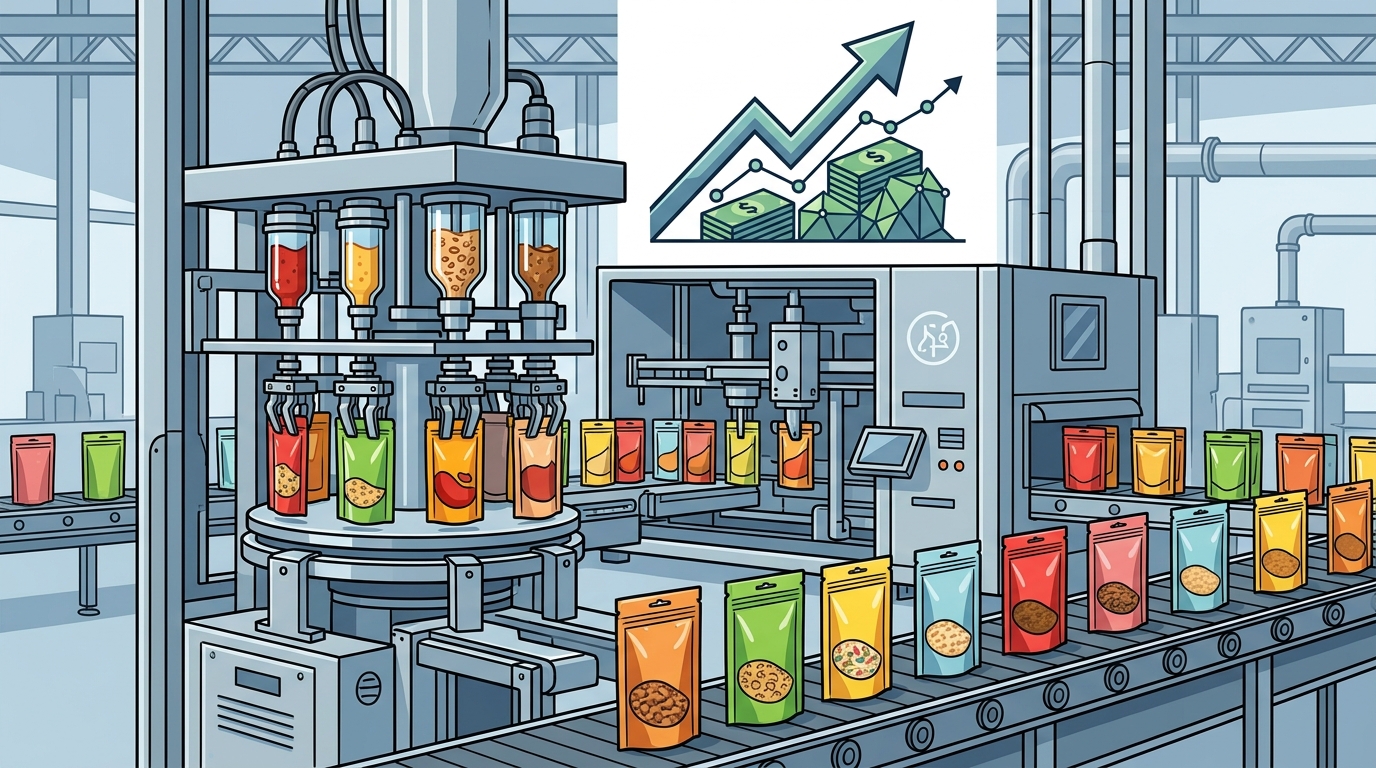
Switching between pouch sizes on a premade bagger typically takes minutes rather than the 30 to 40 minutes often required on rotary carousel machines. JDA Progress designs its premade pouch baggers with modular components so operators can adjust quickly when production demands shift.
Lower Entry Cost
Premade pouch machines generally have a smaller footprint and lower upfront investment than full VFFS lines, making them practical for small to mid-volume producers who want automation without a massive capital outlay.
Types of Automatic Filling Machines for Doy Pouches
Not all pouch filling machines work the same way. The best choice depends on your product type, production volume, and pouch configuration.
Inline Premade Pouch Baggers
Inline machines move pouches in a straight line through stations for picking, opening, filling, and sealing. This design gives operators clear visibility of the entire process. JDA Progress offers dedicated Redeepac 430 premade pouch baggers for liquids and powder-specific models that handle standup doy pouches with high precision.
Rotary Premade Pouch Machines
Rotary systems use a carousel with multiple stations (typically 6 to 10) to process pouches simultaneously. They achieve higher speeds, often reaching 40 to 60 pouches per minute, but require more floor space and can be harder to observe during operation.
Vertical Form Fill Seal (VFFS) Machines
A VFFS machine forms pouches from a roll of film, fills them, and seals them in one continuous motion. While VFFS systems like the Redeepac 520 for liquids are excellent for high-volume runs, they form bags on-site rather than using premade pouches. This distinction matters if your brand requires specialty pre-printed doy pouches with zippers or spouts.
Key Features to Look for in a Pouch Filler
When evaluating an automatic filling machine for doy pouches, focus on the features that directly affect uptime, accuracy, and product quality.
No-pouch, no-fill sensors prevent product waste by stopping the fill cycle when a pouch is missing or misaligned. Vacuum-assisted pouch opening ensures the bag is fully expanded before product enters, reducing errors. Adjustable sealing jaws accommodate different film types and pouch widths without replacing parts.
Modular dosing systems are equally important. A machine that integrates with auger fillers, piston fillers, multihead weighers, or volumetric cups gives you the flexibility to handle powders, liquids, granules, and chunky products on the same platform. JDA Progress engineers its filling machines to pair seamlessly with its pouch baggers for a complete packaging solution.
Machine Comparison: Inline vs. Rotary vs. VFFS
| Feature | Inline Premade Pouch Bagger | Rotary Premade Pouch Machine | VFFS Machine |
|---|---|---|---|
| Pouch Type | Premade doy, SUP, zippered | Premade doy, SUP, flat, gusseted | Formed from roll stock |
| Speed Range | Up to 1,800 bags/hr | Up to 3,600 bags/hr | Up to 4,200 bags/hr |
| Changeover Time | 5-10 minutes | 15-25 minutes | 20-40 minutes |
| Floor Space Required | Small to medium | Medium to large | Medium to large |
| Best For | Low to mid-volume, premium brands | Mid to high-volume production | High-volume, standard pouch shapes |
| Print Quality Control | Full (pre-printed pouches) | Full (pre-printed pouches) | Limited (printed on machine) |
| Typical Investment | Lower | Moderate | Higher |
For most businesses packaging into premade standup doy pouches, an inline premade pouch bagger offers the best balance of cost, flexibility, and ease of use. High-volume operations with standardized pouch formats may benefit from rotary or VFFS alternatives.
Industries That Benefit Most
Automatic doy pouch filling machines serve a broad range of sectors. Food and snack producers use them for nuts, granola, dried fruit, jerky, and coffee. Pet food brands rely on them for treats and kibble. Cosmetics and personal care companies package lotions, serums, and hair products in spouted doy pouches.
The chemical and household products sector also adopts these machines for detergents, cleaning agents, and garden products. With the right filler configuration, a single machine can handle multiple product lines. Pairing a pouch bagger with a dedicated pouch labeler and finished bag conveyor creates a fully automated downstream line.
Key Takeaways
- A doy pouch is a flexible standup packaging format with a gusseted bottom, valued at over USD 35 billion globally in 2025.
- Premade pouch filling machines pick, open, fill, and seal pre-formed doy pouches, preserving premium print quality.
- Inline premade pouch baggers offer the fastest changeovers and lowest floor space requirements for small to mid-volume producers.
- No-pouch, no-fill sensors, vacuum-assisted opening, and modular dosing systems are essential features for any doy pouch filler.
- Rotary machines suit higher throughput needs, while VFFS machines are best for standard pouch shapes at scale.
- One machine platform can serve food, pet food, cosmetics, and household products when paired with the right filler type.
- JDA Progress Industries offers a complete range of premade pouch baggers, fillers, labelers, and conveyors designed to integrate as turnkey packaging lines.
Frequently Asked Questions
What is a premade pouch filling machine?
A premade pouch filling machine is an automated system that picks pre-formed pouches from a magazine, opens them using vacuum suction, fills them with product via an integrated dosing system, and seals them with heat-seal jaws. Unlike VFFS machines, it does not form the pouch from roll stock.
Can an automatic filling machine handle different doy pouch sizes?
Yes. Most modern premade pouch baggers offer adjustable grippers and sealing bars that accommodate a range of pouch widths and heights. Quick-change tooling on machines like the JDA Progress Redeepac 430 series allows operators to switch sizes in minutes.
What products can be filled into standup doy pouches?
Doy pouches can hold liquids, powders, granules, pastes, and solid pieces. Common products include sauces, coffee, protein powder, pet treats, nuts, snack mixes, and personal care items. The filling mechanism (auger, piston, weigher, or volumetric cup) is selected based on the product type.
How fast can an automatic pouch bagger run?
Speeds vary by machine design. Inline premade pouch baggers typically reach 900 to 1,800 bags per hour. Rotary machines can exceed 2,400 bags per hour. Actual throughput depends on bag size, product characteristics, and fill weight.
What is the difference between a doy pouch and a regular standup pouch?
The terms are often used interchangeably. Strictly speaking, a doy pouch refers to the original Doyen-style standup pouch with a bottom gusset. Standup pouch (SUP) is a broader category that includes doy packs, quad-seal bags, and other self-standing flexible formats.
Do I need a separate sealer for premade pouches?
No. Premade pouch filling machines include integrated heat-seal stations that close the top of the pouch after filling. However, some operations add secondary sealing equipment, such as a continuous band sealer, for additional tamper evidence or reinforced seals.
How do I choose between liquid and dry fill configurations?
Liquid fills typically use piston or pump-based dosing systems. Dry fills use auger fillers, multihead weighers, or volumetric cup systems. JDA Progress offers both liquid and powder configurations of their Redeepac 430, plus a scale-based model for weight-critical fills.
Get Started With the Right Machine
Choosing the best automatic filling machine for premade standup doy pouches comes down to matching your product type, target speed, and pouch format with the right equipment platform. JDA Progress Industries, a Canadian packaging equipment manufacturer with over 35 years of experience, offers a complete lineup of premade pouch baggers, fillers, labelers, and conveyors built to work together.
Ready to find the right solution for your doy pouch packaging line? Request a free quote from JDA Progress and speak with an engineer who can recommend the exact configuration for your production needs.