
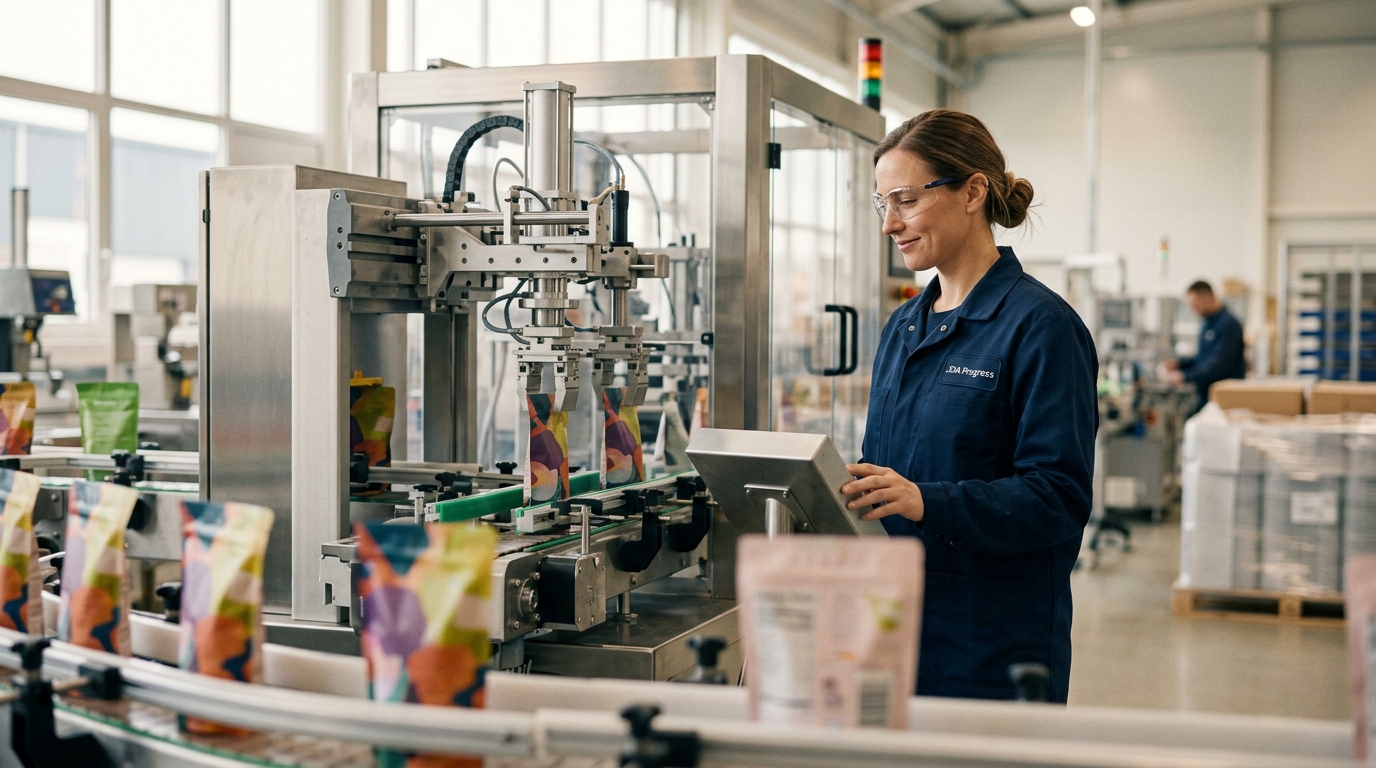
Standup doy pouches are one of the fastest-growing packaging formats in food, beverage, pet care, and household products. Choosing the right automatic filling machine for premade standup pouches can dramatically boost your production speed, reduce labor costs, and improve seal quality. But with rotary, inline, and horizontal machine designs on the market, finding the best fit for your product and throughput needs takes careful evaluation. This guide breaks down everything you need to know to choose the right premade pouch filling machine for your operation, whether you package powders, liquids, granules, or snacks.
What Is a Standup Doy Pouch?
A standup doy pouch is a flexible, premade bag with a bottom gusset that allows it to stand upright on retail shelves. Invented by Louis Doyen in the 1960s, this format is now used across industries from snack foods to laundry detergent. Its lightweight construction uses up to 75% less material than rigid containers, according to the Flexible Packaging Association.
Because doy pouches arrive premade and flat, they require a specialized filling machine that can automatically pick, open, fill, and seal each pouch. This is fundamentally different from vertical form fill seal (VFFS) machines, which form bags from a roll of film.
Types of Automatic Filling Machines for Doy Pouches
There are three primary machine architectures used for filling premade standup pouches. Each serves different production scales and product types.
Rotary Premade Pouch Machines
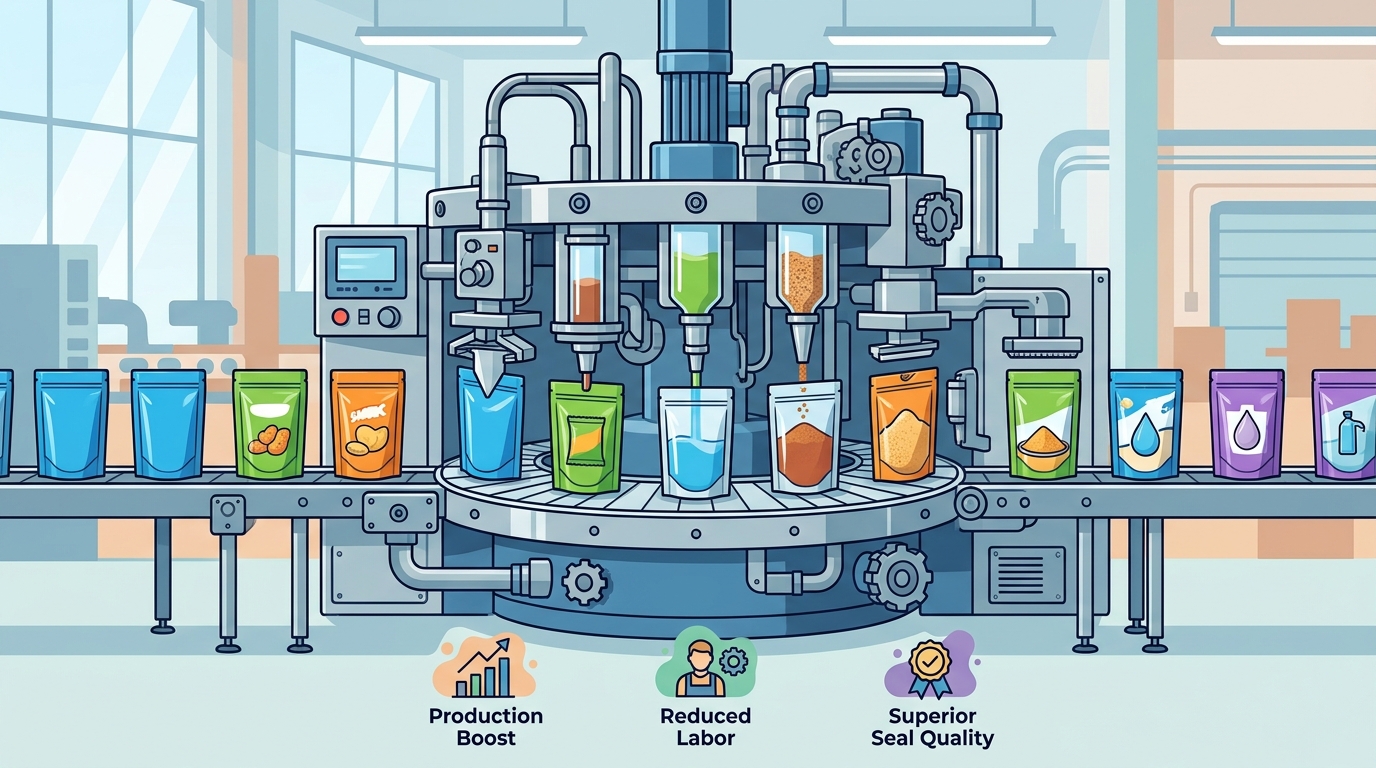
A rotary premade pouch machine is a multi-station system where pouches travel around a central carousel, passing through pick, open, fill, and seal stations. These machines typically feature 6 to 10 stations and handle a wide range of pouch styles. JDA Progress offers premade pouch bagger models that pick, open, and load pouches with high precision for both powders and liquids.
Inline (Linear) Premade Pouch Machines
An inline premade pouch machine is a straight-line system where pouches move sequentially through each station. This design gives operators a clear view of the entire process and simplifies maintenance. Inline machines are well suited for small to medium production volumes.
VFFS Machines (Alternative Approach)
If you do not require premade pouches, VFFS machines from JDA Progress automatically form bags from a roll of film, fill them, and seal them in one continuous motion. However, VFFS machines create pouches on-machine rather than using preformed doy bags, so the shelf appearance may differ.
Key Features to Look For
When evaluating automatic filling machines for standup doy pouches, prioritize these features:
- No-pouch, no-fill sensors: Prevents product waste by stopping dispensing when a pouch is missing or misaligned.
- Automatic zipper opening: Essential for resealable doy pouches to ensure the zipper is fully opened before filling.
- Adjustable bag width: Lets you switch between pouch sizes quickly without extensive retooling.
- Stainless steel construction: A must for food-grade and chemical applications to meet hygiene standards.
- Integrated exit conveyor: Streamlines downstream processes such as labeling and case packing.
JDA Progress provides expert consultation and training services to help you match these features to your specific product requirements.
Filling Methods: Matching Machine to Product
The filling mechanism inside your pouch machine matters as much as the machine architecture. Here is how common filling methods align with product types:
Auger Fillers for Powders
An auger filler is a screw-driven dosing system ideal for fine powders like spices, protein mixes, and flour. JDA Progress offers a dedicated premade pouch bagger configured for powder filling that pairs an auger dosing head with a rotary pouch handler.
Piston and Pump Fillers for Liquids
For sauces, oils, and beverages, a volumetric piston or pump filler delivers precise doses. The Redeepac 430 for liquids from JDA Progress is engineered for viscous and free-flowing liquid products in premade doy pouches.
Multihead Weighers and Scale Fillers for Granules
Snacks, nuts, candy, and granular products benefit from multihead weighers or scale-based filling systems that weigh each portion before releasing it into the pouch. This method minimizes product giveaway and ensures compliance with net weight regulations.
Speed and Throughput Comparison
The table below compares typical throughput ranges for common premade doy pouch filling machine types. Actual speeds depend on bag size, product, and film structure.
| Machine Type | Typical Speed (pouches/hr) | Best For | Footprint |
|---|---|---|---|
| Compact Inline | 600 - 900 | Startups, small batches | ~10 sq ft |
| Mid-Range Inline | 900 - 2,400 | Growing brands, medium runs | ~25 sq ft |
| Rotary (8-10 station) | 2,000 - 3,600 | High-volume production | ~50 sq ft |
| VFFS (forms own bags) | 1,800 - 3,600 | High speed, uniform pouch style | ~30 sq ft |
Speeds shown are mechanical estimates. JDA Progress engineers recommend running product trials at their Vaughan, Canada showroom to validate performance before purchase.
Integrating With Your Packaging Line
A filling machine rarely operates in isolation. For a complete doy pouch packaging line, consider these upstream and downstream components:
- Feeding equipment: Inclined screw feeders or bucket elevators deliver bulk product to the filler hopper.
- Labeling: A pouch labeler from JDA Progress applies labels to the flat surface of finished pouches with precision and speed.
- Conveyors: A finished bag and pouch conveyor moves sealed pouches from floor level to table height for packing.
- Sealing verification: Inline checkweighers and metal detectors ensure quality control before case packing.
JDA Progress, with over 35 years of packaging equipment experience, designs complete turnkey systems that integrate all of these components into one efficient production line.
Key Takeaways
- A premade pouch filling machine is the correct choice for businesses using pre-formed standup doy pouches rather than forming bags from roll stock.
- Rotary machines offer the highest throughput (up to 3,600 pouches per hour), while compact inline machines suit startups and small runs.
- Match your filling method to your product: auger for powders, piston/pump for liquids, and multihead weighers for granules.
- No-pouch, no-fill sensors and automatic zipper openers are essential features for reducing waste and downtime.
- Always run product trials on the actual machine before committing to a purchase to validate speed and seal integrity.
- JDA Progress offers premade pouch baggers in powder, liquid, and scale configurations backed by a 1-year warranty.
- Integrate your filling machine with labelers, conveyors, and quality control equipment for a complete packaging line.
Frequently Asked Questions
What is the difference between a premade pouch filler and a VFFS machine?
A premade pouch filler picks, opens, fills, and seals bags that are already formed. A VFFS machine forms bags from a roll of film, fills, and seals them in one continuous motion. If you already purchase pre-printed doy pouches from a supplier, you need a premade pouch filler.
Can one machine handle both liquids and powders?
Most premade pouch machine frames can accept different filling heads. However, switching between a liquid piston filler and a powder auger filler requires changeover time. Many manufacturers, including JDA Progress, offer dedicated configurations for each product type.
What pouch sizes can automatic doy pouch machines handle?
Typical machines handle pouch widths from 80 mm up to 350 mm or more, covering single-serve sachets through large retail bags. Confirm the maximum and minimum width with your machine supplier before ordering.
How fast can an automatic doy pouch filling machine run?
Speeds vary by machine type. Compact inline machines run approximately 600 to 900 pouches per hour, while high-speed rotary systems can reach up to 3,600 pouches per hour depending on bag size and product density.
What industries use standup doy pouch filling machines?
Common industries include food and beverage, pet food, nutraceuticals, cannabis, cosmetics, and household chemicals. Any sector using flexible retail packaging can benefit from automated doy pouch filling.
Do I need a separate sealer for my pouches?
Most automatic premade pouch fillers include an integrated heat sealing station. Some lines add a secondary band sealer for extra seal security, especially for heavier products or modified atmosphere packaging.
How much floor space does a premade pouch filling machine require?
Compact models occupy as little as 10 square feet. Mid-range and rotary systems typically need 25 to 50 square feet, not including upstream feeders or downstream conveyors.
Where can I see a doy pouch filling machine in action?
JDA Progress maintains a fully equipped showroom in Vaughan, Canada, where you can watch machines run your actual product. Visit the JDA Progress showroom page to book a demo.
Get Started With the Right Machine
Choosing the best automatic filling machine for your standup doy pouches starts with understanding your product, target speed, and pouch format. JDA Progress Industries has spent over 35 years helping businesses across North America find the right packaging solution. Request a free quote from JDA Progress today to get expert recommendations tailored to your production line.