
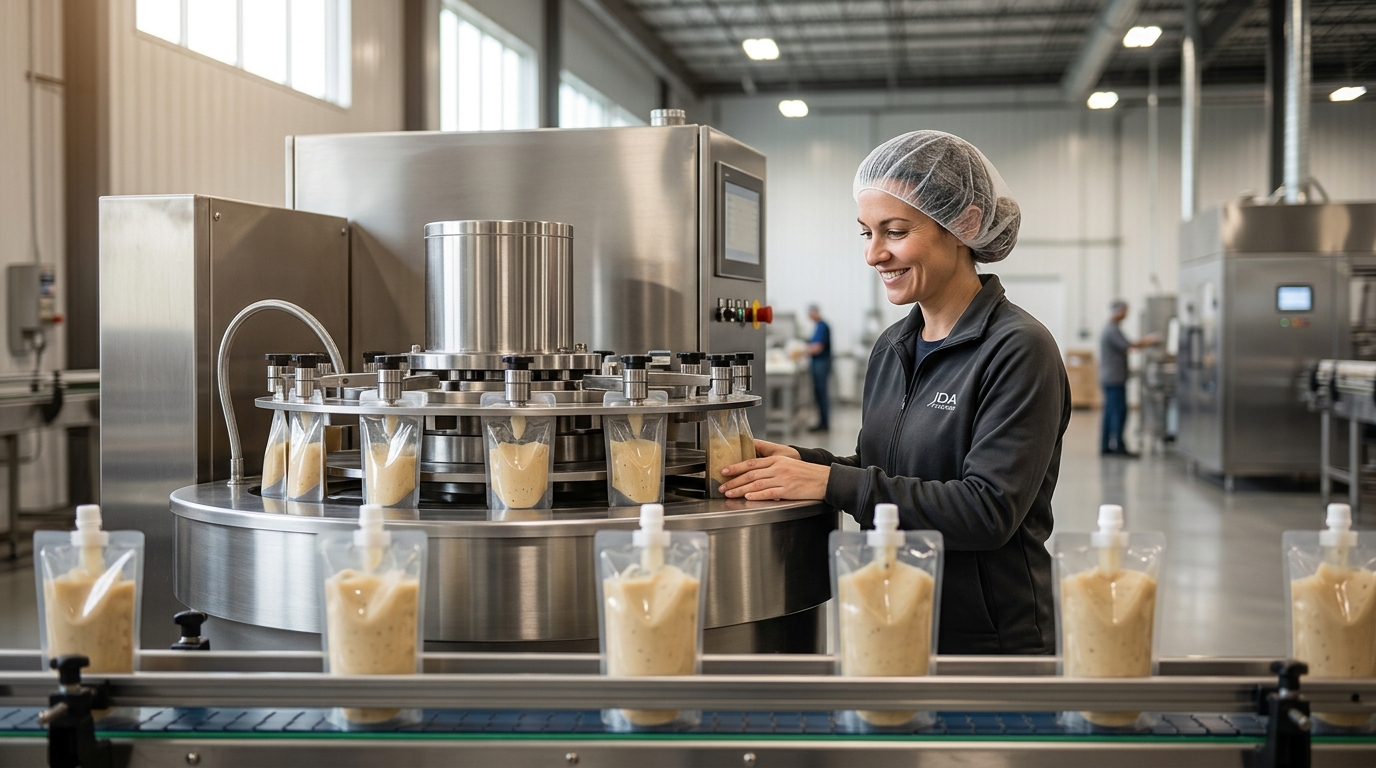
Standup doy pouches have become the packaging format of choice across food, beverage, pet care, and household product industries. Their shelf presence, resealability, and lightweight profile make them a favorite with consumers and retailers alike. But filling premade standup pouches at production speed demands the right automatic filling machine. A doy pouch filling machine is a piece of automated equipment designed to pick, open, fill, and seal premade standup pouches in one continuous process. In this guide, we break down the machine types, key features, and selection criteria so you can invest with confidence.
What Is a Standup Doy Pouch?
A standup doy pouch is a flexible package with a bottom gusset that allows it to stand upright on a shelf. The format was invented by French engineer Louis Doyen in the 1960s and has since become one of the fastest-growing packaging styles worldwide. According to Smithers market research, the global flexible packaging market is projected to exceed $300 billion by 2028, with standup pouches driving a significant share of that growth.
Doy pouches come in several variants: flat-bottom, side-gusseted, zippered, and spouted. Each variant requires slightly different handling at the filling station, which is why machine compatibility matters.
Types of Automatic Filling Machines for Doy Pouches
There are two primary categories of machines used to fill premade standup doy pouches: rotary premade pouch machines and inline (linear) premade pouch machines.
Rotary Premade Pouch Machines
A rotary premade pouch machine is an automatic system that uses a carousel with multiple stations to pick, open, fill, and seal pouches in a circular motion. These machines typically feature 6 to 10 stations and can reach speeds of 40 to 60 pouches per minute. They are ideal for medium to high production volumes and handle doy, SUP, SURP, and zippered bags.
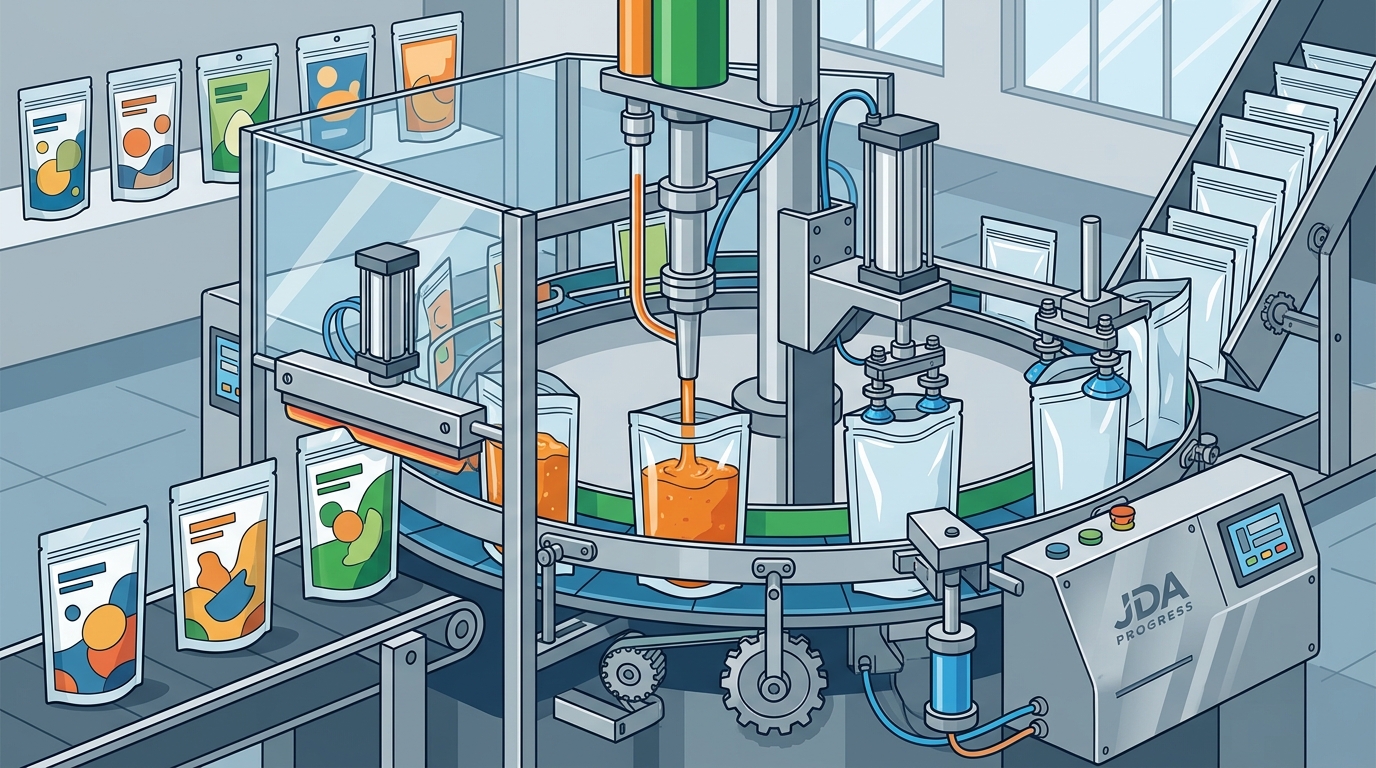
Inline (Linear) Premade Pouch Machines
An inline premade pouch machine processes pouches along a straight path rather than a carousel. This design offers excellent operator visibility and easier maintenance. Linear machines typically run at 10 to 40 pouches per minute and suit small to medium production lines.
VFFS Machines (Alternative Approach)
While not designed for premade pouches, vertical form fill seal (VFFS) machines form bags from a roll of film, fill them, and seal them in one motion. VFFS is better suited when you do not need a premade pouch but want to create bags on the fly.
Key Features to Look For
Not all premade pouch filling machines are created equal. Here are the features that separate a reliable machine from a headache on the production floor.
Pouch Handling and Opening
Look for vacuum-assisted pouch opening with no-pouch, no-fill sensors. These sensors prevent product waste by stopping the fill cycle if a pouch is missing or misaligned. High-quality machines also include automatic zipper opening devices for resealable pouches.
Seal Integrity
Heat-seal bars should deliver consistent pressure and temperature across the entire seal width. Poor seals lead to leaks, returns, and lost revenue. Many machines offer both top-seal and zipper-close stations in a single cycle.
Changeover Speed
If you run multiple pouch sizes, tool-free changeover is essential. The best machines allow bag width and length adjustments in under 15 minutes with minimal part swaps.
Filling Methods Compared
The filling method you pair with your premade pouch machine depends entirely on your product type. Below is a comparison of common methods.
| Filling Method | Best For | Accuracy | Speed |
|---|---|---|---|
| Multihead Weigher | Granules, snacks, nuts, candy | ±0.5 to 1.0 g | High (up to 60 bags/min) |
| Auger Filler | Powders, spices, flour, supplements | ±1% | Medium (15 to 40 bags/min) |
| Volumetric Cup | Free-flowing granules, seeds | ±2% | Medium |
| Piston Filler | Liquids, creams, sauces, pastes | ±0.5% | Medium to High |
| Pump Filler | Thin to medium viscosity liquids | ±1% | Medium to High |
For granular products like snacks or pet food, a multihead weigher paired with a premade pouch bagger delivers the best combination of speed and accuracy. For powders, an automatic auger filler is the standard choice. Liquid products benefit from piston or pump filling machines that handle viscous and thin formulations alike.
How to Choose the Right Machine for Your Product
Selecting the best automatic filling machine for your standup doy pouches comes down to four factors: product type, pouch size, production speed, and budget.
Product type determines the filling mechanism. Dry, free-flowing goods need a weigher or volumetric cup. Sticky or viscous products need a piston or pump. Powders need an auger with dust containment.
Pouch size affects machine selection because not every machine handles the full range. Common doy pouch sizes run from 100 mL to 5 kg. Make sure the machine accommodates your smallest and largest SKU.
Production speed targets should align with your throughput goals. A startup running 500 pouches per hour has very different needs than a co-packer filling 3,000 per hour.
Budget is always a factor, but the cheapest machine often costs more over time in downtime and maintenance. Look for manufacturers that offer a warranty, on-site training, and responsive parts support.
JDA Progress Premade Pouch Baggers
JDA Progress Industries, a Canadian packaging equipment manufacturer with over 35 years of experience, offers a dedicated line of premade pouch baggers under the Redeepac 430 series. These machines are purpose-built to pick, open, fill, and seal premade standup doy pouches with high precision.
The Redeepac 430 is available in three configurations: a powder version with integrated auger filling, a liquids version with piston or pump filling, and a scale version for weigh-fill applications. Each model handles doy pouches, flat pouches, and zippered bags.
All JDA machines come with a 1-year warranty on parts and equipment, and the company maintains in-stock packaging equipment for fast delivery. You can visit the JDA Progress showroom in Vaughan, Ontario to see live demos before purchasing. For downstream pouch handling, JDA also offers a finished bag and pouch incline conveyor and a tabletop pouch labeler to complete your packaging line.
Key Takeaways
- A premade pouch filling machine is the most efficient way to automate standup doy pouch packaging at scale.
- Rotary machines offer higher speeds (up to 60 bags/min), while inline machines provide better visibility and easier maintenance.
- Match your filling method to your product: multihead weighers for granules, auger fillers for powders, piston fillers for liquids.
- No-pouch, no-fill sensors and automatic zipper openers are essential features for reliable operation.
- JDA Progress offers the Redeepac 430 premade pouch bagger in powder, liquid, and scale configurations.
- Always request a live demo and confirm your pouch size range before committing to a machine purchase.
- Factor in warranty, parts availability, and after-sales support when comparing manufacturers.
Frequently Asked Questions
What is a doy pouch filling machine?
A doy pouch filling machine is an automatic packaging system that picks premade standup doy pouches from a magazine, opens them, fills them with product, and seals them. It eliminates manual labor and ensures consistent fill weights and seal integrity.
Can I fill both liquids and dry products in doy pouches?
Yes. The machine frame handles the pouch, and the filling system is interchangeable. Liquid products typically use a piston or pump filler, while dry products use a multihead weigher or auger filler. Some manufacturers, like JDA Progress, offer separate machine configurations optimized for each product type.
How fast can a premade pouch filling machine run?
Speeds vary by machine design. Rotary machines can reach 40 to 60 pouches per minute, while inline machines typically run 10 to 40 pouches per minute. Actual speed depends on pouch size, product characteristics, and filling method.
What pouch styles work with premade pouch filling machines?
Most machines handle standup pouches (SUP), doy packs, flat pouches, side-gusseted bags, quad-seal bags, and zippered pouches. Always confirm compatibility with your specific pouch dimensions and material.
How do I prevent product waste during filling?
Look for machines equipped with no-pouch, no-fill sensors. These sensors detect whether a pouch is properly positioned and open before dispensing product. This prevents spillage and reduces material loss significantly.
What is the difference between a VFFS machine and a premade pouch bagger?
A VFFS (vertical form fill seal) machine forms bags from a roll of film during the filling process. A premade pouch bagger uses bags that have already been manufactured. Premade pouches offer higher-quality graphics and more complex pouch shapes like standup doy packs.
How much does a premade doy pouch filling machine cost?
Pricing depends on speed, automation level, and filling system. Entry-level inline machines may start around $20,000 to $40,000, while high-speed rotary systems can exceed $100,000. Contact the manufacturer directly for accurate quotes based on your application.
Where can I see a doy pouch filling machine in action?
JDA Progress maintains a showroom in Vaughan, Ontario, Canada, where you can see premade pouch baggers and other packaging equipment running live demos. You can request a quote or demo directly on their website.
Ready to Automate Your Doy Pouch Packaging?
Finding the right automatic filling machine for your standup doy pouches does not have to be complicated. JDA Progress engineers are ready to walk you through the options, run your product on a demo machine, and help you build a complete pouch packaging line. Request a free quote today and take the first step toward faster, more consistent production.