Where to Start When Looking for a Filling Machine for Your Product
Choosing the right filling machine is one of the most critical capital expenditures a production manager can make. According to industry data, automated filling systems can reduce labor costs by up to 40% while increasing throughput consistency. This guide walks you through the essential steps to select the perfect equipment for your specific product and volume needs.
Understand Your Product Characteristics
The first step in your search is a rigorous analysis of the product you intend to fill. Filling machines are not one-size-fits-all. The physical properties of your material dictate the mechanical approach required for accurate dispensing.
Viscosity and Flow Dynamics
Viscosity is the measure of a fluid's resistance to flow. Low-viscosity liquids, such as water, juices, or thin solvents, flow easily and require machines designed to prevent dripping and foaming. Piston fillers or gravity-fed systems often work well here. High-viscosity products, like honey, creams, or heavy pastes, require positive displacement pumps or auger fillers to push the material through the nozzle.
If your product is non-Newtonian, meaning its viscosity changes under stress (like ketchup or toothpaste), you need a machine with variable speed controls to maintain consistency during the fill cycle. JDA Progress offers a range of fillers specifically engineered to handle these diverse rheological profiles.
Product State: Liquid, Powder, or Granular
Are you filling a liquid, a powder, or a granular solid? This distinction is fundamental. Liquid fillers use pumps or pistons. Powder fillers typically use augers (screws) to meter out precise amounts of dry product. Granular products may require volumetric cup fillers or weigh fillers. Understanding your product state eliminates half the market options immediately.
Determine Your Volume and Speed Requirements
Your production volume dictates the scale of machinery you need. A machine that is too slow becomes a bottleneck. A machine that is too fast wastes capital and floor space.
Small Batch vs. High Speed
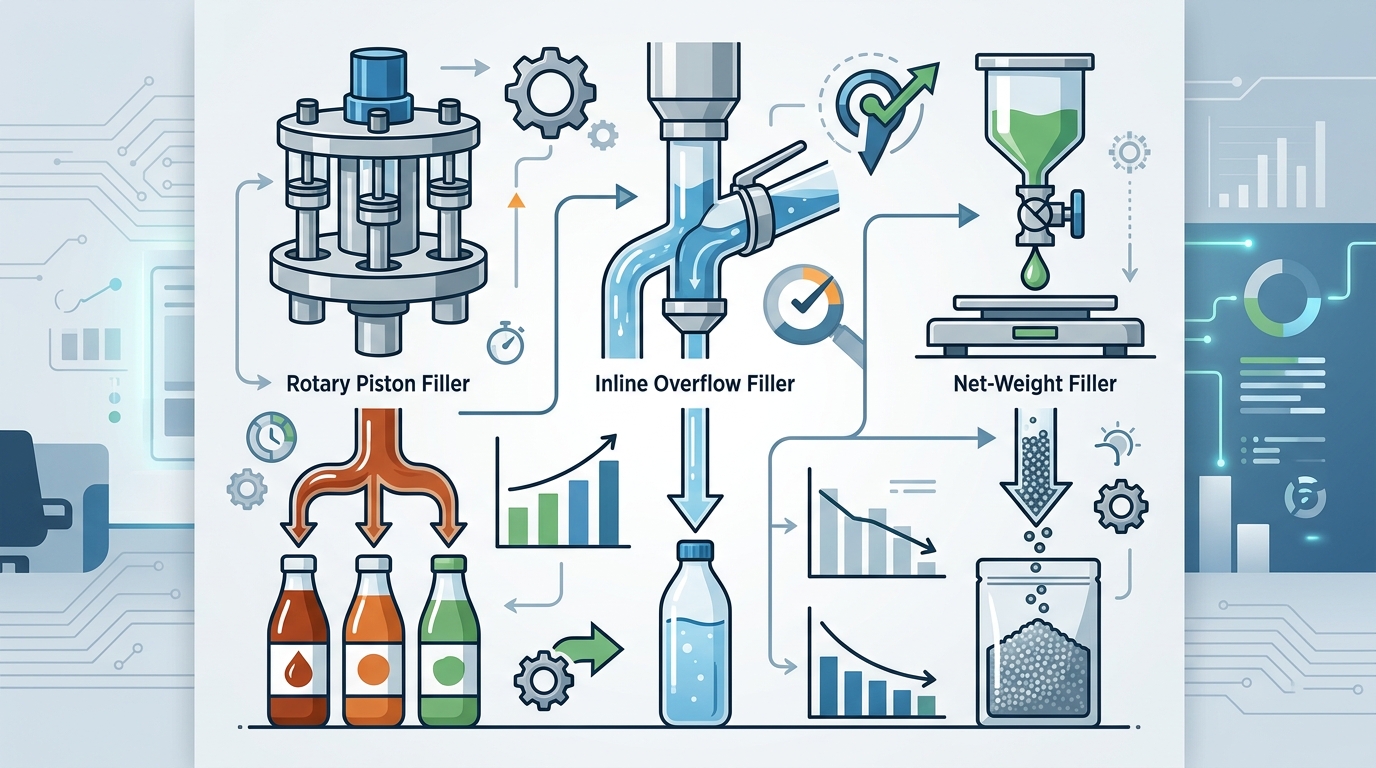
For small batch production or startups, a semi-automatic or standalone liquid filler might be sufficient. These units allow for manual bottle placement and offer flexibility. However, if you are running high-speed lines with thousands of units per hour, you need a fully automatic inline filling system. These systems integrate seamlessly with conveyors and capping machines to create a continuous production flow.
Future-Proofing Your Capacity
Do not just plan for today's volume. Plan for next year's growth. If you anticipate a 50% increase in demand within two years, choose a machine with a higher maximum speed rating than you currently need. This prevents the need for a premature replacement and ensures your packaging line can scale with your business.
Choose the Right Filling Technology
Once you know your product and volume, you must select the specific filling technology. Each method has distinct advantages and limitations.
Piston Fillers
Piston fillers are the workhorses of the industry. They use a cylinder and piston to draw up and push out a precise volume of product. They are excellent for viscous liquids like lotions, sauces, and adhesives. They offer high accuracy and are relatively easy to clean. For products requiring precise dosing, piston fillers are often the default choice.
Auger Fillers
Auger fillers use a rotating screw to dispense powder or granular products. They are highly accurate for free-flowing and non-free-flowing powders. The key advantage is the ability to adjust the fill volume by changing the screw speed or rotation count. This makes them ideal for spices, protein powders, and chemical granules.
Gravity and Pressure Fillers
Gravity fillers rely on the weight of the liquid to fill the container. They are simple, cost-effective, and great for low-viscosity liquids. Pressure fillers use air pressure to push product into the container, which is useful for foaming products or those that need to be filled under pressure to prevent oxidation.
Evaluate Material Compatibility and Hygiene
Your filling machine must be constructed from materials that will not react with your product. Stainless steel is the industry standard for hygiene and corrosion resistance. Ensure the machine's wetted parts are made of food-grade or pharmaceutical-grade stainless steel if you are in the food and beverage or cosmetics industries.
Clean-in-Place (CIP) Systems
If you switch products frequently, consider a machine with Clean-in-Place (CIP) capabilities. CIP systems allow you to clean the internal components without disassembling the machine, reducing downtime and labor costs. This is critical for industries with strict hygiene regulations.
Regulatory Compliance
Ensure the machine meets relevant safety and hygiene standards, such as FDA or EU regulations. This includes proper electrical enclosures, emergency stop buttons, and sanitary design principles that prevent bacterial buildup.
Consider Flexibility and Changeover Speed
In modern manufacturing, product variety is common. You might run multiple SKUs on the same line. Therefore, the ease of changeover is a vital factor.
Quick-Change Parts
Look for machines with quick-change parts. These allow operators to swap nozzles, bottles, or augers in minutes rather than hours. This minimizes production downtime when switching between product lines. JDA Progress designs its equipment with serviceability in mind, ensuring that maintenance and changeovers are straightforward.
Adjustable Parameters
The machine should have intuitive controls to adjust fill volume, speed, and other parameters. Touchscreen interfaces with recipe storage are highly beneficial. They allow you to save settings for different products and recall them instantly, reducing human error.
Assess Support, Warranty, and Service
The best machine is useless if you cannot get it fixed when it breaks. The manufacturer's support network is as important as the hardware itself.
Warranty and Spare Parts
Check the warranty terms. A standard one-year warranty is common, but some manufacturers offer extended options. More importantly, check the availability of spare parts. JDA Progress maintains a robust inventory of in-stock packaging equipment and parts for fast delivery, ensuring minimal downtime for your operations.
Technical Support and Training
Does the manufacturer offer installation support and operator training? Look for companies that provide comprehensive training programs. This ensures your team can operate the machine efficiently and troubleshoot minor issues independently. JDA Progress offers demo centre visits where you can see their equipment in action and speak directly with their engineers.
Local vs. Global Support
If you are in North America, a manufacturer with a local presence can provide faster on-site support. JDA Progress is a Canadian company with a head office in Vaughan, Ontario, providing reliable support for customers across the region.
Key Takeaways
- Product Analysis: Viscosity and state (liquid, powder, granular) are the primary drivers for selecting the correct filling technology.
- Volume Planning: Choose a machine that meets current needs but has the capacity for future growth to avoid premature obsolescence.
- Technology Match: Piston fillers for viscous liquids, auger fillers for powders, and gravity fillers for thin liquids are standard industry matches.
- Hygiene Standards: Ensure wetted parts are food-grade stainless steel and consider CIP systems for frequent product changes.
- Changeover Speed: Quick-change parts and recipe storage reduce downtime and increase operational flexibility.
- Support Network: Prioritize manufacturers with strong warranty terms, in-stock spare parts, and local technical support.
- Demo Verification: Always test your specific product with the manufacturer before purchasing to verify performance and accuracy.
Frequently Asked Questions
How do I choose between a piston filler and an auger filler?
Choose a piston filler for liquids and pastes. Choose an auger filler for powders and granular solids. The physical state of your product is the deciding factor.
What is the typical lead time for a custom filling machine?
Lead times vary by manufacturer and complexity. Standard machines may ship in weeks, while custom configurations can take several months. JDA Progress offers in-stock options for faster deployment.
Do I need a fully automatic machine or can I start with semi-automatic?
Semi-automatic machines are cost-effective for low volumes and startups. Fully automatic machines are necessary for high-speed, high-volume production. Consider your current and future volume when making this decision.
How important is the manufacturer's service support?
Extremely important. Downtime costs money. A manufacturer with a strong service network, in-stock parts, and responsive technical support ensures your production line stays running.
Can I test my product before buying?
Yes, many reputable manufacturers offer demo centers. JDA Progress invites customers to visit their Vaughan showroom to test their products on their equipment.
What maintenance does a filling machine require?
Regular maintenance includes cleaning, lubrication, and inspection of wear parts like seals and gaskets. Following the manufacturer's maintenance schedule is crucial for longevity.
Are filling machines compatible with different bottle sizes?
Most machines are adjustable for different bottle sizes. Look for quick-change parts to facilitate easy adjustments between different container formats.
Ready to Optimize Your Packaging Line?
Choosing the right filling machine is a strategic decision that impacts your efficiency, quality, and bottom line. By understanding your product, volume needs, and the importance of support, you can make an informed choice. JDA Progress offers a comprehensive range of fillers, labelers, and cappers to meet your needs. Visit our demo centre or contact us today to discuss your specific requirements and get a personalized quote.