Where to Start When Looking for a Filling Machine for Your Product
Choosing the right filling machine is the single most critical decision in scaling your production line. According to recent industry data, automated filling systems can increase throughput by up to 400% compared to manual methods while reducing product waste by nearly 15%. This statistic highlights why starting with the right partner matters. JDA Progress has spent over 35 years helping manufacturers navigate this exact challenge. We understand that the journey from concept to installation requires careful planning and expert guidance. (About JDA Progress Packaging)
Understand Your Product Characteristics
The first step in selecting a filling machine is a deep analysis of your product itself. Viscosity is the primary determinant of the machinery you will need. A thick, non-Newtonian fluid like peanut butter requires a completely different mechanism than a low-viscosity liquid like water or a fine powder like protein mix.
Viscosity is the measure of a fluid's resistance to flow. High-viscosity products require piston fillers or pump fillers that can exert significant pressure to move the material. Low-viscosity liquids often work well with gravity fillers or volumetric cup fillers. If your product contains particulates, such as fruit pieces in yogurt or herbs in salad dressing, you must look for fillers with wide bore tubes and gentle pumping actions to prevent damage to the ingredients.
At JDA Progress, we specialize in both liquid and powder filling solutions. Our fillers are engineered to handle a wide range of consistencies. Whether you are processing food, cosmetics, or chemicals, the physical properties of your product dictate the mechanical requirements of the machine. Do not guess this parameter. Bring samples of your product to your equipment provider for testing.
Define Your Production Speed Requirements
Speed is not just about how fast a machine runs, but how consistently it runs at that speed. Your current output needs and your projected growth over the next five to ten years will determine the scale of the equipment you purchase. A standalone filler might suffice for a small batch operation, but a fully integrated bottling line is necessary for high-volume manufacturing.
According to manufacturing efficiency reports, integrating filling machines with upstream and downstream equipment can reduce labor costs by up to 30%. This integration requires careful planning. You must consider the speed of your capping, labeling, and packaging units. If your filler outputs bottles faster than your labeler can process them, you create a bottleneck that negates the benefits of automation.
JDA Progress offers solutions that scale from single units to complete bottling lines. Our engineers help you map out your workflow to ensure that every component operates in harmony. This holistic approach prevents costly downtime and ensures that your investment supports your long-term business goals.
Choose the Right Filling Technology
Once you understand your product and your speed requirements, you must select the appropriate filling technology. The market offers several distinct types of fillers, each with specific advantages and limitations.
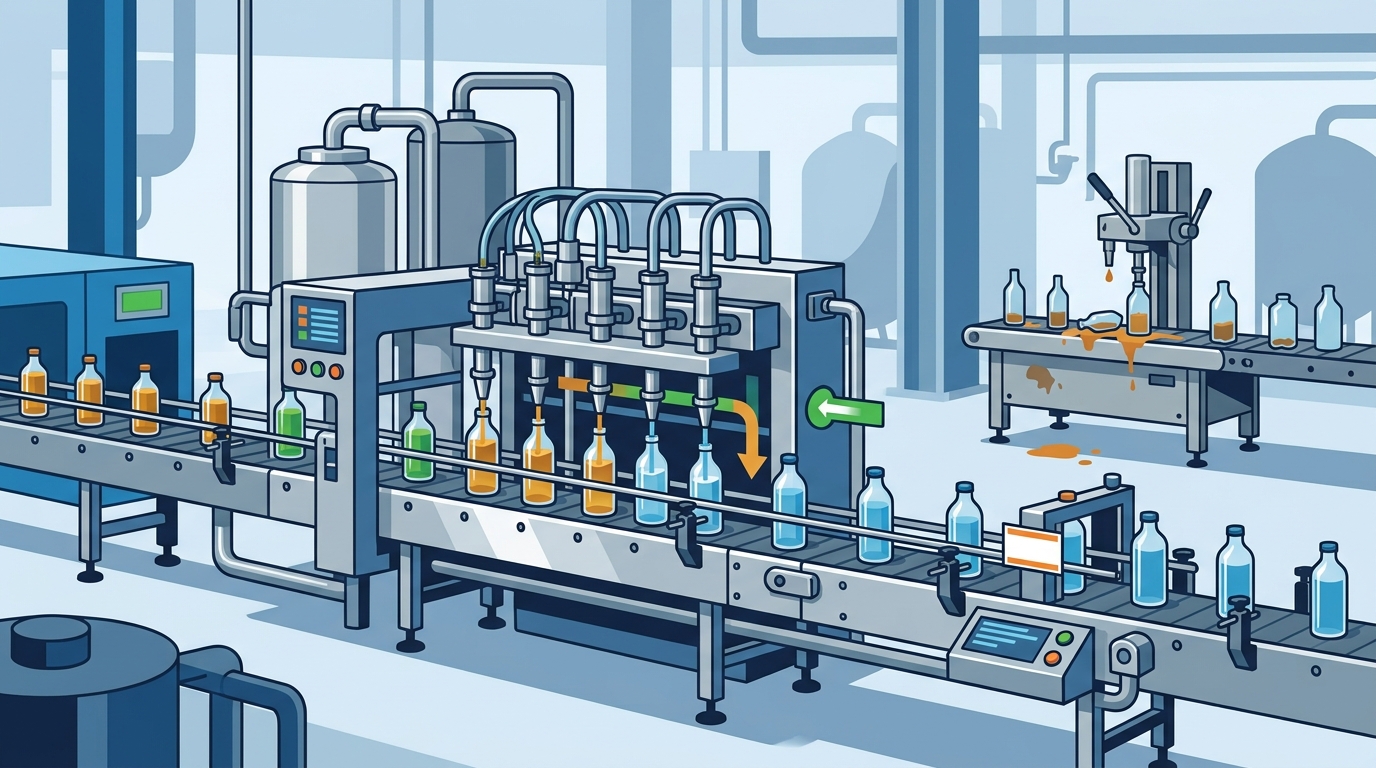
Piston fillers are ideal for viscous products. They use a piston and cylinder mechanism to draw a precise volume of product and then push it into the container. This method is highly accurate and versatile. Gravity fillers rely on the weight of the liquid to fill the container. They are excellent for low-viscosity liquids and are often faster than piston fillers. Volumetric cup fillers use a pre-measured cup to dispense product. They are simple, cost-effective, and great for free-flowing liquids.
For powders, gravimetric fillers are the gold standard. They weigh the product as it fills the container, ensuring extreme accuracy regardless of product density fluctuations. JDA Progress provides a comprehensive range of filling equipment tailored to these specific technologies. Our team can help you determine which technology aligns best with your product's unique characteristics.
Evaluate Container Materials and Compatibility
Your filling machine must be compatible with the containers you use. The material, shape, and size of your bottles or jars impact the filling process. Glass containers require gentle handling to prevent breakage. Plastic containers may deform under high pressure, requiring precise control of the filling force. Metal containers often require specialized capping mechanisms that work in tandem with the filler.
Additionally, consider the hygiene requirements of your industry. Food and beverage products require stainless steel construction that meets strict sanitary standards. Cosmetics and nutraceuticals may require materials that resist corrosion from active ingredients. JDA Progress builds its machines with high-quality stainless steel to ensure durability and compliance with industry regulations.
We also offer labeling machines that work seamlessly with our fillers. This compatibility ensures that your labeling process does not interfere with the filling operation. Proper integration of these systems is crucial for maintaining a smooth production flow.
Prioritize After-Sales Support and Warranty
Buying a filling machine is a significant investment. The longevity of that investment depends heavily on the support you receive after the purchase. A machine is only as good as the service that keeps it running. Look for a manufacturer that offers comprehensive warranty coverage and readily available spare parts.
JDA Progress provides a 1-year warranty on all machines and parts. This commitment reflects our confidence in our engineering. More importantly, we maintain a large inventory of in-stock parts to minimize downtime. When a machine breaks down, every minute of downtime costs you money. Having immediate access to replacement components is essential for maintaining production schedules.
We also offer extensive training and service support. Our technicians are available to assist with installation, programming, and troubleshooting. This level of support ensures that your team can operate the equipment efficiently and safely. Do not compromise on support for a lower initial price. The total cost of ownership includes maintenance and repair costs over the life of the machine.
Visit a Demo Center for Hands-On Testing
Theoretical specifications do not tell the whole story. Seeing a machine run with your actual product is the best way to evaluate its performance. A demo center allows you to test your product under real-world conditions. You can observe the fill accuracy, speed, and ease of cleaning firsthand.
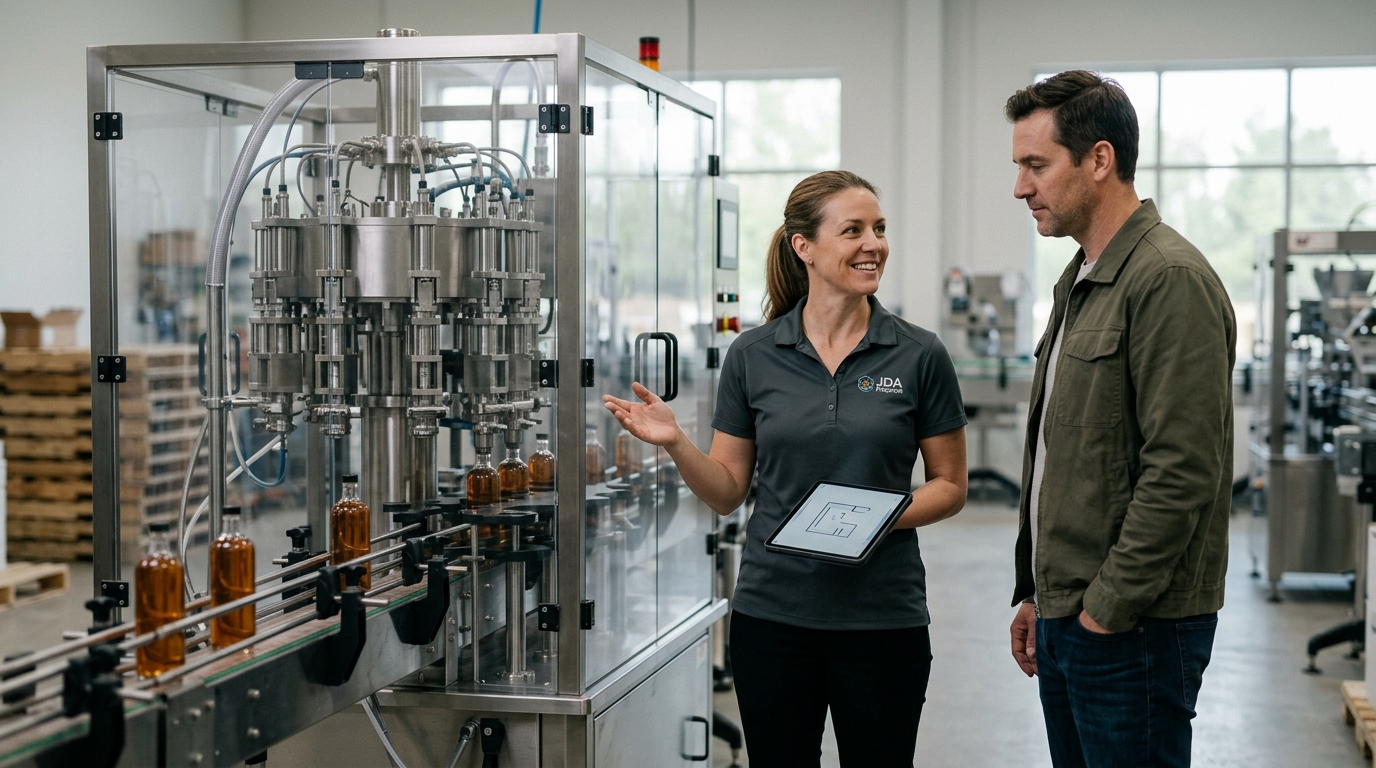
JDA Progress maintains a permanent showroom and demo center in Vaughan, Ontario. This facility features dozens of packaging machines on display. You can bring your product and your containers to our site for a personalized demonstration. Our engineers will walk you through the process, answering your questions and addressing your concerns.
This hands-on experience is invaluable. It allows you to verify that the machine meets your expectations before you commit to a purchase. It also helps you understand the operational nuances of the equipment. Many customers report that seeing the machine in action gave them the confidence to move forward with their investment.
Calculate Long-Term ROI and Maintenance
Finally, calculate the return on investment (ROI) for your filling machine. Consider the cost of the equipment, installation, training, and ongoing maintenance. Compare these costs against the savings from reduced labor, increased speed, and decreased product waste.
A high-quality machine from a reputable manufacturer like JDA Progress may have a higher upfront cost than cheaper alternatives. However, the long-term savings from reliability, efficiency, and support often outweigh the initial difference. According to industry benchmarks, automated filling lines typically pay for themselves within 12 to 18 months through labor savings and increased production capacity.
Focus on the value the machine brings to your business. Does it improve product consistency? Does it allow you to take on larger orders? Does it reduce the risk of contamination? These factors contribute to your overall profitability. JDA Progress is committed to helping you maximize your ROI through efficient, high-quality packaging solutions.
Key Takeaways
- Viscosity Dictates Technology: High-viscosity products require piston or pump fillers, while low-viscosity liquids work well with gravity fillers.
- Integration is Critical: Ensure your filler speed matches your capping and labeling equipment to avoid bottlenecks.
- Support Matters: JDA Progress offers a 1-year warranty and in-stock spare parts to minimize downtime.
- Test Before You Buy: Visit our Vaughan demo center to test your product on our machines.
- Long-Term Value: Invest in quality machinery to achieve a faster ROI through increased efficiency and reduced waste.
- Industry Expertise: Over 35 years of experience in serving food, beverage, cosmetic, and chemical industries.
- Custom Solutions: We tailor our equipment to your specific product and container requirements.
Frequently Asked Questions
How do I choose between a piston filler and a gravity filler?
Choose a piston filler for viscous products like creams, sauces, and pastes. Choose a gravity filler for low-viscosity liquids like water, juices, and thin chemicals that flow easily.
What industries does JDA Progress serve?
JDA Progress serves the food and beverage, cosmetics, chemicals, and nutraceutical industries with tailored packaging solutions.
Do you offer training for your filling machines?
Yes, we provide comprehensive training for your operators to ensure safe and efficient use of the equipment.
How long is the warranty on your machines?
We provide a 1-year warranty on all machines and parts, backed by our extensive service network.
Can I test my product before buying?
Absolutely. We invite you to visit our demo center in Vaughan, Ontario, to test your product on our equipment.
What types of containers can your fillers handle?
Our fillers are compatible with a wide range of containers, including plastic, glass, and metal bottles and jars.
How can I request a quote?
You can request a quote by contacting our team directly through our website or by calling our sales department.
Ready to Optimize Your Packaging Line?
Starting your search for a filling machine does not have to be overwhelming. By understanding your product, defining your needs, and partnering with an experienced manufacturer, you can make a confident decision. JDA Progress is here to guide you every step of the way. From initial consultation to installation and ongoing support, we are committed to your success.
Contact us today to schedule a demo or request a quote. Let us help you find the perfect filling solution for your business. Visit our contact page to get started.