
Best Fully Automatic Filling Solutions for Sauces, Condiments, and Liquids
The global market for automated packaging machinery is expanding rapidly as manufacturers seek to reduce labor costs and increase throughput. According to recent industry analysis, the automated packaging equipment market is projected to grow significantly through 2030, driven by the demand for high-speed, precise filling systems in the food and beverage sector. For businesses producing sauces, condiments, and liquid products, selecting the right filling technology is not just an operational choice but a critical financial decision that impacts margin, consistency, and scalability.
Understanding Filling Technologies
Before investing in capital equipment, it is essential to define the mechanical principles behind each filling method. A filler is a machine designed to dispense a specific quantity of product into a container with high precision and speed. The complexity of your product dictates the machinery required. Sauces and condiments often vary in viscosity, meaning a machine that works perfectly for water may fail completely with ketchup or mustard.
JDA Progress has spent over 35 years refining these technologies. Our head office in Vaughan, Ontario, houses a permanent showroom where engineers demonstrate how different machines handle various product consistencies. Understanding the difference between volumetric and gravimetric filling is the first step in optimizing your production line.
Piston Fillers for Viscous Products
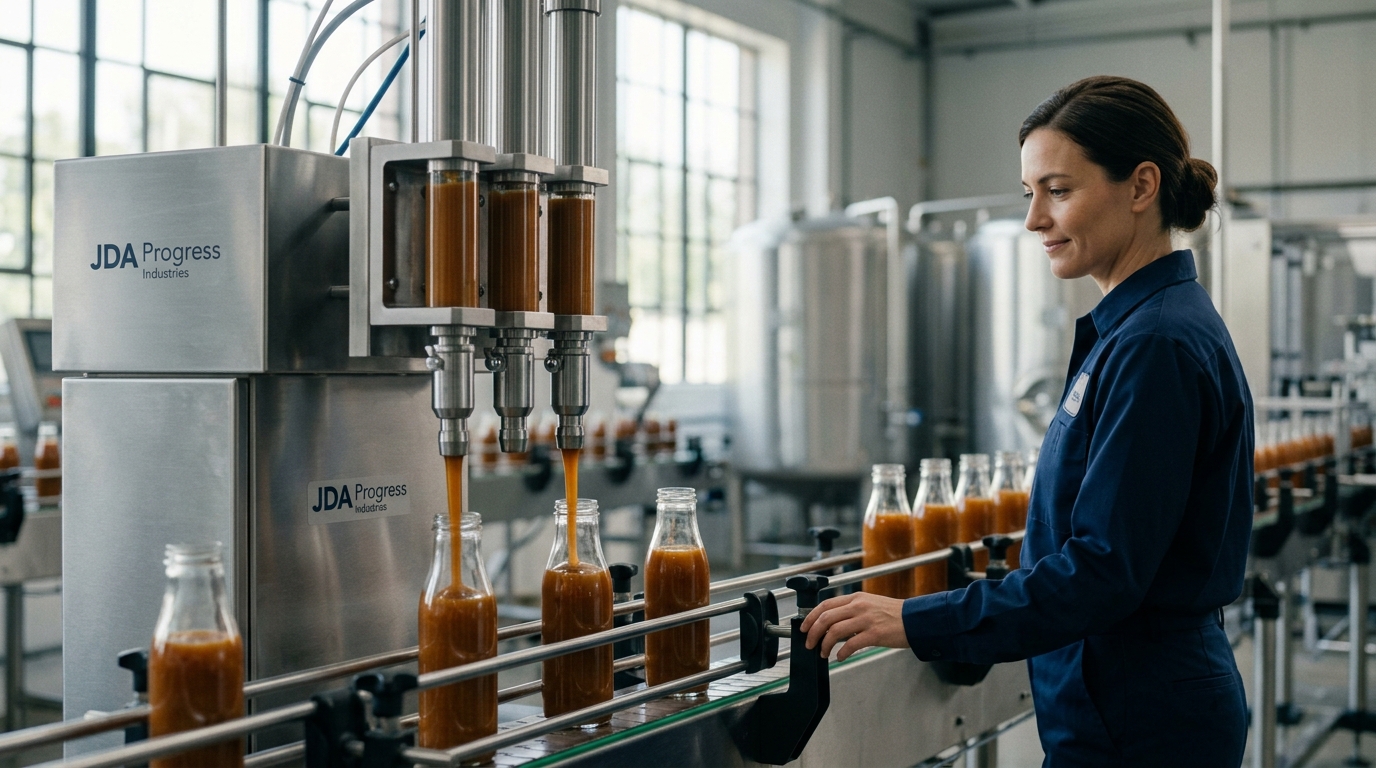
For thick sauces, dressings, and condiments, the piston filler is the industry standard. This machine uses a cylinder and piston mechanism to draw up a precise volume of product and then push it into the container. The beauty of this system lies in its ability to handle high-viscosity materials without losing accuracy.
The piston filler is ideal for products like tomato paste, hot sauce, and heavy creams. Because the product is forced through the nozzle, it maintains its shape and does not drip excessively. JDA Progress offers advanced inline piston bottle fillers, such as the Model PF-14, which are engineered for continuous operation. These machines are particularly effective for contract manufacturers who switch between different sauce types frequently, as they allow for quick changeovers and easy cleaning.
When evaluating a piston filler, consider the motor type and the control system. Modern units use Programmable Logic Controllers (PLCs) to adjust fill volumes digitally, eliminating the need for manual mechanical adjustments. This reduces downtime and ensures that every bottle contains exactly the amount specified by your label claims.
Gravity and Pressure Fillers
Not all liquids are thick. For lower viscosity products like vinegar, oil, or thin marinades, gravity and pressure fillers are often more efficient. A gravity filler relies on the natural flow of liquid from a hopper into the container. This method is simple, cost-effective, and excellent for high-speed operations where the product flows freely.
However, gravity filling can struggle with foaming products. If your sauce or condiment is prone to aeration, a pressure filler may be necessary. This system uses compressed air to push the product from the tank into the bottle, allowing for faster fill rates and better control over the liquid level. Pressure fillers are also preferred for carbonated liquids or products that require a specific headspace to prevent oxidation.
JDA Progress engineers can help you determine whether gravity or pressure is the right fit for your specific liquid. During a demo at our Vaughan facility, you can see how these machines handle different flow rates and product characteristics. The choice between these two methods often comes down to your production speed requirements and the physical properties of your liquid.
Weigh Fillers for Accuracy
In industries where product cost is high or regulatory compliance is strict, volumetric filling may not be sufficient. This is where the weigh filler shines. Unlike piston or gravity fillers that measure volume, a weigh filler measures the actual weight of the product in the container. This ensures that you never underfill a customer, which protects your brand reputation and avoids legal issues.
Weigh fillers are particularly useful for sauces that may have slight variations in density due to temperature or ingredient batches. By measuring weight, you guarantee that every customer receives the exact same amount of product, regardless of viscosity fluctuations. JDA Progress offers scale-based filling solutions that integrate seamlessly with existing bottling lines. These systems are often used in the nutraceutical and chemical industries, but they are increasingly popular in premium food production.
The trade-off with weigh fillers is speed. They are generally slower than volumetric fillers because the machine must stop to weigh each container or group of containers. However, for high-value products, the accuracy and waste reduction often justify the lower throughput.
Comparing Equipment Options
Choosing the right filler requires balancing speed, accuracy, and product compatibility. The table below summarizes the key characteristics of the primary filling technologies available from JDA Progress.
| Filling Technology | Best For | Accuracy Type | Speed Potential | Key Benefit |
|---|---|---|---|---|
| Piston Filler | Thick sauces, condiments, pastes | Volumetric | High | Handles high viscosity without dripping |
| Gravity Filler | Thin liquids, oils, vinegars | Volumetric | Very High | Simple mechanics, low maintenance |
| Pressure Filler | Foaming liquids, carbonated items | Volumetric | High | Controls aeration and fill level |
| Weigh Filler | High-value products, strict compliance | Gravimetric | Medium | Guarantees exact weight per unit |
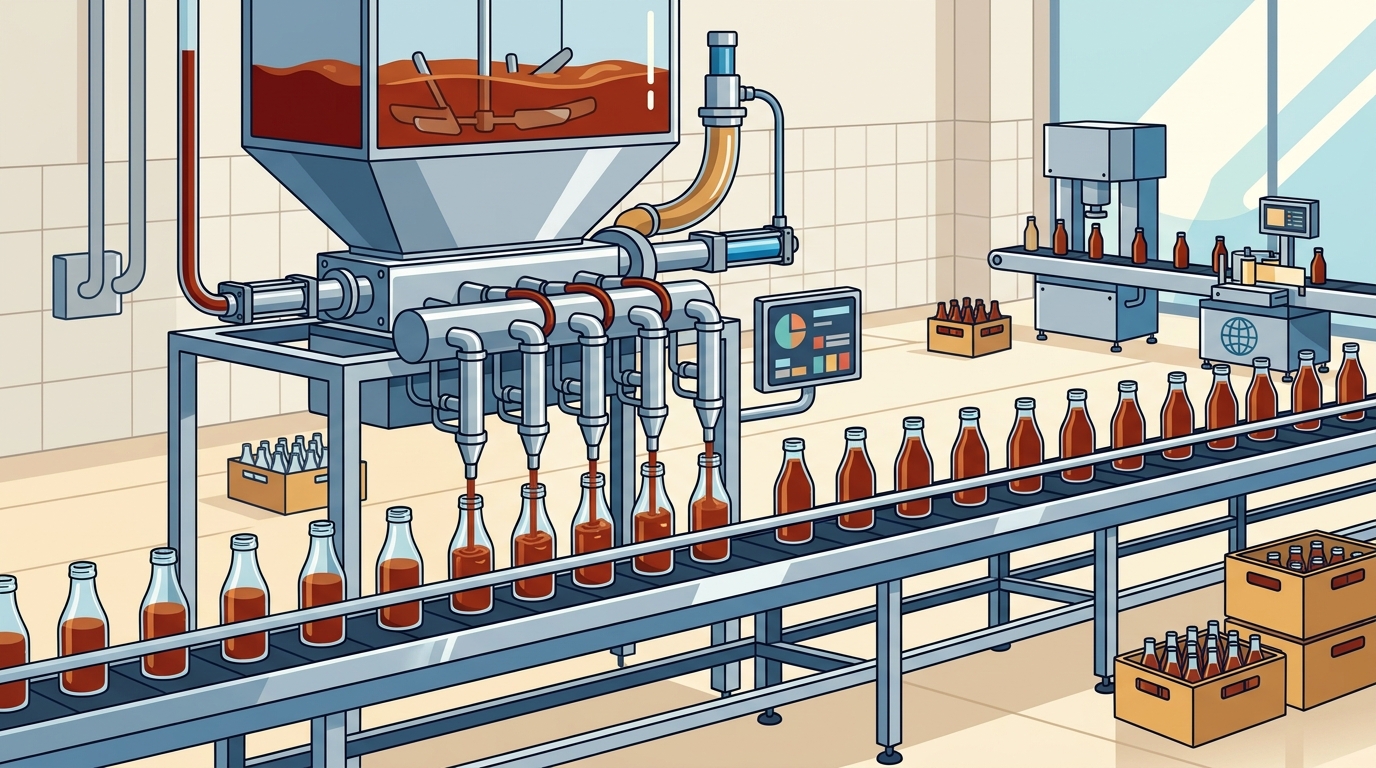
Each of these machines can be integrated into a complete bottling line. JDA Progress also offers bottling lines that combine filling, capping, and labeling into a single automated workflow. This integration reduces labor costs and minimizes the risk of product contamination during handling.
Key Takeaways
- Viscosity Matters: Thick sauces require piston fillers, while thin liquids can use gravity or pressure fillers.
- Accuracy vs. Speed: Weigh fillers offer superior accuracy but lower speed compared to volumetric methods.
- Industry Experience: JDA Progress has over 35 years of experience serving the food, beverage, and chemical industries.
- Local Support: With a showroom in Vaughan, Ontario, customers can test machines with their own products before buying.
- In-Stock Inventory: Most machines and spare parts are kept in stock to ensure fast delivery and minimal downtime.
- Warranty Coverage: All machines come with a 1-year warranty on parts and labor, providing peace of mind.
- Custom Solutions: Engineers can tailor equipment to specific container shapes and product characteristics.
Frequently Asked Questions
What is the difference between a piston filler and a weigh filler?
A piston filler measures the volume of liquid dispensed using a cylinder mechanism, while a weigh filler measures the actual weight of the product in the container. Piston fillers are generally faster, while weigh fillers offer higher accuracy for high-value products.
Can JDA Progress handle my specific sauce viscosity?
Yes. JDA Progress engineers specialize in handling a wide range of viscosities, from thin oils to thick pastes. We recommend bringing samples to our Vaughan showroom for a live demonstration.
How long does it take to receive a filling machine?
Because JDA Progress keeps most machines and spare parts in stock, delivery times are significantly faster than competitors. Specific lead times depend on the model and configuration, but many units ship within weeks.
Do you offer after-sales support and parts?
Absolutely. JDA Progress provides comprehensive after-sales support, including remote troubleshooting, on-site service, and a full inventory of replacement parts. Many customers have relied on JDA equipment for over 15 years.
Is it possible to integrate a filler with my existing bottling line?
Yes. JDA Progress designs equipment to integrate seamlessly with existing capping, labeling, and conveying systems. Our engineers will assess your current layout to ensure optimal workflow.
What industries does JDA Progress serve?
JDA Progress serves the food and beverage, cosmetics, chemicals, and nutraceutical industries. Our equipment is used by manufacturers worldwide, from small startups to large industrial facilities.
How do I request a demo?
You can request a demo by contacting our team directly. Our Vaughan showroom is open to the public, and our engineers will demonstrate the machine using your specific product to show you exactly how it performs.
Contact Us
Choosing the right filling solution is a critical step in scaling your business. Whether you need a standalone piston filler or a complete automated bottling line, JDA Progress has the expertise and inventory to meet your needs. Visit our Demo Centre to see our machines in action, or contact us today to request a personalized quote. Our team is ready to help you maximize efficiency and boost your ROI.