Where to Start When Looking for a Filling Machine for Your Product
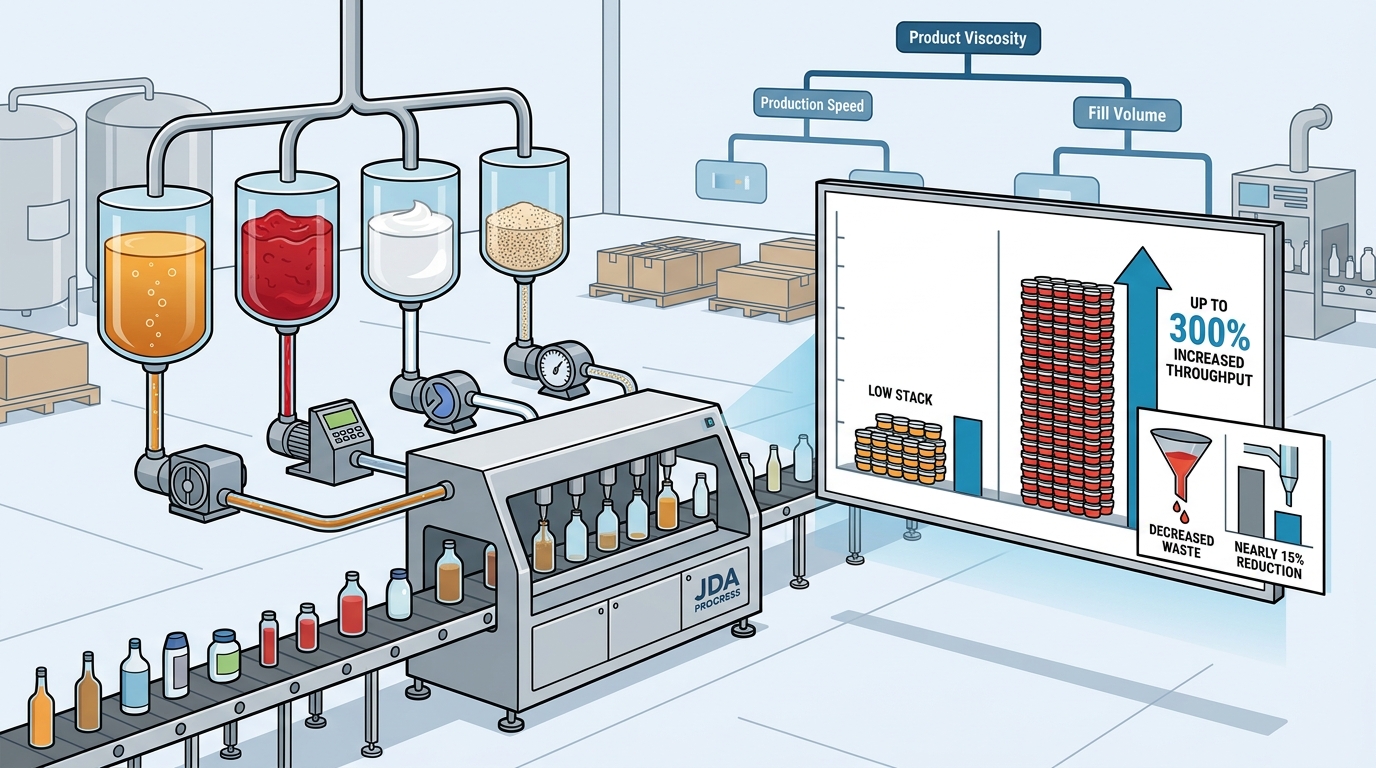
Choosing the right filling machine is the single most critical decision in scaling your production line. According to industry data, automated filling systems can increase throughput by up to 300% compared to manual methods while reducing product waste by nearly 15%. This statistic highlights why selecting the correct equipment is not just an operational upgrade but a fundamental financial lever for growth. The process requires a rigorous analysis of your product's physical properties, your current volume requirements, and your long-term scalability goals.
Understand Your Product Viscosity and Type
The first step in your search is a technical audit of the product you intend to package. Filling machines are not one-size-fits-all. They are engineered around the rheological properties of the material. Viscosity is the measure of a fluid's resistance to flow. This definition is the cornerstone of machinery selection. A machine designed for thin liquids will fail completely when attempting to handle thick pastes.
Liquid Fillers
Liquid fillers are designed for products with low to medium viscosity. These include water, juices, oils, and thin chemical solutions. The most common mechanism for these products is the piston filler. A piston filler uses a cylinder and piston to draw a specific volume of product and then push it into the container. This method is highly accurate and versatile. It handles everything from watery lotions to thick honey with equal precision. For high-speed lines, gravity fillers or vacuum fillers are often used for free-flowing liquids.
Powder and Paste Fillers
If your product is a powder, such as protein supplements or spices, you need a volumetric cup filler or an auger filler. An auger filler uses a rotating screw to dispense powder. The depth of the screw rotation determines the fill volume. This method is essential for products that are prone to clumping or require precise dosing. For thick pastes like peanut butter or adhesives, a piston filler is again the standard. However, the piston must be engineered with larger clearances to prevent product degradation or blockage.
Understanding your product's behavior under pressure and temperature is vital. If your product is sensitive to shear stress, such as certain cosmetics or food items, you must specify a gentle filling mechanism. JDA Progress offers specialized fillers that are tailored to handle these delicate materials without compromising quality.
Determine Fill Volume and Accuracy Needs
Accuracy is non-negotiable in regulated industries. Overfilling costs you money in product waste. Underfilling risks regulatory fines and customer dissatisfaction. The required accuracy depends on your product category and local regulations.
For pharmaceutical and nutraceutical products, accuracy requirements are extremely tight. A variance of even a few milliliters can be a compliance failure. Piston fillers typically offer accuracy within plus or minus 0.5% of the set volume. This level of precision is achieved through high-quality servo motors and precise mechanical tolerances. In contrast, general consumer goods may tolerate a slightly wider variance, allowing for faster, less expensive filling mechanisms.
You must also consider the range of fill volumes. If you plan to produce multiple SKUs with different bottle sizes, your machine must be adjustable. Quick changeover features are essential for minimizing downtime. Look for machines that allow for tool-less adjustments to the piston stroke or auger depth. This flexibility ensures that your production line can adapt to market demands without significant operational delays.
Evaluate Container Types and Materials
Your filling machine must interface seamlessly with your packaging format. The shape, material, and neck finish of your container dictate the capping and filling interface. Container geometry is the physical constraint that defines the filling head design. This definition explains why a machine optimized for round bottles may struggle with square or irregular containers.
Bottle and Jar Compatibility
Plastic, glass, and metal containers each present different challenges. Glass is fragile and requires gentle handling to prevent breakage. Plastic is lightweight but can deform under pressure, affecting fill accuracy. Metal containers are rigid but may require specific grounding to prevent static buildup during filling.
The neck finish of the container determines the type of capper you will need later in the line. If you are using screw caps, the filling nozzle must retract sufficiently to allow the capper to engage. If you are using snap caps or spray pumps, the filling mechanism must be positioned precisely to avoid contact with the dispensing mechanism. JDA Progress provides a range of labelers and cappers that are designed to work in tandem with their filling systems for a cohesive line.
Bagging Alternatives
Not all products are packaged in rigid containers. If your product is a powder or a granular solid, you might consider bagging. Vertical Form Fill Seal (VFFS) machines create the bag from a roll of film, fill it, and seal it in one continuous process. This is ideal for products like coffee, snacks, or hardware. Premade pouch baggers are another option for products that require a high-quality, printed package. These machines pick, open, and load pre-made bags. Both options offer flexibility in packaging design and can reduce material costs. Explore bagging solutions if your product format aligns with pouch packaging.
Assess Production Speed and Automation
Speed is a function of your current volume and your projected growth. A machine that is too slow will become a bottleneck. A machine that is too fast may be overkill and unnecessarily expensive. You must calculate your required bottles per minute (BPM) based on your peak production hours.
For low to medium volume production, a semi-automatic filler is a cost-effective entry point. The operator places the container under the nozzle, triggers the fill, and removes it. This method offers maximum flexibility and lower initial investment. However, it is labor-intensive and prone to human error.
For high-volume production, a fully automatic inline filler is necessary. These machines integrate with conveyors, cappers, and labelers to create a continuous flow. The speed of an automatic filler can range from 20 BPM to over 200 BPM, depending on the product and container type. The integration of these components reduces labor costs and increases overall line efficiency. JDA Progress designs bottling lines that are modular, allowing you to start with a core filling unit and add components as you grow.
Conveyor Integration
The conveyor system is the backbone of your automated line. It must be compatible with your container type and weight. Belt conveyors are standard for bottles and jars. Chain conveyors are used for heavier or irregular items. The conveyor must also include guides to keep containers aligned under the filling nozzles. Misalignment is a common cause of spillage and inaccurate fills. Ensure that your conveyor system has adjustable guides and speed controls to match the filling cycle.
Prioritize Support and Warranty
Industrial machinery is a long-term investment. The manufacturer's support network is as important as the machine itself. Downtime costs money. If a machine breaks down and you cannot get parts or technical support quickly, your production stops. Therefore, you must evaluate the manufacturer's service capabilities before purchasing.
Warranty Coverage
A standard warranty typically covers one year for parts and labor. This is a baseline expectation. However, the quality of the warranty terms varies by manufacturer. Look for clear definitions of what is covered and what is excluded. Pay attention to the response time for technical support. A manufacturer that offers remote diagnostics can often resolve software or configuration issues without a site visit.
Parts Availability
Wear parts, such as pistons, seals, and augers, will need replacement over time. The availability of these parts is critical. A manufacturer that keeps a robust inventory of spare parts ensures that you can minimize downtime. JDA Progress maintains a large inventory of in-stock packaging equipment and parts for fast delivery. This commitment to inventory reduces the risk of prolonged production halts due to part shortages.
Technical Expertise
The expertise of the engineering team is a key differentiator. A knowledgeable team can help you troubleshoot issues, optimize your line, and suggest upgrades. They should be able to provide training on operation and maintenance. This training empowers your staff to handle minor issues independently, further reducing downtime. The reviews from long-term clients highlight the value of this ongoing support. Clients frequently mention the professionalism and helpfulness of the service teams.
Schedule a Live Demonstration
Theoretical specifications do not tell the whole story. Seeing a machine run with your actual product is the only way to validate your choice. A live demonstration allows you to assess the machine's stability, noise level, and ease of use. It also provides an opportunity to ask specific questions about your unique product challenges.
Bring Your Products
When scheduling a demo, bring your actual product and your actual containers. This ensures that the demonstration reflects your real-world conditions. The manufacturer can then show you how the machine handles your specific viscosity, foam characteristics, and container geometry. This hands-on experience is invaluable for making an informed decision. JDA Progress invites customers to visit their test and demo centre in Vaughan, Ontario. This facility allows you to see dozens of machines in action and speak directly with engineers.
Factory Acceptance Test
Before the machine leaves the manufacturer's facility, a Factory Acceptance Test (FAT) should be conducted. This test verifies that the machine meets all the agreed-upon specifications. It includes running the machine with your product at full speed and checking for accuracy, stability, and safety features. A successful FAT gives you confidence that the machine is ready for installation at your site.
Key Takeaways
- Viscosity Dictates Mechanism: Low viscosity liquids require piston or gravity fillers, while powders require auger or volumetric cup fillers.
- Accuracy is Financial: Overfilling wastes product; underfilling risks compliance. Piston fillers offer high precision for regulated industries.
- Container Geometry Matters: The shape and material of your container determine the filling head and conveyor requirements.
- Scalability is Modular: Start with a core filling unit and add conveyors, cappers, and labelers as volume grows.
- Support is Critical: In-stock parts and responsive technical support minimize costly downtime.
- Demo Validates Choice: Always test your actual product on the machine before purchasing.
- Long-Term Partnership: Choose a manufacturer with a history of reliability and customer satisfaction.
Frequently Asked Questions
How do I choose between a piston filler and an auger filler?
Choose a piston filler for liquids, pastes, and creams. Choose an auger filler for powders and granular solids. The choice depends entirely on the physical state of your product.
What is the typical accuracy of a piston filler?
High-quality piston fillers typically offer accuracy within plus or minus 0.5% of the set volume. This level of precision is suitable for most consumer and industrial applications.
Can I upgrade my filling line in the future?
Yes, many modern filling machines are designed with modularity in mind. You can add conveyors, cappers, and labelers to your existing line as your production volume increases.
Why is a live demonstration important?
A live demonstration allows you to test your actual product and containers on the machine. This validates the machine's performance and helps identify any potential issues before purchase.
What should I look for in a manufacturer's warranty?
Look for a warranty that covers both parts and labor for at least one year. Also, check the manufacturer's reputation for responsive technical support and parts availability.
How does JDA Progress support its customers?
JDA Progress provides in-stock parts, responsive technical support, and a dedicated demo centre for testing. Their long-term client relationships highlight their commitment to after-sales service.
What industries does JDA Progress serve?
JDA Progress serves the food and beverage, cosmetics, chemicals, and nutraceutical industries. Their equipment is tailored to meet the specific needs of these sectors.
Ready to Optimize Your Production Line?
Selecting the right filling machine is a strategic decision that impacts your efficiency, quality, and bottom line. By understanding your product's properties, evaluating your volume needs, and prioritizing manufacturer support, you can make a confident choice. JDA Progress offers a comprehensive range of packaging solutions, from fillers to complete bottling lines. Visit our demo centre to see our equipment in action or contact us to discuss your specific requirements. Let our experts help you build a packaging line that drives your business forward.