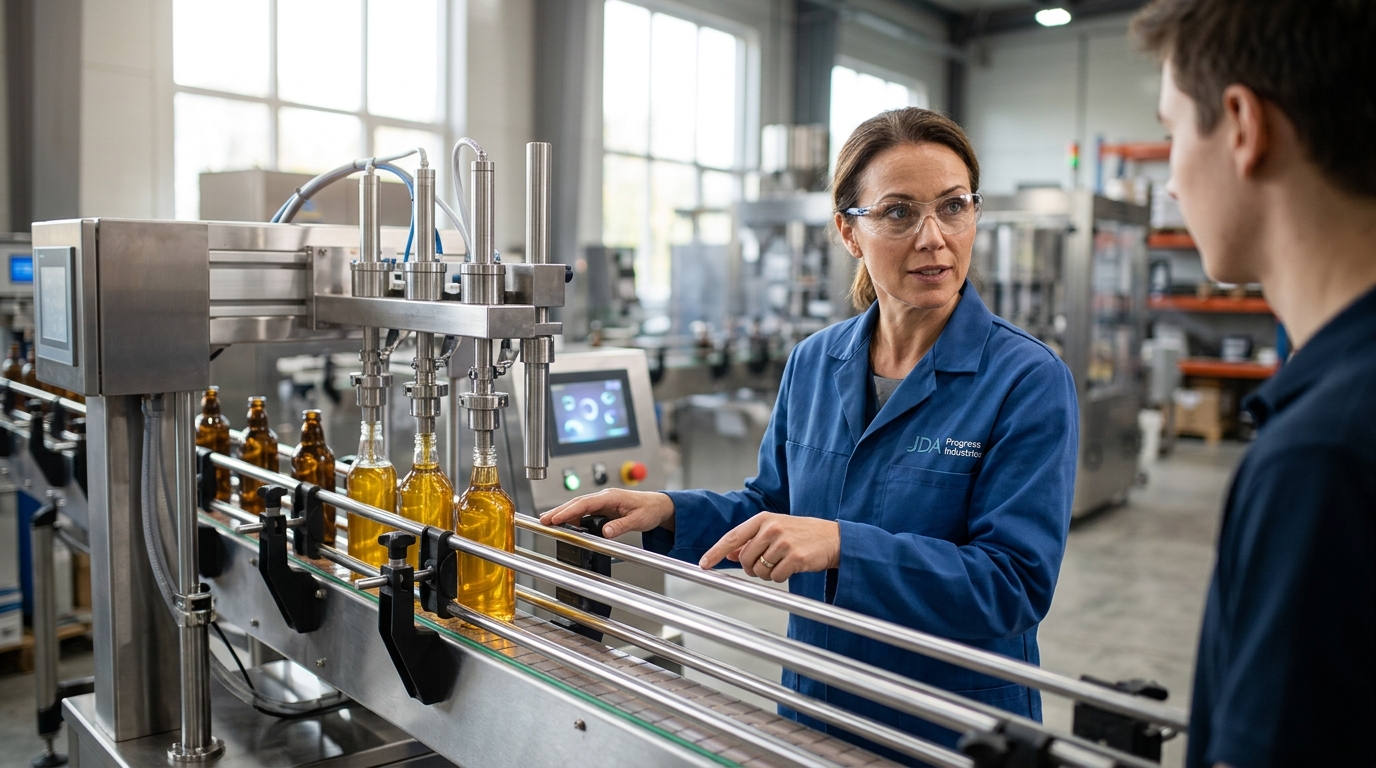
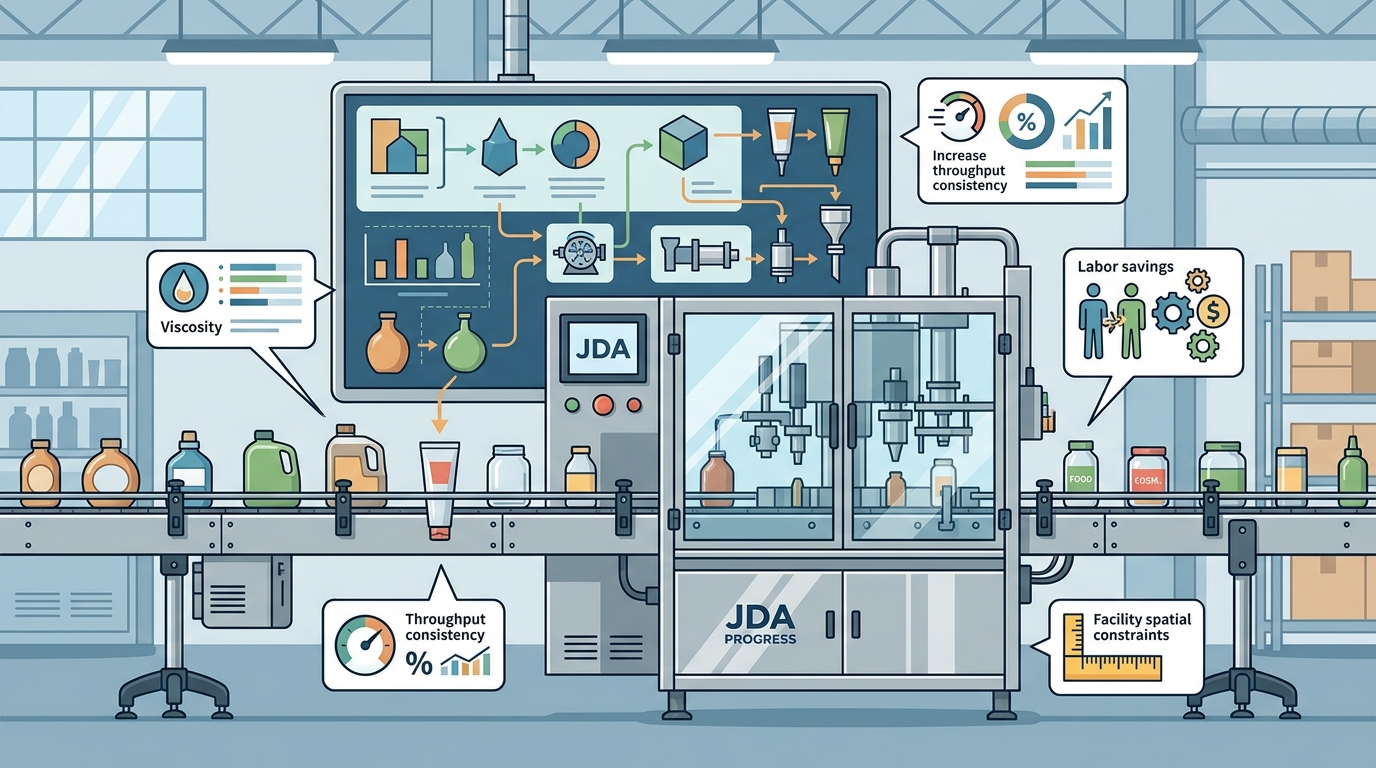
Industrial packaging efficiency is no longer a luxury but a strict operational necessity. According to recent industry analyses, automated filling systems can reduce labor costs by up to 40% while increasing throughput consistency. This statistic highlights why manufacturers must move beyond manual processes to secure a competitive edge in the global market. Selecting the correct machinery requires a deep understanding of your product's physical properties and your facility's spatial constraints.
Understanding Viscosity and Product Type
The first step in your search is defining the physical characteristics of your product. Viscosity is the primary driver in machinery selection. Viscosity is the measure of a fluid's resistance to flow. This single metric dictates whether you need a gravity-fed system or a high-pressure piston unit.
Low viscosity products, such as water, juices, and thin solvents, flow easily. These materials often require volumetric cup fillers or gravity fillers to prevent splashing and foaming. High viscosity products, like honey, heavy creams, and thick pastes, require positive displacement piston fillers. These machines physically push the product into the container with precision.
Another critical factor is the product state. Powder is a solid particulate material that requires specialized auger or weigh fillers. Unlike liquids, powders can bridge or clump, requiring vibration or agitation systems to ensure consistent flow. If your product contains particulates, such as fruit chunks in yogurt or nuts in sauce, you must select a filler with a large bore and gentle pumping action to avoid damaging the ingredients.
Evaluating Volume and Speed Requirements
Once you understand your product, you must define your production goals. The volume of output directly impacts the complexity and cost of the filling machine. Throughput is the total amount of product processed by a machine within a specific time frame. Knowing your required bottles per minute (BPM) helps narrow down the mechanical options.
For small batch production or startup operations, a semi-automatic filler may be sufficient. These units require an operator to place each bottle manually. While slower, they offer flexibility and lower upfront costs. However, as production scales, the labor cost of manual placement becomes unsustainable. At this stage, an automatic inline filler becomes necessary.
High-speed lines often require rotary fillers. These machines rotate around a central axis, allowing multiple containers to be filled simultaneously. This configuration is ideal for high-volume industries like beverages and pharmaceuticals. The transition from semi-automatic to automatic is a significant capital decision that requires careful financial planning.
Comparing Filler Technologies
The market offers several distinct technologies for filling. Each has specific strengths and limitations. Understanding these differences is crucial for making an informed investment.
| Filler Type | Best For | Accuracy Level | Speed Potential |
|---|---|---|---|
| Piston Filler | High viscosity liquids, creams, pastes | Very High | Medium |
| Gravity Filler | Low viscosity, free-flowing liquids | High | High |
| Auger Filler | Powders, granules, fine particles | High | Medium to High |
| Volumetric Cup Filler | Thin liquids, cost-effective solutions | Medium | High |
Piston Fillers
Piston fillers are the workhorses of the packaging industry. They use a cylinder and piston mechanism to draw a precise volume of product and then push it into the container. This method is exceptionally accurate for viscous materials. The accuracy remains consistent regardless of the product's viscosity, making them versatile for many applications.
Auger Fillers
Auger fillers utilize a rotating screw to dispense product. The depth of the screw rotation determines the fill volume. This technology is ideal for powders because it can handle materials that do not flow freely. The auger design allows for precise control over fine particles that might otherwise clump or settle unevenly.
Integration and Facility Layout
A filling machine does not operate in isolation. It must integrate seamlessly with your existing bottling line. This includes conveyors, cappers, labelers, and case packers. Integration is the process of connecting disparate machines to function as a unified production system. Poor integration leads to bottlenecks and increased downtime.
Consider the footprint of the machine. Your facility may have limited space. JDA Progress offers compact inline solutions that fit into tight production environments. The Model ProCap-2, for example, is an automatic inline quill capping machine that demonstrates how compact engineering can maximize floor space efficiency.
Furthermore, consider the utility requirements. Pneumatic fillers require compressed air. Electric fillers require specific voltage and amperage. Ensure your facility can support the power and air demands of the new equipment before making a purchase. Upgrading utilities can be costly and time-consuming.
Vendor Selection and Support
The choice of manufacturer is as important as the choice of machine. You need a partner who understands your industry and provides long-term support. After-sales support refers to the technical assistance, maintenance, and parts supply provided after the initial purchase. This is critical for minimizing downtime when issues arise.
Look for a vendor with a proven track record. JDA Progress has been in business since 1988, providing over three decades of experience in the packaging sector. This longevity indicates stability and a deep understanding of evolving industry standards. Their team of engineers can help you navigate the complexities of selection.
Additionally, verify the availability of spare parts. Downtime often results from waiting for a single replacement part. JDA Progress maintains an inventory of in-stock packaging equipment and parts for fast delivery. This readiness ensures that your production line can resume quickly after any maintenance event.
Finally, consider the opportunity for demonstration. Seeing the machine run with your actual product is invaluable. JDA Progress offers a test and demo centre in Vaughan, Ontario. This facility allows you to bring your product and observe the filling process firsthand. This hands-on experience reduces the risk of purchasing unsuitable equipment.
Key Takeaways
- Viscosity dictates technology: High viscosity requires piston fillers, while low viscosity suits gravity or volumetric fillers.
- Powders need augers: Solid particulates require auger or weigh fillers to prevent bridging and ensure accuracy.
- Scale matters: Semi-automatic fillers are for low volume, while automatic inline or rotary fillers are for high throughput.
- Integration is key: Ensure the new filler matches the speed and interface of your cappers and labelers.
- Support ensures longevity: Choose a vendor with a history of reliable after-sales service and in-stock parts.
- Demo before buy: Testing your product on the machine prevents costly mismatches in performance.
- Experience counts: Vendors with decades of history, like JDA Progress, offer deeper technical expertise.
Frequently Asked Questions
How do I choose between a piston and gravity filler?
Choose a piston filler for high viscosity products like creams and pastes. Choose a gravity filler for low viscosity, free-flowing liquids like water or juice.
What is the most accurate type of filler for powders?
Auger fillers are generally the most accurate for powders. They use a rotating screw to dispense precise volumes of particulate material.
Can I test my product before buying a machine?
Yes, many manufacturers offer demo facilities. JDA Progress has a showroom in Vaughan where you can test your product on their equipment.
How important is after-sales support?
It is critical. Reliable support ensures quick access to spare parts and technical assistance, minimizing costly production downtime.
What is the typical lifespan of a filling machine?
With proper maintenance, a high-quality filling machine can last for decades. Many JDA machines have been in operation for over 14 years.
Do I need a fully automatic line?
This depends on your volume. If you produce thousands of units daily, automation is necessary. For small batches, semi-automatic may suffice.
What industries use filling machines?
Filling machines are used in food and beverage, cosmetics, chemicals, and nutraceuticals to package products efficiently.
How does viscosity affect filling speed?
Higher viscosity products generally fill slower than low viscosity products. Piston fillers handle thick products accurately but may have lower BPM than gravity fillers.
Contact JDA Progress
Starting your search for the right filling machine can be complex. You need a partner who understands your specific needs and provides reliable, long-term support. JDA Progress offers a comprehensive range of packaging solutions, from fillers to labelers and cappers. Our team is ready to help you maximize efficiency and boost your ROI.
Visit our Demo Centre to see our equipment in action. Or, Contact Us today to request a personalized quote. Let our experts guide you toward the perfect packaging solution for your business.