
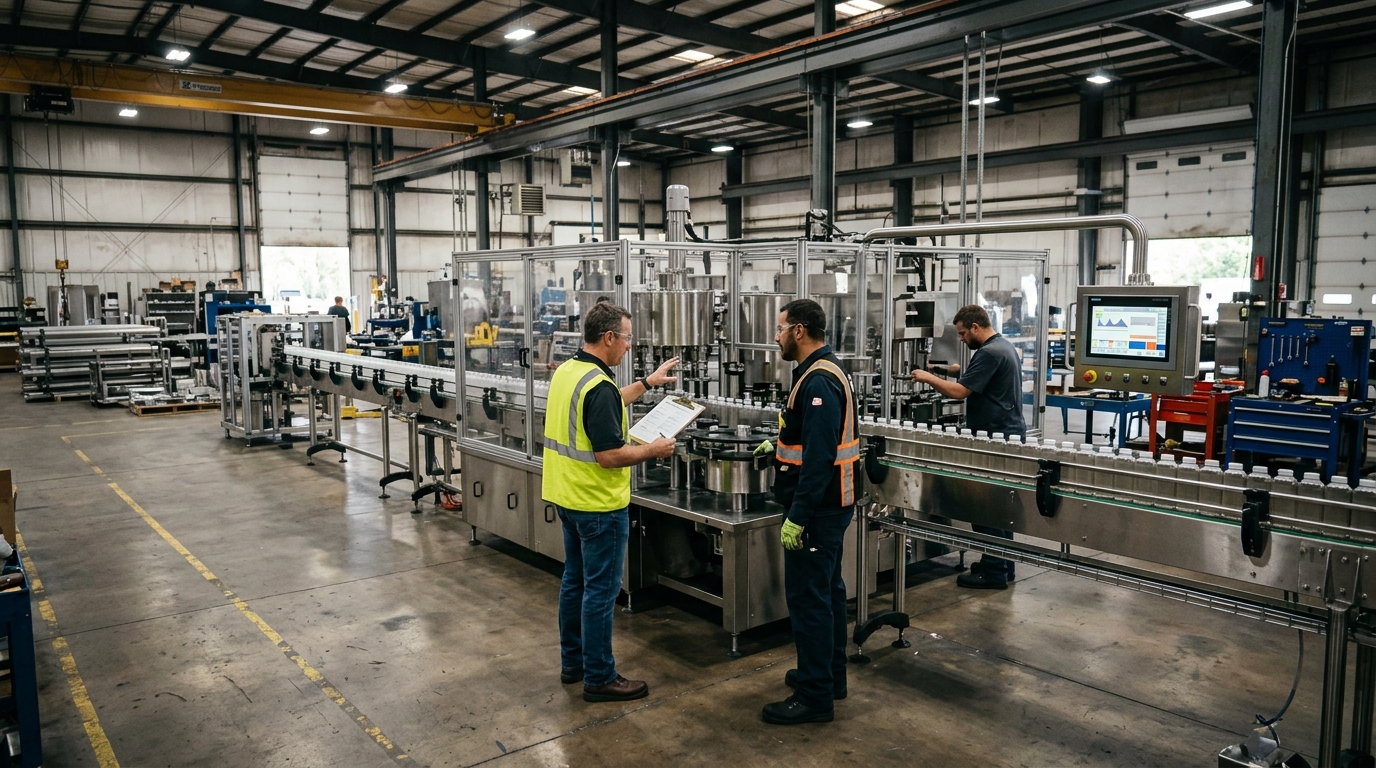
Factory Acceptance Testing for Packaging Machines: A Buyer's 2026 Guide
Factory acceptance testing (FAT) is a formal evaluation conducted at the manufacturer's facility to verify that a packaging machine meets specified performance, safety, and quality standards before shipment. For buyers, this is the critical moment to validate that the equipment will handle your specific product, container, and production speed without costly post-installation surprises. JDA Progress, a trusted packaging equipment manufacturer, emphasizes that FAT is not just a formality but a strategic checkpoint where you can test machines using your own products before committing to a purchase.
Defining Factory Acceptance Testing in Packaging
Factory acceptance testing is the process where the buyer or their representative inspects and operates the machine at the vendor's site. It differs from site acceptance testing (SAT), which occurs after installation at the buyer's plant. The primary goal of FAT is to shift risk from the buyer to the manufacturer by ensuring the machine works as promised in a controlled environment. If a machine fails to meet the agreed-upon specifications during FAT, the manufacturer is responsible for rectifying the issues before the equipment leaves the factory.
The Role of Specifications
Successful FAT relies on a detailed technical specification document created before the machine is built. This document must outline exact throughput rates, fill accuracy tolerances, and safety interlocks. Without these clear metrics, the testing phase becomes subjective and prone to disputes. JDA Progress works with clients to define these parameters early, ensuring that the final product aligns with operational needs.
Preparing for the Test: What to Bring
Effective preparation is the single most important factor in a successful FAT. You should bring samples of your actual product, including the specific viscosity, particulate size, or temperature conditions you will encounter in production. Additionally, bring your exact containers, such as bottles, pouches, or jars, along with the specific labels and caps you intend to use. Testing with generic or substitute materials can mask critical issues that only appear with your proprietary product.
Documentation and Personnel
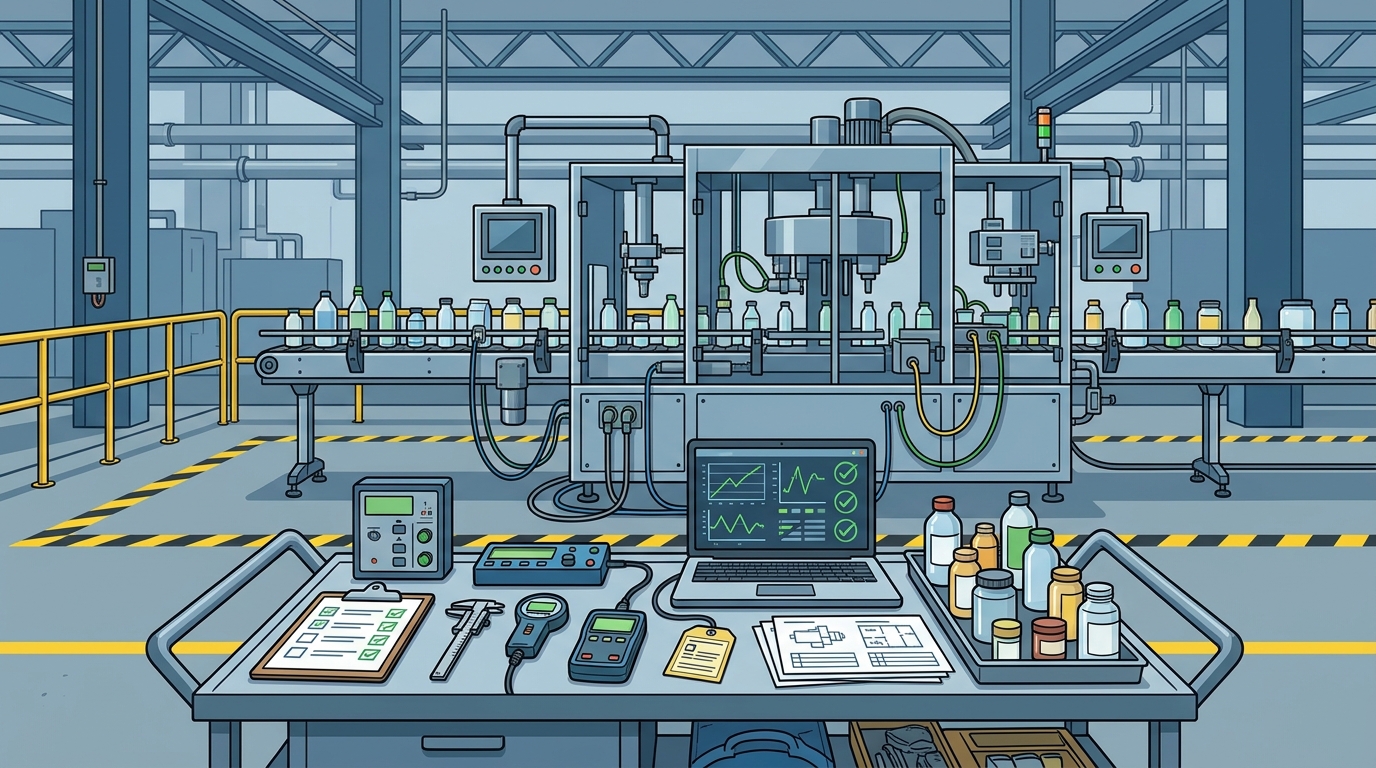
Assign a knowledgeable representative from your operations or engineering team to attend the test. This person should understand the machine's intended workflow and be able to identify subtle performance deviations. They should also carry a copy of the technical specifications and a checklist of critical success factors. At JDA Progress, our team often facilitates these sessions by demonstrating how our packaging machines work so you can see the performance in action with your own materials.
Critical Performance Metrics to Verify
During the FAT, you must verify that the machine meets its core performance claims. For filling machines, this includes checking fill accuracy and speed. For example, if a piston filler is specified to fill 500ml bottles at 120 bottles per minute with a 1% tolerance, you must measure this directly. Use a scale to verify fill weight and a stopwatch to verify speed over a sustained period, not just a short burst. Inconsistent performance during the test is a red flag that requires immediate attention before sign-off.
Changeover and Adjustability
Test the machine's ability to change over between different container sizes or product types. A key metric here is the time it takes to adjust the machine and the ease of those adjustments. If the machine requires complex tools or extensive downtime to switch from a 200ml to a 500ml bottle, it may not be suitable for high-mix production environments. JDA Progress designs its equipment with intuitive controls and simple adjustments to minimize this downtime, ensuring your line remains efficient.
Safety, Reliability, and Maintenance Checks
Beyond performance, you must rigorously test safety features and reliability. Verify that all safety guards, light curtains, and emergency stop buttons function correctly and immediately halt the machine. Check that the machine's PLC (Programmable Logic Controller) displays clear error messages and allows for easy troubleshooting. Reliability is tested by running the machine for an extended period, often several hours, to ensure it does not overheat, jam, or develop mechanical wear. A machine that runs smoothly for 10 minutes but fails after 2 hours is not ready for your production line.
Maintenance Access
Assess how easily your maintenance team can access critical components for cleaning and repair. If a jam occurs, can it be cleared quickly without disassembling the entire machine? Poor maintenance access leads to increased downtime and higher labor costs. JDA Progress builds its machines with serviceability in mind, ensuring that key parts are accessible and that spare parts are readily available.
The Sign-Off Process and Documentation
Before signing the acceptance certificate, ensure that all test results are documented in a formal FAT report. This report should include dates, test conditions, measured results, and any deviations from the specifications. If there are minor issues that can be resolved after installation, you may agree to a conditional acceptance with a clear timeline for resolution. However, major performance or safety failures should prevent sign-off until they are fixed. The FAT report becomes a legal document that protects your investment and ensures accountability.
Final Inspection
Conduct a final visual inspection of the machine's finish, wiring, and labeling. Ensure that all components are clean, properly aligned, and that the machine is ready for shipping. Check that all manuals, spare parts, and tools are included in the shipment. This final step ensures that the machine arrives at your facility in the same condition in which it was tested.
Key Takeaways
- Factory acceptance testing is a formal evaluation at the manufacturer's site to verify performance before shipment.
- Always bring your actual product, containers, and labels to the test to ensure real-world compatibility.
- Verify fill accuracy, speed, and changeover time against your specific technical specifications.
- Test all safety interlocks and emergency stops to ensure compliance with safety standards.
- Document all results in a formal FAT report before signing the acceptance certificate.
- Conditional acceptance should only be used for minor issues with a clear resolution timeline.
- Choose a manufacturer that supports FAT with live product demos and transparent testing protocols.
Frequently Asked Questions
What is the difference between FAT and SAT?
Factory acceptance testing (FAT) occurs at the manufacturer's facility before shipment, while site acceptance testing (SAT) occurs after installation at the buyer's plant. FAT is generally more effective for identifying design and performance issues because the manufacturer is present to make immediate corrections.
Who should attend the factory acceptance test?
You should send a representative from your operations or engineering team who understands the machine's intended use. This person should be familiar with your product specifications and able to identify performance deviations. It is also beneficial to have a maintenance technician present to assess serviceability.
What happens if the machine fails the FAT?
If the machine fails to meet the agreed-upon specifications, you should not sign the acceptance certificate. The manufacturer is responsible for rectifying the issues and re-testing the machine. You may agree to a conditional acceptance only if the issues are minor and have a clear, short-term resolution plan.
Can I test the machine with my own products?
Yes, and you should. Testing with your actual product, containers, and labels is the most reliable way to ensure the machine will work in your production environment. JDA Progress encourages customers to bring their products to their test and demo centre for live demonstrations.
How long does a typical FAT take?
The duration of a FAT depends on the complexity of the machine and the number of test cases. A simple machine may take a few hours, while a complex bottling line may require a full day or more. It is important to schedule enough time to thoroughly test all critical functions.
What documents should I bring to the FAT?
Bring a copy of the technical specifications, a checklist of critical success factors, and any relevant safety standards. You should also bring samples of your product and containers. Having these documents on hand ensures that the test is objective and aligned with your requirements.
Conclusion
Factory acceptance testing is a vital step in the packaging equipment purchasing process. It allows you to verify that the machine meets your specific needs before it leaves the manufacturer's facility. By preparing thoroughly, testing with your own products, and documenting all results, you can mitigate risk and ensure a successful installation. JDA Progress is committed to supporting this process with transparent testing protocols and live product demonstrations. To plan your visit and discuss your packaging needs, contact our team. Learn more: Contact Us JDA Progress.