
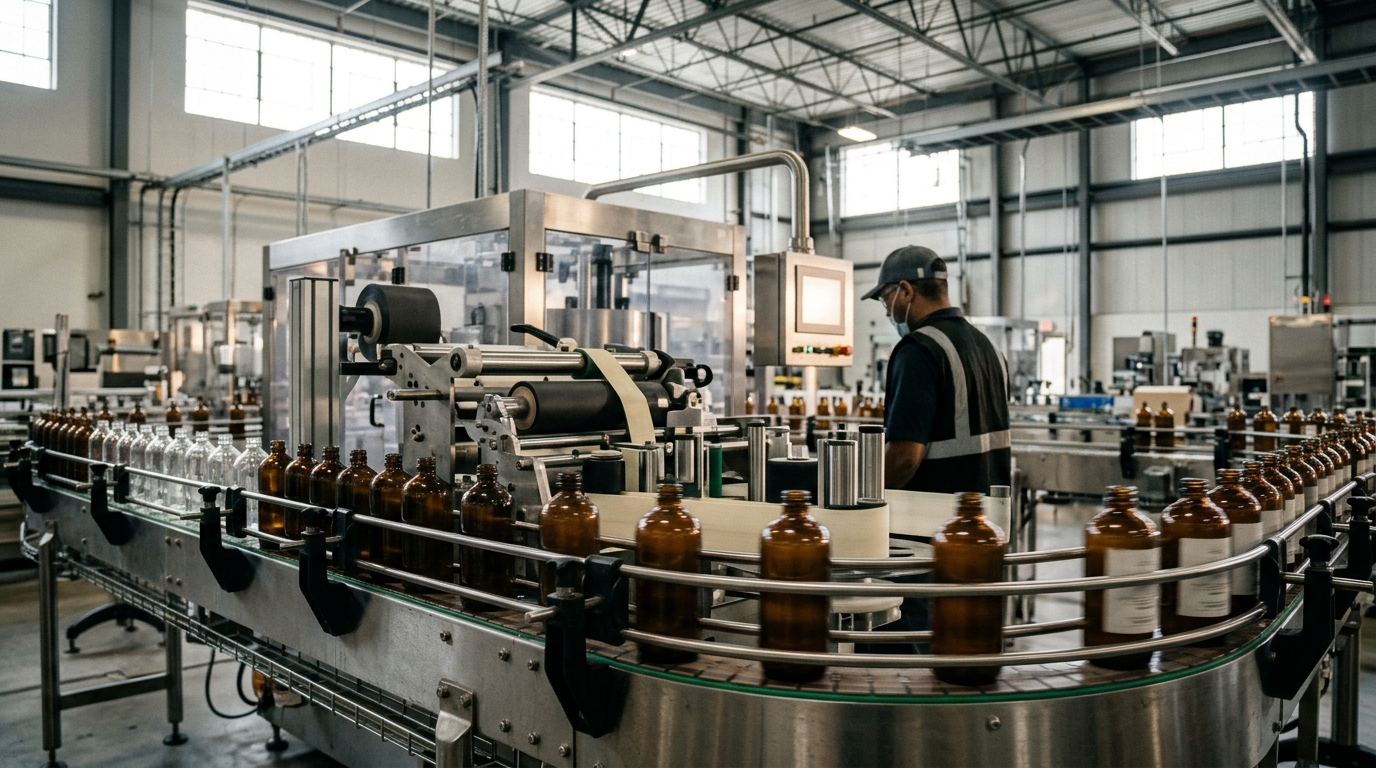
Automatic round bottle labelers typically operate between 30 and 150 bottles per minute, depending on the specific machine model, label size, and product viscosity. High-speed inline systems can exceed 200 bottles per minute, but most standard industrial lines run comfortably in the 60 to 120 range. JDA Progress designs labeling equipment to balance speed with precision, ensuring that throughput does not compromise label placement accuracy or product integrity.
Understanding Labeler Speed Classifications
Labeling speed is not a single metric but a range defined by the machine's mechanical architecture. A labeler speed is the maximum number of containers the machine can process in one minute under ideal conditions. However, realistic production speed is often lower due to changeovers, maintenance, and product variability. Manufacturers categorize machines into semi-automatic, automatic, and high-speed inline classes, each with distinct throughput ceilings.
Semi-Automatic vs. Automatic Systems
Semi-automatic labelers, where an operator places the bottle and the machine applies the label, typically run at 10 to 30 bottles per minute. These are suitable for small batches or low-volume production. Automatic labelers, which use conveyors to feed bottles continuously, start at 30 bottles per minute and scale upward. The transition from manual placement to automated feeding is the primary driver of speed increases in labeling operations.
High-Speed Inline Labelers
High-speed inline labelers are engineered for continuous production lines. These machines can reach speeds of 150 to 300 bottles per minute. They utilize advanced servo motors and vision systems to track bottle position in real time. This technology allows the labeler to apply labels at high speeds without missing or misaligning them, making them ideal for large-scale beverage and pharmaceutical manufacturing.
Factors That Influence Realistic Throughput
Theoretical maximum speed is rarely the actual production speed. Several operational factors reduce the effective bottles per minute. Understanding these variables helps operators set realistic production targets and avoid bottlenecks in the packaging line.
Label Size and Application Method
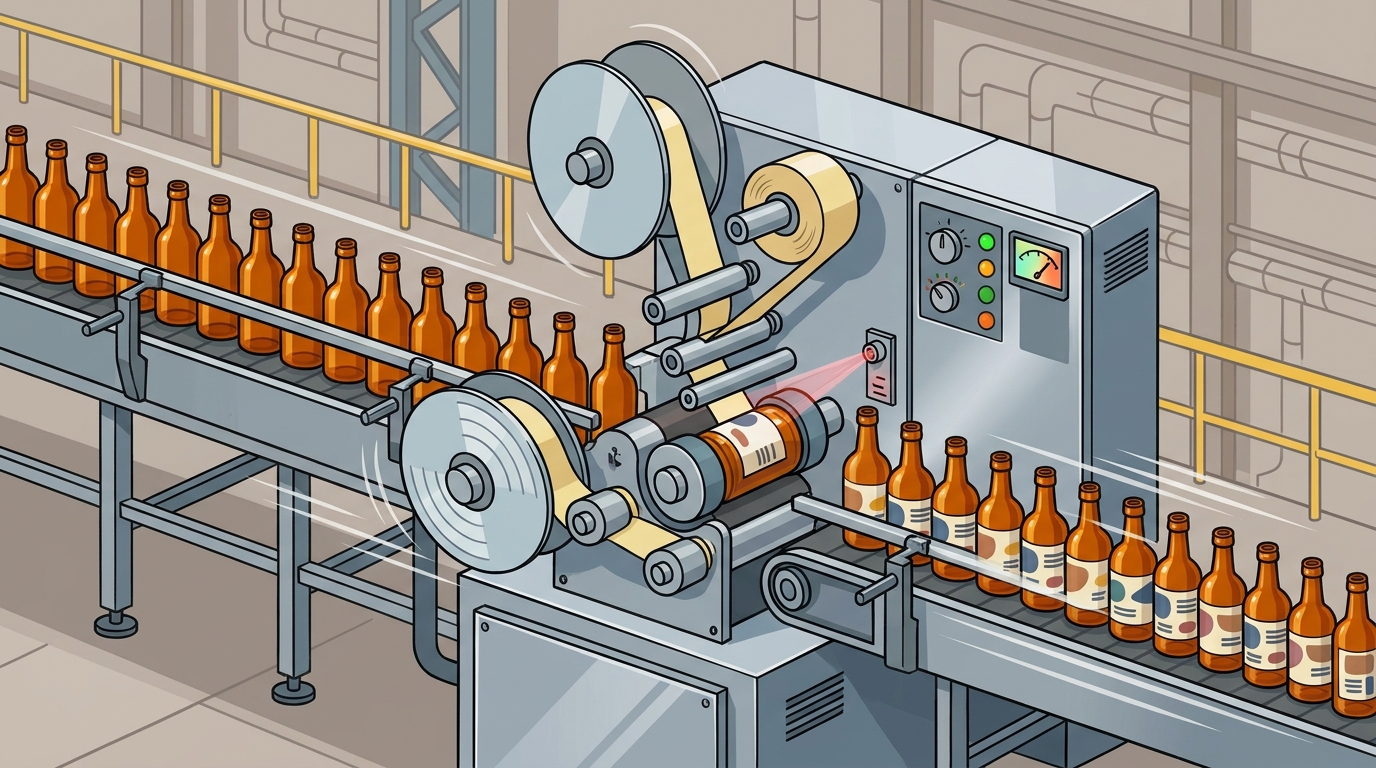
Larger labels require more time to apply and adhere properly. A wrap-around label covering 360 degrees of a bottle takes longer to apply than a small front-and-back label. Additionally, the application method matters. Pressure-sensitive labels apply quickly, while hot-melt adhesive systems may require a brief dwell time for the adhesive to set, slightly reducing line speed.
Bottle Geometry and Container Material
Bottle shape significantly impacts labeling speed. Standard cylindrical bottles are the easiest to label at high speeds. Irregular shapes, such as tapered shoulders or complex curves, require slower speeds to ensure proper label alignment. Glass bottles are heavier and may require slower conveyor speeds to prevent breakage, while plastic bottles can often be handled at higher velocities.
Product Viscosity and Line Integration
The product inside the bottle affects the overall line speed. Thick, viscous products like sauces or lotions may require slower filling speeds, which in turn limits the labeling speed to match. If the filler cannot keep up with the labeler, the labeler must slow down to prevent empty bottles from being labeled. This integration between filling and labeling stations is critical for maintaining consistent throughput.
Speed vs. Accuracy: Finding the Balance
Increasing speed often comes at the cost of accuracy. Operators must find the optimal balance between throughput and label placement precision. A label placement accuracy is the degree to which a label is applied in the correct position and orientation on the container. High-speed machines use vision systems to correct minor misalignments, but there is a limit to how fast a machine can operate while maintaining acceptable quality standards.
The Role of Vision Systems
Changeover Time Considerations
Speed is not the only metric that matters. Changeover time, the time required to switch from one product or label size to another, significantly impacts overall productivity. Machines with quick-change features can minimize downtime, allowing for more effective use of high-speed capabilities. JDA Progress designs its labelers with ease of changeover in mind, ensuring that operators can switch products quickly without extensive recalibration.
Real-World Speed Benchmarks by Industry
Different industries have different speed requirements based on product type and market demand. Understanding typical speed ranges by industry helps in selecting the right equipment for specific applications.
Beverage Industry
Beverage manufacturers often require the highest labeling speeds. Carbonated drinks and water are typically labeled at 150 to 300 bottles per minute. These lines are highly automated and integrated with filling and capping stations. The high volume and low margin per unit drive the need for maximum throughput.
Pharmaceutical and Cosmetics
Pharmaceutical and cosmetics lines typically run at lower speeds, often between 30 and 100 bottles per minute. These industries prioritize accuracy and compliance over raw speed. Labels must be perfectly aligned and legible, and any defects can lead to regulatory issues. Therefore, operators often choose to run at a speed that ensures perfect label placement rather than maximum throughput.
Food and Beverage (Non-Carbonated)
Non-carbonated beverages, juices, and sauces often run at moderate speeds, typically 60 to 120 bottles per minute. These products may have more complex label designs or require additional coding, such as expiration dates, which can slightly reduce line speed. The balance between speed and accuracy is carefully managed to meet production targets.
Optimizing Your Labeling Line for Speed
Maximizing labeling speed requires more than just buying a fast machine. It involves optimizing the entire packaging line. Operators should consider several strategies to improve throughput.
Regular Maintenance and Calibration
Regular maintenance is essential for maintaining high speeds. Worn parts, misaligned guides, and dirty sensors can all reduce speed and accuracy. A preventive maintenance schedule ensures that the machine operates at its peak performance. JDA Progress provides comprehensive service and parts support to help customers maintain their equipment.
Operator Training
Well-trained operators can identify and resolve issues quickly, minimizing downtime. Training should cover not only machine operation but also troubleshooting and changeover procedures. Operators who understand the machine's capabilities and limitations can make better decisions about speed settings and quality controls.
Line Balancing
The labeling station should be balanced with the rest of the line. If the filler is slower than the labeler, the labeler will idle, reducing overall throughput. Conversely, if the labeler is slower than the filler, bottles will accumulate, potentially causing jams. Proper line balancing ensures that each station operates at its optimal speed.
Key Takeaways
- Automatic round bottle labelers typically operate between 30 and 150 bottles per minute, with high-speed systems reaching up to 300.
- Realistic production speed is often lower than theoretical maximum due to changeovers, maintenance, and product variability.
- Label size, bottle geometry, and product viscosity are key factors that influence labeling speed.
- High-speed machines use vision systems to maintain accuracy at high throughput, reducing waste and rework.
- Industry-specific speed benchmarks vary, with beverages running fastest and pharmaceuticals prioritizing accuracy over speed.
- Regular maintenance, operator training, and line balancing are essential for maximizing labeling speed.
Frequently Asked Questions
What is the average speed of an automatic bottle labeler?
The average speed of an automatic bottle labeler is typically between 60 and 120 bottles per minute. This range accommodates most standard industrial applications, balancing throughput with label placement accuracy. Specific speeds depend on the machine model, label size, and product type.
Can a labeler run faster than 150 bottles per minute?
Yes, high-speed inline labelers can run faster than 150 bottles per minute, with some systems reaching up to 300 bottles per minute. These machines are designed for large-scale production lines, such as those in the beverage industry, where maximum throughput is required.
How does label size affect labeling speed?
Larger labels generally require slower labeling speeds because they take more time to apply and adhere properly. A wrap-around label covering the entire bottle circumference will slow the line down compared to a small front-and-back label. Operators should consider label size when setting speed targets.
Does bottle shape impact labeling speed?
Yes, bottle shape significantly impacts labeling speed. Standard cylindrical bottles are the easiest to label at high speeds. Irregular shapes, such as tapered shoulders or complex curves, require slower speeds to ensure proper label alignment and prevent defects.
What role do vision systems play in high-speed labeling?
Vision systems allow high-speed labelers to maintain accuracy by detecting and correcting minor misalignments in real time. They also inspect each labeled bottle for defects, such as missing or damaged labels. This enables operators to run at higher speeds with confidence, knowing that quality is being maintained.
How can I optimize my labeling line for maximum speed?
To optimize your labeling line for maximum speed, ensure regular maintenance, train operators thoroughly, and balance the line with other stations. Use quick-change features to minimize changeover time and consider vision systems to maintain accuracy at high speeds. JDA Progress can help you design a line that meets your specific throughput requirements.
Conclusion
Understanding the realistic speed of automatic round bottle labelers is essential for planning your packaging line. While high-speed systems can reach impressive throughput, the optimal speed depends on your specific product, label, and production goals. JDA Progress offers a range of labeling machines designed to balance speed with precision, ensuring that your line runs efficiently and reliably. To discuss your specific speed requirements and find the right labeling solution, contact our team for a personalized consultation.