
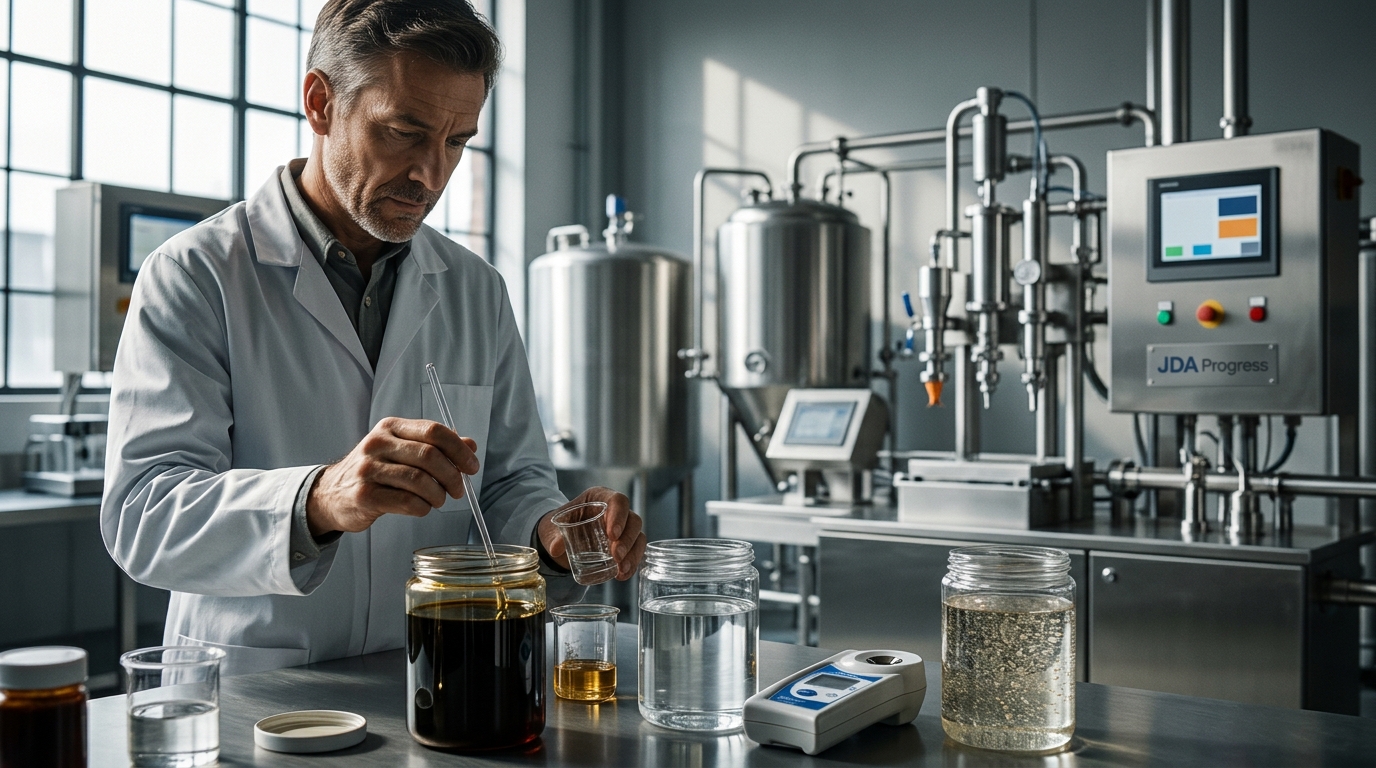
Selecting the right filling machine depends heavily on the physical and chemical properties of your product. Viscosity, particle size, and flow behavior determine whether a piston, volumetric, or gravimetric system is the correct fit. JDA Progress helps manufacturers match these specific product characteristics to the appropriate equipment to ensure accuracy and efficiency.
Viscosity and Flow Behavior
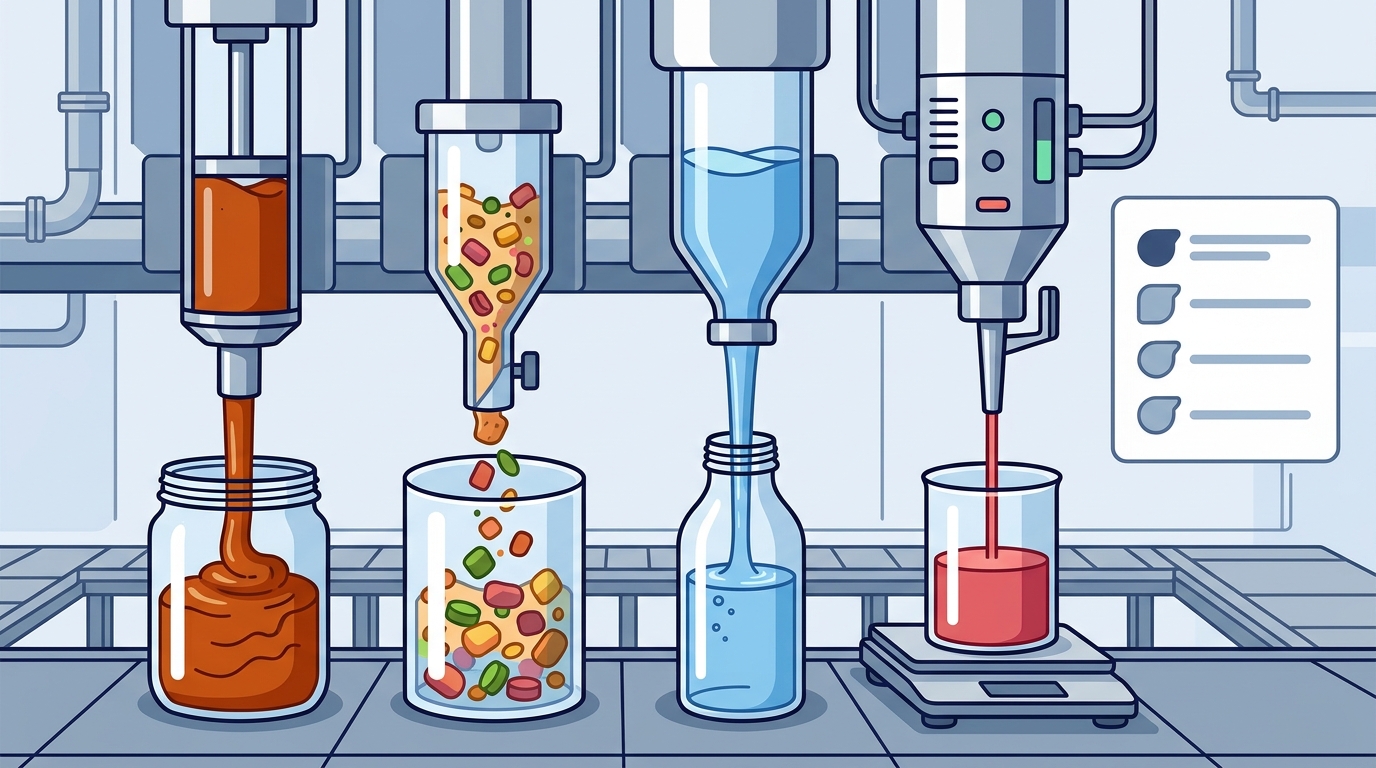
Viscosity is the measure of a fluid's resistance to flow. It is the single most critical factor in determining the filling mechanism. Low-viscosity liquids like water or juice flow easily and are often handled by pressure overflow or pump fillers. High-viscosity products like honey, lotions, or sauces require positive displacement systems. These systems push the product into the container rather than relying on gravity or pressure alone.
When a product is non-Newtonian, its viscosity changes under stress. For example, ketchup is thick at rest but flows when squeezed. Standard volumetric fillers may struggle with these materials, leading to inconsistent fill levels. Piston fillers are often the best solution for these complex fluids because they provide precise control over the volume dispensed regardless of the fluid's changing resistance.
Particle Size and Solids Content
The presence of solids or particulates in a liquid product creates unique challenges for filling equipment. Small particles can clog narrow nozzles or damage pump seals. Large chunks, such as fruit pieces in a sauce or nuts in a spread, require wide-bore nozzles and robust mechanical components. If your product contains solids, you must evaluate the maximum particle size against the internal diameter of the filler's tubing and valves.
Chemical Compatibility and Material Safety
Chemical compatibility is the study of how a product interacts with the materials of the filling machine. Certain acids, solvents, or oils can degrade standard stainless steel or plastic components over time. You must verify that the wetted parts of the machine are compatible with your specific formulation. For example, some cosmetic oils may require specific gaskets or seals that standard food-grade materials cannot withstand.
Food safety regulations also dictate material choices. In the food and beverage industry, 304 or 316 stainless steel is the standard for wetted parts. 316 stainless steel offers higher corrosion resistance, which is essential for acidic products like citrus juices or vinegar. Ensuring chemical compatibility prevents product contamination and extends the lifespan of your equipment.
Temperature and Thermal Stability
Temperature is a critical variable that affects both the product and the machine. Some products are filled hot to sterilize them, such as canned soups or hot sauces. Others are filled cold to preserve freshness, like dairy products or certain beverages. The filling machine must be able to withstand the operating temperature of the product. Hot filling requires components that can handle thermal expansion and maintain seal integrity at high temperatures.
Thermal stability also impacts the product's viscosity. A product that is thick at room temperature may become thin when heated. This change in flow behavior must be accounted for in the machine's calibration. JDA Progress designs fillers that can handle a wide range of temperatures, ensuring consistent performance whether you are filling hot or cold products.
Packaging Container Geometry
The shape and size of your container influence the filling process. Narrow-neck bottles require different nozzle designs than wide-mouth jars. The height of the container also matters, as the filler must be able to reach the bottom of the container for accurate filling. If you use a variety of container sizes, you need a machine that allows for quick changeovers. This minimizes downtime and ensures that your production line remains efficient.
Container material also plays a role. Glass, plastic, and metal containers have different thermal properties and structural strengths. A filler that works well with rigid glass bottles may need adjustments when used with flexible plastic pouches. Understanding the geometry and material of your packaging helps you select a filler that integrates seamlessly into your line.
Key Takeaways
- Viscosity determines the filling method, with piston fillers best for high-viscosity and non-Newtonian products.
- Particle size dictates nozzle width and mechanical robustness to prevent clogging and damage.
- Chemical compatibility ensures that machine materials do not react with or degrade due to the product.
- Temperature affects both machine durability and product flow behavior, requiring specific component ratings.
- Container geometry and material influence nozzle design and changeover speed.
- Accurate fill levels depend on matching the filler's precision capabilities to the product's consistency.
Frequently Asked Questions
What is the best filler for high-viscosity products?
Piston fillers are generally the best choice for high-viscosity products like creams, lotions, and sauces. They provide positive displacement, ensuring accurate fill volumes regardless of the product's thickness.
How does particle size affect filler selection?
Particle size determines the required nozzle diameter and the robustness of the internal components. Large particles require wide nozzles and durable seals to prevent clogging and wear.
Can one filler handle multiple product types?
Yes, many modern fillers are designed for versatility. However, the range of products you can handle depends on the specific model and its changeover capabilities. Quick-change systems allow for efficient switching between different products.
What materials are best for food-grade fillers?
304 and 316 stainless steel are the standard materials for wetted parts in food-grade fillers. 316 stainless steel is preferred for highly acidic or corrosive products due to its superior corrosion resistance.
How does temperature impact filling accuracy?
Temperature changes can alter a product's viscosity, which affects flow rate and fill accuracy. Machines must be calibrated to account for these thermal changes to maintain consistent fill levels.
What is the role of chemical compatibility in filler selection?
Chemical compatibility ensures that the product does not react with the machine's materials. This prevents contamination, corrosion, and equipment failure, ensuring both product safety and machine longevity.
Conclusion
Understanding your product's characteristics is the first step in selecting the right filling machine. By evaluating viscosity, particle size, chemical compatibility, temperature, and container geometry, you can make an informed decision that ensures accuracy and efficiency. JDA Progress offers a wide range of filling solutions tailored to these specific needs. To discuss your product requirements, .