Common Myths and FAQs About Automatic Standup Doy Pouch Filling Machines
Industrial packaging efficiency is often misunderstood by operations managers who assume automation is a one-size-fits-all solution. According to industry data, automated packaging lines can reduce labor costs by up to 60 percent while increasing throughput by 300 percent. However, the reality of implementing automatic standup doy pouch filling machines is far more nuanced. Many businesses hesitate because they believe these systems are too rigid or difficult to maintain. This guide dismantles those barriers by addressing the most persistent myths and answering critical operational questions.
Myth 1: Standup Pouches Require Specialized, Expensive Machinery
Many procurement officers believe that switching from rigid containers to flexible standup pouches requires a complete overhaul of their packaging infrastructure. This is a false assumption. Modern vertical form fill seal (VFFS) technology has evolved to handle complex pouch structures with ease. A standup doy pouch is a flexible packaging format with a gusseted bottom that allows the package to stand upright on retail shelves.
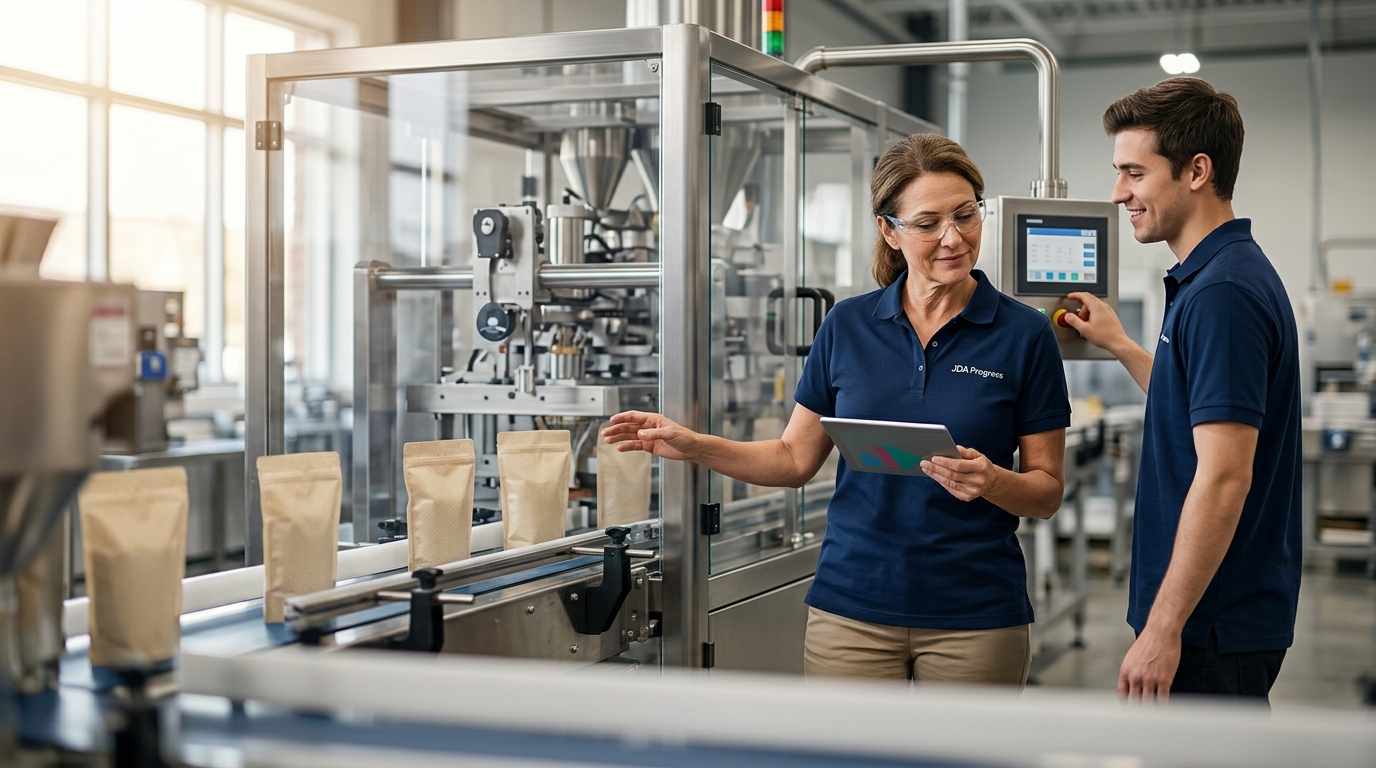
At JDA Progress, we design equipment that integrates seamlessly into existing lines. Our baggers are engineered to manage both vertical form fill seal processes and pre-made pouch loading. The misconception often stems from older machinery that lacked the precision to handle the delicate nature of laminated films. Today’s automated systems use advanced servo motors to control film tension, ensuring that the pouch forms correctly without tearing or misalignment.
Furthermore, the cost of entry is lower than many anticipate. When you factor in the reduced material costs of flexible packaging compared to glass or rigid plastic, the total cost of ownership favors automation. Our team of packaging experts can help you calculate the exact break-even point based on your current labor and material expenses.
Myth 2: Changeovers Are Too Slow for Small Batches
In an era where consumer demand shifts rapidly, the ability to run short production runs is critical. A common fear is that switching from one pouch size or product type to another will take hours of downtime. This myth ignores the advancements in quick-changeover mechanisms. Modern automatic filling machines feature tool-less adjustments for guide rails, fill heads, and sealing jaws.
For example, our Redeepac series of bagging machines allows operators to adjust settings via a human-machine interface (HMI) panel. This digital control reduces the physical labor required for changeovers. Instead of using wrenches and screwdrivers, technicians can input new parameters directly into the system. This capability is essential for businesses that produce limited edition flavors or seasonal products.
Additionally, the consistency of the machine ensures that the first pouch produced after a changeover is as good as the thousandth. This eliminates the waste associated with manual adjustments. By visiting our demo centre in Vaughan, you can witness these changeovers in real-time and see how quickly our engineers can adapt the equipment to your specific needs.
Myth 3: Automation Eliminates the Need for Skilled Technicians
Some business owners assume that buying an automatic machine means they no longer need technical staff. This is a dangerous misconception. While automation reduces the need for manual labor on the line, it increases the need for skilled maintenance personnel. Automated systems are complex assemblies of pneumatics, electronics, and mechanical components that require regular care.
However, this is not a drawback but an opportunity. By investing in proper training, your team can become highly valuable assets to the company. JDA Progress provides comprehensive service and parts support to ensure your team is equipped to handle routine maintenance. We offer factory acceptance tests and on-site training to ensure your operators understand the machine’s capabilities and limitations.
Moreover, the reliability of modern machines means that downtime is rare if maintenance protocols are followed. Our customer reviews frequently highlight the importance of after-sales support. Clients like Iman Navab, a contract manufacturer, note that JDA’s professional and knowledgeable team has been instrumental in their long-term success. This partnership model ensures that your investment is protected over the lifespan of the equipment.
FAQ 1: What is a Standup Doy Pouch?
A standup doy pouch, often referred to simply as a doy pouch, is a type of flexible packaging that features a gusseted bottom. This design allows the package to stand upright on retail shelves, maximizing visibility and shelf presence. These pouches are widely used in the food, beverage, and chemical industries because they offer excellent barrier properties against moisture and oxygen. The structure is typically made from multiple layers of laminated materials, such as PET, aluminum foil, and PE, to ensure product freshness and durability.
FAQ 2: Can These Machines Handle Viscous Products?
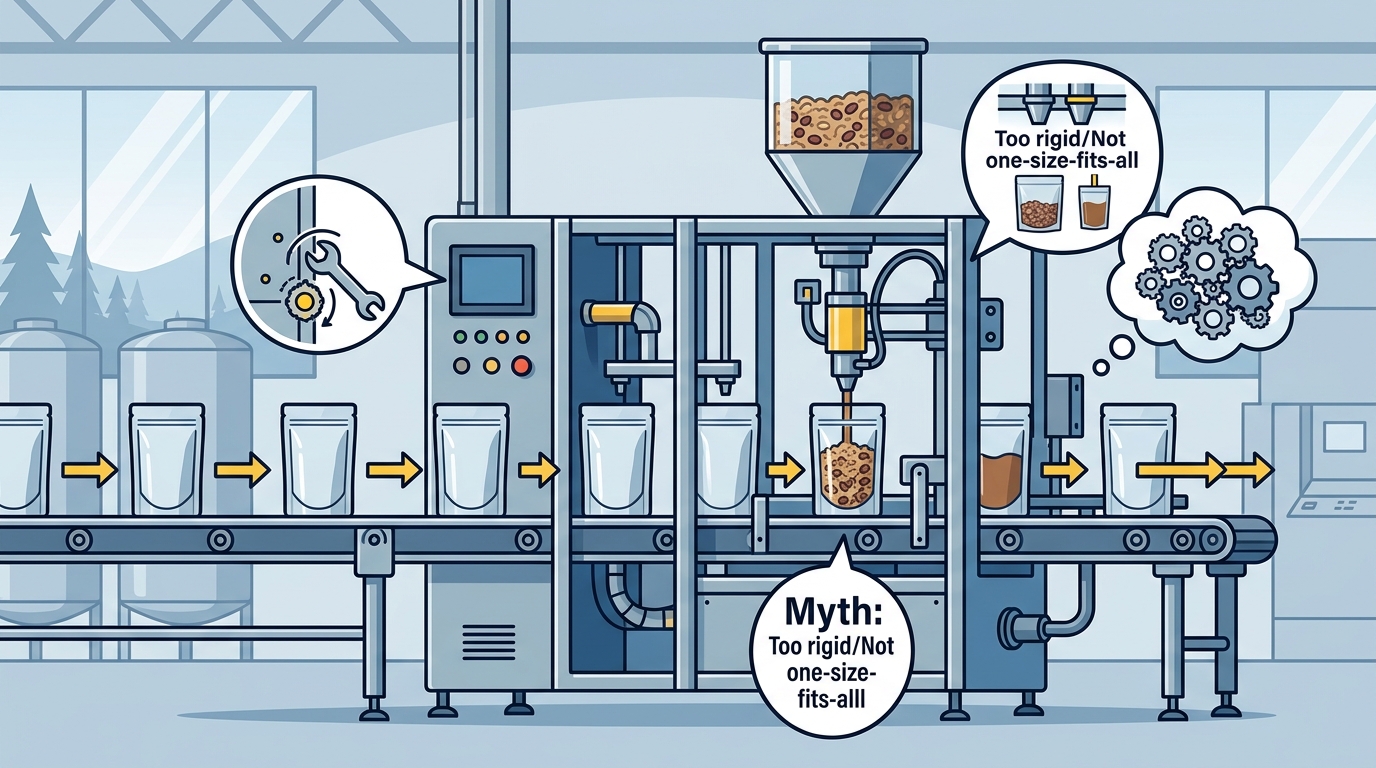
Yes, automatic filling machines are highly versatile and can handle a wide range of product viscosities. Whether you are packaging free-flowing powders, thick pastes, or viscous liquids, there is a specific filling mechanism designed for your needs. For powders, we offer weigh fillers that ensure precise dosing. For liquids and pastes, piston fillers or pump fillers are used to control the flow rate accurately.
Our fillers are engineered to prevent dripping and ensure clean seals, which is critical for standup pouches. The sealing process must be robust enough to handle the weight of the product without compromising the integrity of the pouch. JDA Progress provides customized solutions to match your product’s specific rheological properties, ensuring consistent fill weights and high-quality seals every time.
FAQ 3: How Does JDA Progress Support Installation?
JDA Progress offers end-to-end support from the initial consultation to post-installation training. Our process begins with a detailed analysis of your production requirements. We then design a solution that fits your facility’s layout and operational goals. Installation is handled by our technical team, who ensure that the machine is calibrated correctly and integrated with your existing equipment.
We also provide ongoing support through our service and parts department. This includes remote troubleshooting, on-site repairs, and regular maintenance checks. Our commitment to customer success is reflected in our long-term relationships with clients across North America and beyond. We believe that a successful installation is just the beginning of a lasting partnership.
FAQ 4: What is the Typical ROI Timeline?
The return on investment (ROI) for automatic standup doy pouch filling machines varies depending on your current production volume and labor costs. However, most businesses see a positive ROI within 12 to 18 months. The primary drivers of this return are reduced labor costs, increased production speed, and lower material waste.
For example, if you currently use manual filling methods, the labor savings alone can be significant. Automated machines can run continuously with minimal supervision, allowing you to reallocate your workforce to other value-added tasks. Additionally, the precision of automated filling reduces product giveaway, which can save thousands of dollars annually in high-volume production environments. Our contact team can help you create a detailed ROI projection based on your specific operational data.
FAQ 5: Are Parts Readily Available?
Yes, JDA Progress maintains a comprehensive inventory of in-stock packaging equipment and spare parts. This ensures that any necessary repairs or replacements can be made quickly, minimizing downtime. Our head office in Vaughan, Ontario, serves as a central hub for our North American operations, allowing us to ship parts rapidly to most locations.
We understand that downtime is costly, which is why we prioritize the availability of critical components. Whether you need a new sealing jaw, a piston seal, or a control board, we have the parts you need to keep your line running. Our customer testimonials often mention the ease of obtaining support and the quality of our after-sales care.
Key Takeaways
- Automation is Versatile: Modern automatic standup doy pouch filling machines can handle a wide range of products, from powders to viscous liquids, using specialized filling mechanisms.
- Quick Changeovers: Advanced HMI controls and tool-less adjustments allow for rapid changeovers, making short production runs economically viable.
- Support is Critical: Long-term success depends on robust after-sales support, which JDA Progress provides through its extensive service and parts network.
- ROI is Achievable: Most businesses see a positive return on investment within 12 to 18 months due to labor savings and increased efficiency.
- Parts Availability: JDA Progress maintains a large inventory of in-stock parts to ensure minimal downtime for its customers.
- Expert Guidance: Visiting the demo centre in Vaughan allows you to see the machinery in action and receive personalized advice.
- Proven Track Record: With over 35 years in business, JDA Progress has established itself as a trusted manufacturer of high-quality packaging equipment.
Frequently Asked Questions
What types of products can be packaged in standup doy pouches?
Standup doy pouches are suitable for a wide variety of products, including coffee, pet food, snacks, liquids, powders, and chemicals. The flexible nature of the packaging allows for excellent barrier protection against moisture, oxygen, and light, preserving product freshness and extending shelf life.
How do I choose the right filling machine for my product?
The choice of filling machine depends on the product’s viscosity, particle size, and desired fill weight. For free-flowing powders, weigh fillers are ideal. For liquids and pastes, piston or pump fillers are more appropriate. Our filling experts can help you select the best equipment for your specific application.
What is the warranty on JDA Progress equipment?
JDA Progress provides a 1-year warranty on all machines and parts. This warranty covers manufacturing defects and ensures that your investment is protected. We also offer extended service agreements for ongoing support and maintenance.
Can I see the machine before I buy?
Yes, we invite you to visit our demo centre in Vaughan, Ontario. Our showroom features dozens of packaging machines on display, and our engineers can demonstrate how each one works with your specific products.
How long does installation take?
Installation time varies depending on the complexity of the system and your facility’s readiness. Typically, installation and commissioning take one to two weeks. Our technical team handles the entire process, ensuring that the machine is fully operational before we leave.
Do you offer financing options?
We work with various financial partners to provide flexible financing options for our customers. Our sales team can provide more details on available financing plans tailored to your business needs.
What industries do you serve?
JDA Progress serves a wide range of industries, including food and beverage, cosmetics, chemicals, and nutraceuticals. Our equipment is designed to meet the specific regulatory and operational requirements of each sector.
Contact JDA Progress for a Demo
Ready to upgrade your packaging line with automatic standup doy pouch filling machines? Contact JDA Progress today to schedule a demo at our Vaughan showroom or request a quote for your specific needs. Our team of experts is ready to help you maximize efficiency and boost your ROI.