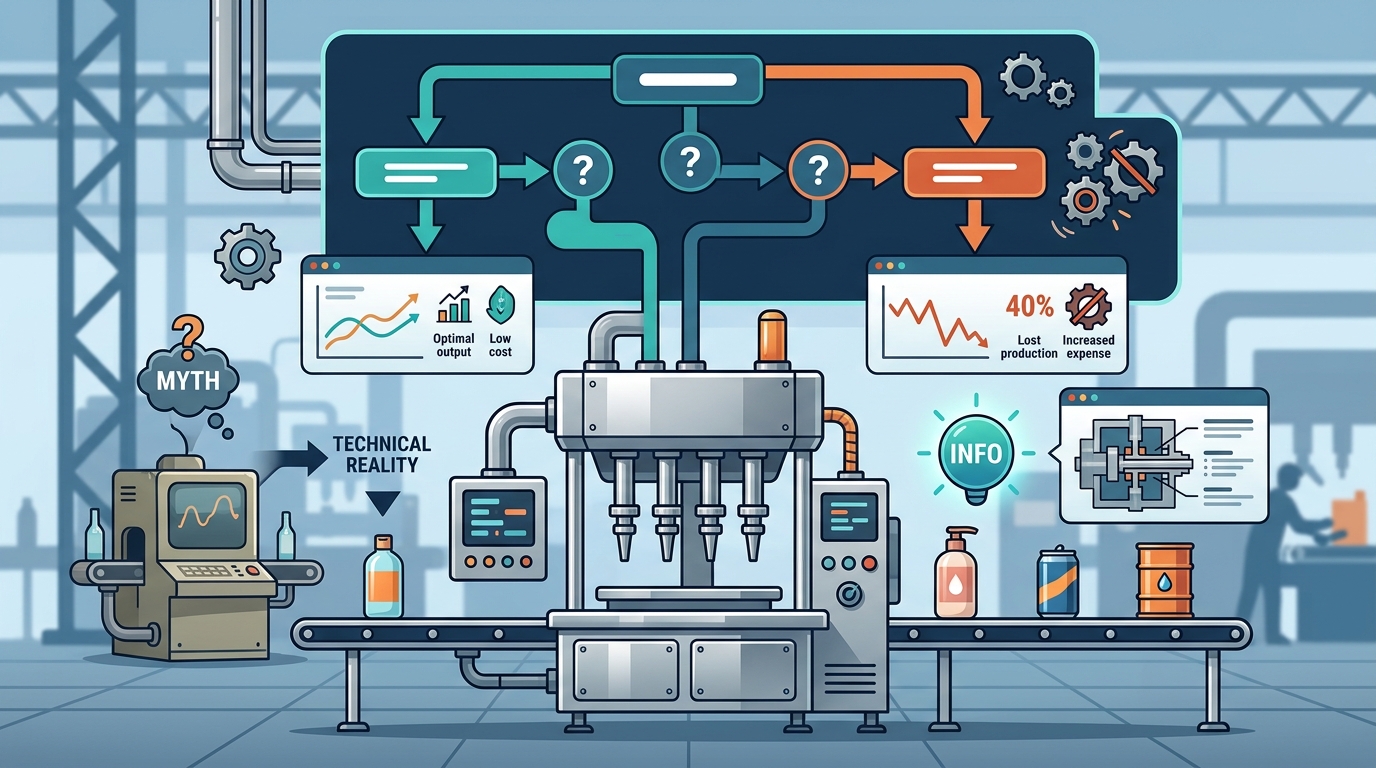
Choosing the right filling machine is one of the most critical decisions for any production facility. According to industry data, nearly 40% of packaging line inefficiencies stem from mismatched equipment specifications rather than operational errors. This statistic highlights why understanding the technical realities of filling technology is essential for maximizing efficiency and minimizing cost. Many business owners make purchasing decisions based on outdated assumptions or incomplete information. This guide addresses the most frequent questions and misconceptions to help you make an informed choice that boosts your ROI. (About JDA Progress Packaging)
Myth 1: All Fillers Are Interchangeable
A pervasive myth in the packaging industry is that any filler can handle any product. This is fundamentally incorrect. A filling machine is defined as a device that dispenses a specific volume or weight of product into a container with precision. The mechanics of dispensing a viscous liquid like honey differ entirely from dispensing a free-flowing powder like protein isolate.
For instance, liquid fillers rely on piston or pump mechanisms to control viscosity and prevent dripping. In contrast, powder fillers use auger screws or weigh fillers to manage dust and flowability. Using the wrong type leads to product waste, inconsistent fill weights, and frequent downtime. JDA Progress designs specialized equipment for these distinct categories, ensuring that your specific product characteristics are matched with the correct mechanical approach.
Myth 2: Higher Speed Always Equals Better ROI
Many buyers assume that the fastest machine on the market will automatically provide the best return on investment. However, speed without accuracy is a liability. A machine that runs at 100 containers per minute but has a 2% error rate in fill weight will cost more in product giveaway and regulatory fines than a slower, more precise machine.
True ROI comes from the balance of speed, accuracy, and reliability. According to operational benchmarks, a well-tuned mid-speed line often outperforms an over-speeded line in total cost of ownership. This is because it requires less maintenance, generates less waste, and integrates more smoothly with downstream processes like capping and labeling. At JDA Progress, we prioritize engineering solutions that maximize efficiency while maintaining rigorous quality standards.
Myth 3: Maintenance Is Only the Service Team's Job
Another common misconception is that once a machine is installed, maintenance is entirely the responsibility of the vendor. While professional support is vital, the longevity of your equipment depends heavily on daily operator care. Preventive maintenance involves regular cleaning, lubrication, and inspection of wear parts by your in-house team.
Neglecting basic upkeep can lead to premature failure of critical components like seals and sensors. JDA Progress provides comprehensive training and keeps a wide array of spare parts in stock to ensure that your team can perform routine checks quickly. This partnership model ensures that your production line remains operational with minimal disruption.
FAQ 1: How Do I Choose Between Liquid and Powder Fillers?
The choice between liquid and powder filling technology depends on your product's physical properties. If you are packaging liquids, such as beverages, oils, or chemicals, you need a liquid filler. These machines use piston, peristaltic, or pump systems to measure volume accurately. For powders, such as spices, supplements, or detergents, an auger filler or weigh filler is required. These systems measure by weight or volume displacement to handle the unique flow characteristics of dry goods.
Consider the viscosity of your liquid or the flowability of your powder. Highly viscous products may require heated lines or specialized pumps. Free-flowing powders might need vibration trays to prevent bridging. Consulting with engineers who understand these nuances is crucial for selecting the right hardware.
FAQ 2: What Is the Difference Between VFFS and Premade Pouch Systems?
When selecting bagging equipment, you must choose between Vertical Form Fill Seal (VFFS) machines and premade pouch baggers. A VFFS machine forms the bag from a roll of film, fills it, and seals it in one continuous process. This method is cost-effective for high-volume runs and reduces packaging material waste. In contrast, a premade pouch bagger picks, opens, and loads pre-manufactured bags. This option is ideal for complex bag shapes, high-barrier materials, or lower-volume production where flexibility is key.
JDA Progress offers both Redeepac VFFS models for powders and liquids, as well as premade pouch baggers. The decision often comes down to your packaging design requirements and production volume. If you need a custom bag shape, premade pouches are the only option. If you are optimizing for cost per unit, VFFS is typically superior.
FAQ 3: Why Is In-Stock Availability Critical?
Downtime is the enemy of profitability. One of the most significant advantages of working with a manufacturer that maintains a robust inventory is the ability to minimize repair times. JDA Progress keeps most machines and spare parts in stock, ready for immediate shipment. This operational readiness ensures that if a critical component fails, you are not waiting weeks for a replacement part from overseas.
Fast delivery of parts and equipment allows for quicker line installations and faster recovery from breakdowns. This reliability is a key factor in maintaining consistent production schedules and meeting customer demand without interruption.
FAQ 4: How Does Labeling Impact the Filling Process?
Labeling is often treated as a separate step, but it is integral to the overall packaging line efficiency. A labeler is a device that applies labels to containers, and its synchronization with the filler and capper is vital. If the labeling speed does not match the filling speed, bottlenecks occur. Furthermore, the type of label material and application method must be compatible with the container shape and product type.
JDA Progress offers a range of labelers for plastic, glass, and metal containers. Ensuring that your labeling equipment is compatible with your filling line prevents misalignment issues and ensures a professional final product appearance. Proper integration of these components streamlines the entire bottling line.
FAQ 5: What Warranty and Support Should I Expect?
Quality manufacturers stand behind their equipment with strong warranties and responsive support. JDA Progress provides a 1-year warranty on all machines and parts, reflecting confidence in their build quality. Beyond the warranty, ongoing support is essential. This includes access to technical documentation, remote diagnostics, and on-site training.
Customer reviews frequently highlight the importance of after-sales care. A manufacturer that provides knowledgeable people to deal with ensures that your team can operate the equipment effectively. This long-term partnership approach is what distinguishes top-tier packaging equipment providers from commodity sellers.
Key Takeaways
- Specialization Matters: Liquid fillers and powder fillers use distinct mechanical principles; choosing the wrong type leads to inefficiency.
- ROI is Balanced: Speed alone does not guarantee profitability; accuracy and reliability are equally important factors.
- Preventive Maintenance: Daily operator care is essential for extending the lifespan of your filling equipment.
- VFFS vs. Premade: VFFS machines offer cost savings for high volumes, while premade pouch systems offer design flexibility.
- In-Stock Parts: Immediate availability of spare parts minimizes costly production downtime.
- Integrated Systems: Labelers and cappers must be synchronized with fillers for optimal line performance.
- Long-Term Support: A 1-year warranty and responsive technical support are standard expectations for quality equipment.
Frequently Asked Questions
What is the primary difference between a piston filler and a pump filler?
A piston filler uses a reciprocating piston to draw and dispense a specific volume of product, making it ideal for viscous liquids. A pump filler uses a rotating mechanism to move product, which is better suited for lower viscosity fluids and higher speeds.
Can a single machine handle both liquids and powders?
Generally, no. The mechanical requirements for dispensing liquids versus powders are fundamentally different. However, some modular systems can be reconfigured with different heads or augers, but this requires significant changeover time and expertise.
How long does it take to install a new filling machine?
Installation time varies based on the complexity of the line and site preparation. Typically, a standalone filler can be operational within a few days, while a full bottling line may take several weeks. JDA Progress provides training and support to ensure a smooth transition.
What industries does JDA Progress serve?
JDA Progress serves a wide range of industries including food and beverage, cosmetics, chemicals, and nutraceuticals. Their equipment is tailored to meet the specific regulatory and operational needs of each sector.
Is remote support available for troubleshooting?
Yes, many modern filling machines offer remote diagnostics capabilities. This allows technical experts to access the machine's PLC (Programmable Logic Controller) to identify and resolve issues quickly without needing to travel to your site.
What is the average lifespan of a packaging machine?
With proper maintenance and care, a high-quality packaging machine can last for decades. Many of JDA Progress's machines have been in operation for over 14 years, demonstrating their durability and build quality.
How do I request a demo of their equipment?
You can request a demo by visiting their test and demo centre in Vaughan, Ontario. They have dozens of packaging machines on display, and their engineers can demonstrate how each one works with your specific products.
Ready to Optimize Your Packaging Line?
Choosing the right filling machine is a strategic decision that impacts your bottom line for years to come. Avoid common pitfalls by partnering with a manufacturer that understands your unique needs. JDA Progress offers expert guidance, high-quality equipment, and reliable support to help you maximize efficiency and boost your ROI.
Contact us today to discuss your packaging requirements. Visit our Contact Us page to request a quote or schedule a demo at our Vaughan showroom. Our team is ready to help you find the perfect solution for your business.