
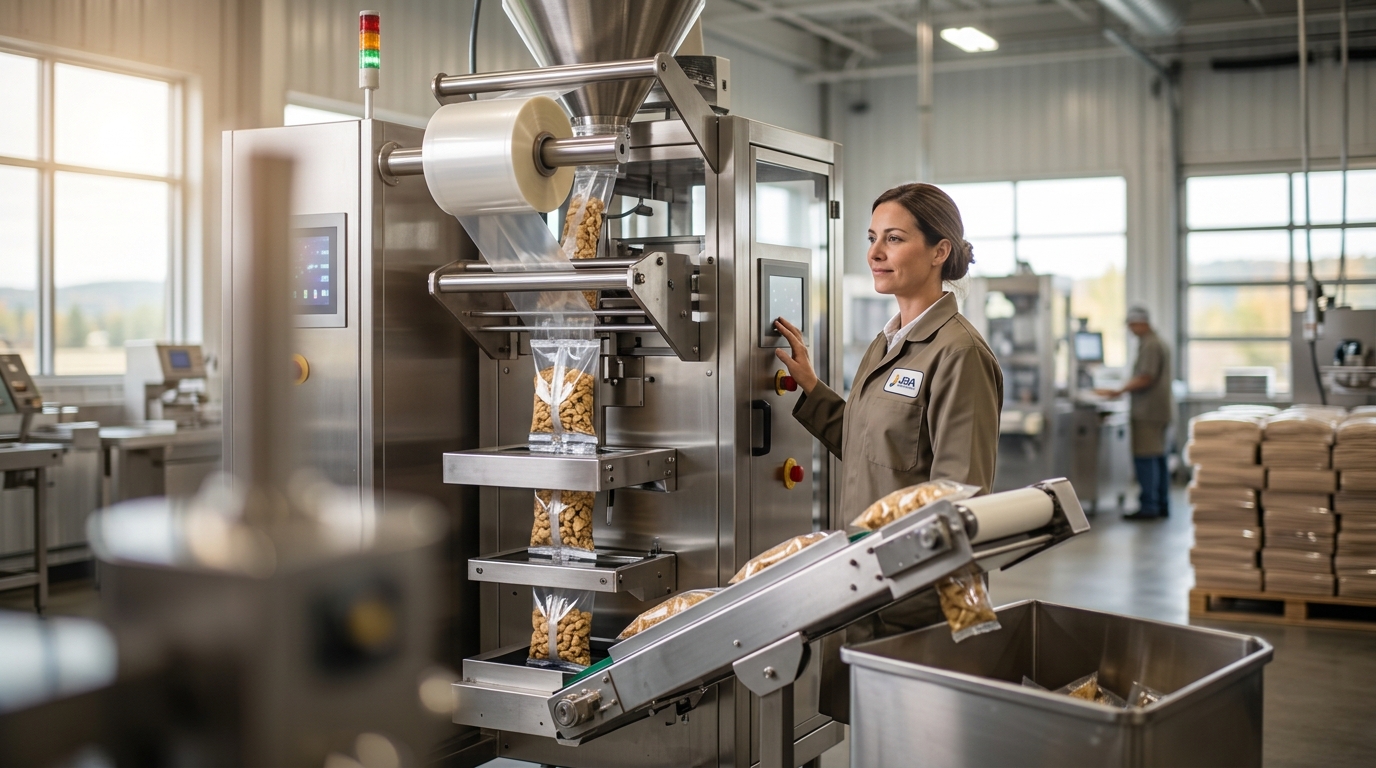
Vertical Form Fill Seal (VFFS) technology has fundamentally transformed the packaging industry by replacing manual labor with high-speed, automated precision. According to recent market analysis, the global VFFS machine market is projected to expand significantly through 2030, driven by the increasing demand for efficient packaging solutions in the food and beverage sectors. This growth is not merely a trend but a necessity for manufacturers seeking to reduce waste and increase throughput. By automating the creation of pouches from a roll of film, businesses can achieve consistent seal integrity and drastically lower operational costs. This guide explores the mechanics, benefits, and selection criteria for VFFS systems to help you make an informed investment decision. (About JDA Progress Packaging)
What is VFFS Technology?
VFFS stands for Vertical Form Fill Seal. It is a packaging method where the machine forms a bag from a continuous roll of flat film, fills it with product, and seals it, all in one vertical motion. This process is distinct from using pre-made bags, which require separate handling and loading steps. The term VFFS is often used interchangeably with "vertical packing machine" or "automatic bagging machine." The core advantage of this technology is its ability to create custom-sized packages on the fly, reducing inventory costs associated with storing various bag sizes. (Trusted Packaging Equipment Manufacturer)
At its heart, a VFFS machine is a complex integration of mechanical and electronic systems. It relies on precise temperature control for sealing, accurate film tension management, and high-speed servo motors for product feeding. The technology is particularly favored for its versatility. Whether you are packaging granules, powders, or liquids, a properly configured VFFS line can handle a wide variety of materials with minimal changeover time. This adaptability makes it a cornerstone of modern production lines in diverse sectors.
How VFFS Machines Operate
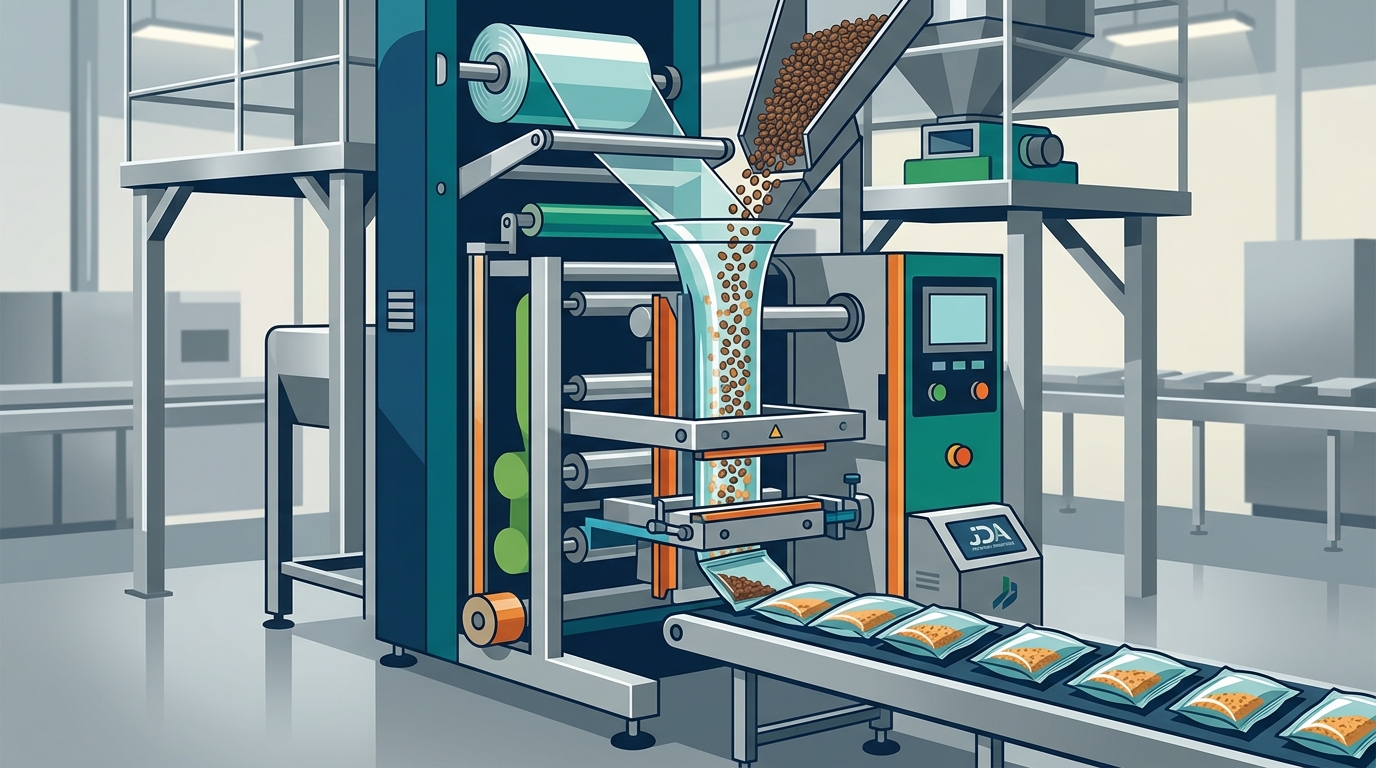
Understanding the operational workflow of a VFFS machine is crucial for evaluating its fit for your production needs. The process begins with the film roll mounted on the unwind stand. The film is pulled down through a forming tube, which shapes the flat film into a tube. This tube is then sealed longitudinally, creating a continuous sleeve of packaging material.
The Forming Process
The forming tube is the heart of the bag creation process. As the film passes through, it is shaped into a cylinder. The longitudinal seal is created using a sealing jaw or a heated bar, depending on the machine model. This seal must be strong enough to prevent leakage but precise enough to avoid damaging the film. The width of the formed tube determines the width of the final bag.
Filling and Sealing
Once the tube is formed, the product is introduced into the top of the tube. This is typically done using a volumetric filler, weigh filler, or auger filler, depending on the product density. After the fill cycle, the film is pulled down to the transverse sealing jaws. These jaws close simultaneously, sealing the bottom of the current bag and the top of the next bag. A cutter then separates the two bags. This cycle repeats at high speeds, often producing dozens of bags per minute.
Key Benefits of Automated Bagging
Investing in a VFFS machine offers several strategic advantages for manufacturing operations. The primary benefit is efficiency. Automated bagging lines can operate continuously with minimal human intervention, significantly increasing output compared to manual packing. This speed is critical for meeting tight production deadlines and scaling operations.
Another significant advantage is cost reduction. By using a single roll of film rather than pre-made bags, companies save on material costs. Pre-made bags often carry a premium due to the manufacturing and storage expenses involved. Additionally, VFFS machines reduce labor costs by automating tasks that were previously done by hand. This shift allows staff to focus on quality control and machine maintenance rather than repetitive packing tasks.
Consistency and quality are also enhanced. Automated systems ensure that every bag is filled to the exact same weight and sealed with the same pressure. This consistency is vital for brand reputation and regulatory compliance. Inconsistent fill weights can lead to customer dissatisfaction and potential legal issues regarding net content regulations. VFFS technology minimizes these risks through precise control mechanisms.
Industries Served by VFFS Systems
VFFS machines are versatile and serve a wide range of industries. The food and beverage sector is the largest adopter, using these machines for packaging snacks, coffee, frozen vegetables, and liquids. The ability to handle both free-flowing and non-free-flowing products makes VFFS ideal for diverse food items.
The pharmaceutical and nutraceutical industries also rely heavily on VFFS technology. These sectors require high levels of hygiene and precision. VFFS machines can be equipped with stainless steel components and advanced cleaning systems to meet strict sanitary standards. They are used to package vitamins, powders, and herbal supplements in single-serving pouches.
Chemical and agricultural industries benefit from the durability of VFFS machines. These sectors often package granular products like fertilizers, pesticides, and industrial chemicals. The machines are built to withstand harsh environments and handle abrasive materials. The robust construction ensures long-term reliability even in demanding conditions.
VFFS vs. Premade Pouch Machines
When selecting packaging equipment, businesses often choose between VFFS and premade pouch machines. Both have distinct advantages depending on the specific needs of the operation. Understanding these differences is key to making the right choice.
| Feature | VFFS Machines | Premade Pouch Machines |
|---|---|---|
| Material Source | Roll film | Pre-formed bags |
| Cost Efficiency | Lower material cost | Higher material cost |
| Bag Variety | Custom sizes on demand | Limited to available stock |
| Setup Time | Faster changeovers | Slower due to bag loading |
| Best For | High volume, standard shapes | Premium look, complex shapes |
VFFS machines are generally more cost-effective for high-volume production of standard bag shapes. They allow for quick changeovers between different bag sizes by simply adjusting the forming tube and sealing jaws. Premade pouch machines, on the other hand, are better suited for products that require a premium appearance or complex bag structures that VFFS cannot easily create. They are also useful for packaging irregularly shaped items that might not flow well in a vertical tube.
How to Choose the Right VFFS Machine
Selecting the appropriate VFFS machine requires careful consideration of several factors. First, evaluate the type of product you are packaging. Granules, powders, and liquids each require different filling mechanisms. For example, powders often need an auger filler to ensure accurate dosing, while liquids may require a piston filler.
Next, consider the production speed required. VFFS machines vary in speed, with some models capable of producing hundreds of bags per minute. Ensure that the machine you choose can meet your current and future production demands without becoming a bottleneck. It is also important to consider the film type you will use. Some films require specific sealing temperatures and pressures, so the machine must be compatible with your chosen packaging material.
After-sales support is another critical factor. Packaging equipment requires regular maintenance and occasional repairs. Choosing a manufacturer that offers comprehensive support, including spare parts and technical assistance, is essential for minimizing downtime. JDA Progress, for instance, maintains a large inventory of in-stock parts and offers a 1-year warranty on all machines. This commitment to support ensures that your investment remains productive over the long term.
Key Takeaways
- VFFS machines automate the bagging process, significantly increasing production speed and reducing labor costs.
- The technology uses a continuous roll of film, which is more cost-effective than pre-made bags.
- VFFS systems are versatile and serve industries including food, beverage, pharmaceuticals, and chemicals.
- Proper machine selection depends on product type, required speed, and film compatibility.
- After-sales support and warranty coverage are crucial for long-term operational success.
- JDA Progress offers a range of VFFS models, including the Redeepac series, tailored to specific needs.
- Automated bagging improves consistency and reduces waste, enhancing overall product quality.
Frequently Asked Questions
What products are best suited for VFFS machines?
VFFS machines are ideal for packaging granules, powders, liquids, and small solids. They are widely used in the food industry for items like coffee, snacks, and frozen vegetables. The pharmaceutical sector uses them for vitamins and supplements. The key is that the product must be able to flow into the forming tube or be metered accurately into it.
How fast can a VFFS machine operate?
Speed varies by model and product. Standard VFFS machines can produce between 30 to 120 bags per minute. High-speed models designed for simple products like chips or candies can reach even higher speeds. The actual speed depends on the complexity of the bag and the filling method used.
Can VFFS machines handle different bag sizes?
Yes, one of the main advantages of VFFS technology is the ability to produce custom bag sizes on demand. By adjusting the forming tube and sealing parameters, you can change the bag dimensions quickly. This flexibility allows for efficient production runs of various sizes without significant downtime.
What maintenance is required for VFFS machines?
Regular maintenance includes cleaning the sealing jaws, checking film tension, and lubricating moving parts. It is also important to inspect the heating elements and sensors periodically. Following the manufacturer's maintenance schedule ensures optimal performance and extends the machine's lifespan. JDA Progress provides detailed maintenance guides and support for all its equipment.
Is VFFS more expensive than manual packing?
While the initial investment in a VFFS machine is higher than manual packing equipment, the long-term savings are significant. Reduced labor costs, lower material costs, and increased production speed lead to a faster return on investment. For high-volume operations, VFFS is almost always more cost-effective.
What warranty does JDA Progress offer?
JDA Progress offers a 1-year warranty on all machines and parts. This warranty covers manufacturing defects and ensures that you receive support during the critical initial period of operation. Additionally, their team provides ongoing technical assistance and spare parts availability.
Where is JDA Progress located?
JDA Progress is headquartered in Vaughan, Ontario, Canada. They have a 15,000 square foot facility that includes a showroom open to the public for machine demonstrations. This location allows customers to see their equipment in action and discuss their specific packaging needs with engineers.
Contact JDA Progress
Ready to optimize your packaging line with a high-performance VFFS machine? JDA Progress offers expert guidance to help you select the right equipment for your specific needs. Visit our Baggers page to explore our range of Vertical Form Fill Seal machines. You can also request a demo at our Vaughan showroom to see our technology in action. For immediate assistance, call us at 905-850-6434 or contact our team online. Let us help you maximize efficiency and boost your ROI with reliable packaging solutions.