
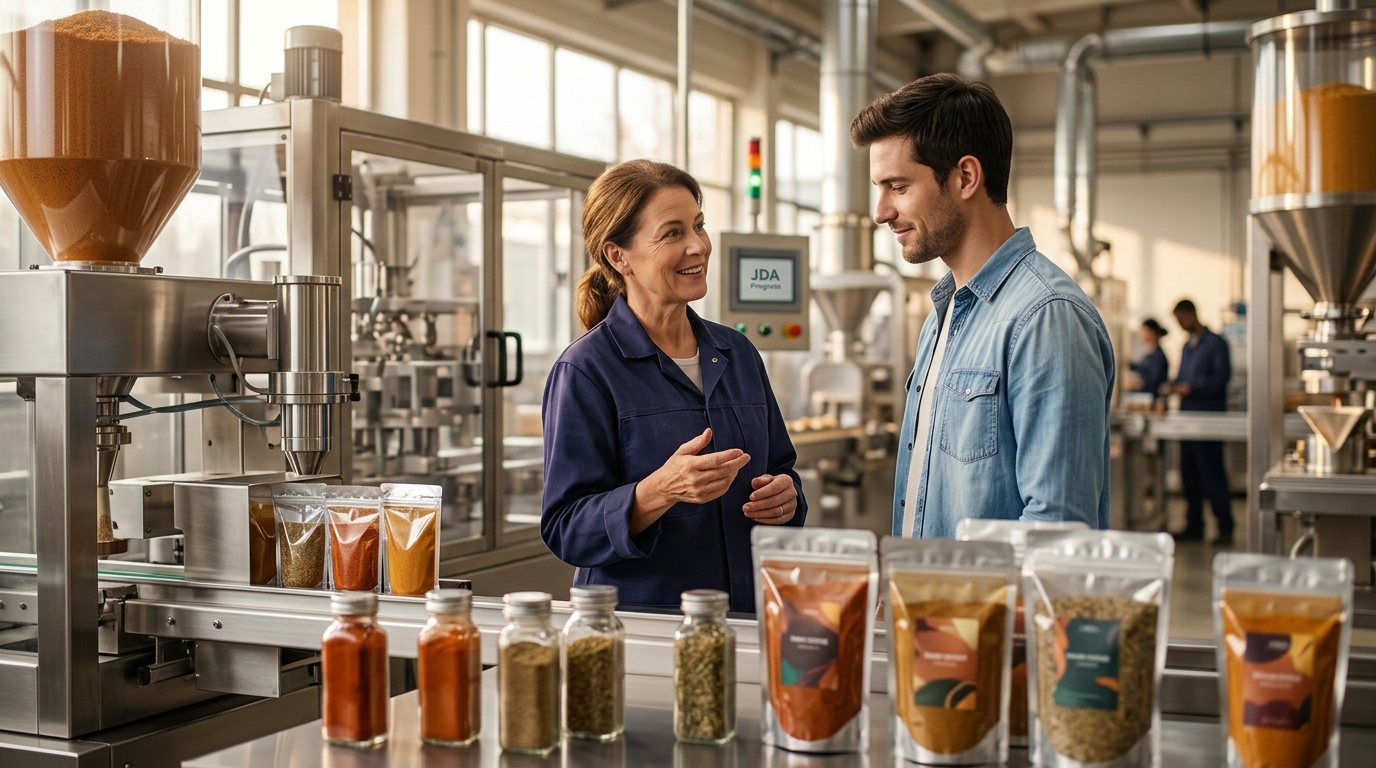
Spice manufacturers often face significant operational bottlenecks when transitioning from manual labor to automated filling systems. According to industry data, automated packaging lines can increase throughput by up to 300% compared to manual methods, yet many business owners hesitate due to persistent misconceptions about cost and complexity. This guide addresses the most common myths surrounding spice filling machines for both pouches and bottles, providing clear, evidence-based answers to help you make an informed decision.
Myth 1: Automation is Too Expensive for Small Batches
One of the most pervasive myths in the packaging industry is that automated filling machines are only viable for large-scale production runs. Many small to medium-sized spice businesses believe they must invest in massive, high-speed lines to justify the cost. This perspective ignores the flexibility of modern packaging equipment.
Modern filling machines, such as those offered by JDA Progress, are designed to handle a wide range of batch sizes. Whether you are producing 500 units or 50,000 units, the efficiency gains from automation quickly offset the initial investment. The return on investment (ROI) is realized through reduced labor costs, minimized product waste, and consistent fill weights that prevent overfilling.
Furthermore, the concept of a weigh filler is critical here. A weigh filler is a precision filling system that uses load cells to measure the exact weight of the product being dispensed. This technology ensures accuracy regardless of batch size, making it ideal for spices where density can vary. By using a weigh filler, you eliminate the guesswork associated with volumetric filling, ensuring every pouch or bottle contains the exact amount of spice promised to the consumer.
Myth 2: Spice Filling Requires Specialized, Rare Equipment
Another common misconception is that filling spices requires highly specialized, hard-to-find machinery. Spices are often free-flowing powders, but they can also be coarse, abrasive, or prone to clumping due to humidity. This variability leads some manufacturers to believe they need custom-built, exotic equipment.
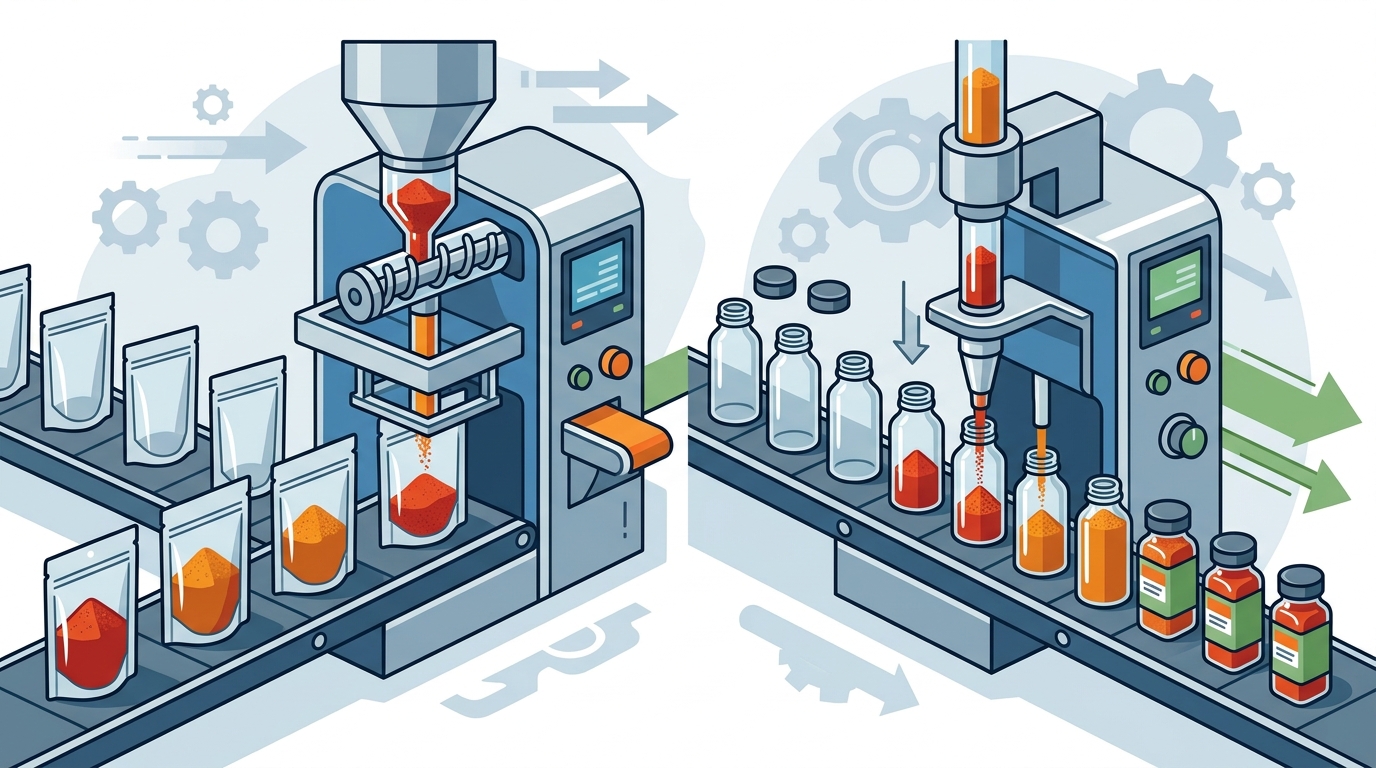
In reality, standard packaging equipment can be adapted to handle most spice types effectively. Fillers designed for powders utilize auger mechanisms or piston systems to dispense product accurately. An auger filler is a mechanical device that uses a rotating screw to push powder into a container, providing precise control over fill volume. This mechanism is particularly effective for spices because it can handle variations in powder density without clogging.
Additionally, the choice between baggers and bottle fillers depends on your product's physical properties. Vertical Form Fill Seal (VFFS) machines are excellent for spices because they create a sealed pouch directly from a roll of film, protecting the spice from moisture and light. Premade pouch baggers are another option, offering a different aesthetic and structural integrity for premium spice lines.
Myth 3: Automated Systems Are High-Maintenance
Many potential buyers avoid automation due to the fear of complex maintenance requirements. They worry that automated machines will break down frequently, requiring specialized technicians and causing costly downtime. This fear is often unfounded when dealing with reputable manufacturers who prioritize durability and ease of service.
High-quality packaging equipment is built to withstand the rigors of continuous operation. Service and parts availability is a key indicator of a manufacturer's commitment to long-term support. JDA Progress, for instance, maintains a comprehensive inventory of spare parts and provides extensive training to ensure your team can perform routine maintenance effectively.
Regular maintenance is straightforward and predictable. Cleaning the auger or piston mechanism after each batch prevents cross-contamination and buildup. Lubricating moving parts according to the manufacturer's schedule ensures smooth operation. By following these simple protocols, you can extend the lifespan of your equipment and minimize unexpected repairs.
Pouches vs. Bottles: Which Filling Method Suits Your Spice?
Choosing between pouches and bottles is a strategic decision that impacts your brand identity, shipping costs, and consumer experience. Both options have distinct advantages and are supported by robust filling technologies.
| Feature | Pouches (VFFS/Premade) | Bottles (Glass/Plastic) |
|---|---|---|
| Material Cost | Generally lower for the packaging material itself. | Higher, especially for glass or high-grade plastic. |
| Storage Efficiency | Flat pouches save significant warehouse space. | Rigid bottles require more storage volume. |
| Consumer Perception | Modern, eco-friendly, convenient. | Premium, traditional, durable. |
| Filling Technology | Requires baggers or blenders for pre-mixing. | Requires fillers and cappers. |
| Shelf Life | Excellent barrier properties against moisture. | Depends on cap seal integrity. |
For spices that are sensitive to moisture, such as garlic powder or onion powder, pouches often provide superior protection. The multi-layer films used in VFFS machines can include aluminum barriers that block light and oxygen. On the other hand, bottles offer a tactile experience that many consumers associate with quality. They are also easier to store in kitchen cabinets and can be refilled by the consumer.
Regardless of your choice, the filling process must be precise. Labelers play a crucial role in both scenarios, ensuring that your branding and regulatory information are applied correctly and consistently. A mislabeled product can lead to returns and damage your brand reputation.
Key Takeaways
- Automation is cost-effective for all batch sizes due to labor savings and reduced waste.
- Standard auger fillers and weigh fillers are suitable for most spice types, including coarse and free-flowing powders.
- Regular maintenance is simple and predictable when using equipment from reputable manufacturers like JDA Progress.
- Pouches offer lower material costs and better moisture protection, while bottles provide a premium consumer experience.
- JDA Progress has over 35 years of experience in the packaging industry, serving clients in food, beverage, cosmetics, and chemicals.
- Their facility in Vaughan, Ontario, includes a 15,000 square foot showroom for machine demonstrations.
- Customer reviews highlight the importance of after-sales support and the durability of JDA equipment.
Frequently Asked Questions
What is the difference between a weigh filler and an auger filler for spices?
A weigh filler is a precision filling system that uses load cells to measure the exact weight of the product being dispensed, ensuring high accuracy for variable-density spices. An auger filler is a mechanical device that uses a rotating screw to push powder into a container, providing consistent fill volumes for free-flowing powders.
Can I use a single machine for both pouches and bottles?
Typically, no. Pouch filling requires baggers such as VFFS machines, while bottle filling requires fillers and cappers. However, you can integrate these machines into a single bottling line for a complete automated workflow.
How do I choose the right filler for a coarse spice like chili flakes?
Coarse spices require fillers with larger auger flights or piston mechanisms to prevent clogging. It is essential to test your specific product with the manufacturer to ensure the machine can handle the particle size without bridging or rat-holing.
What industries does JDA Progress serve?
JDA Progress serves the food and beverage, cosmetics, chemicals, and nutraceuticals industries. Their equipment is designed to meet the specific hygiene and precision requirements of these sectors.
Is there a warranty on JDA Progress packaging machines?
Yes, JDA Progress provides a 1-year warranty on all machines and parts. They also offer extensive after-sales support and training to ensure your team can operate and maintain the equipment effectively.
Where is JDA Progress located?
JDA Progress is located in Vaughan, Ontario, Canada. Their facility includes a permanent showroom open to the public for machine demonstrations and consultations.
How long has JDA Progress been in business?
JDA Progress has been in business for over 35 years, having been founded in 1988. They have sold thousands of packaging machines to customers in North America and around the world.
What types of labelers are compatible with spice packaging?
JDA Progress offers labelers for plastic, glass, and metal containers. These labelers can apply labels to bottles, jars, and even pouches, ensuring consistent and professional branding.
Contact JDA Progress for Your Solution
Don't let myths hold your spice business back. Whether you are looking to upgrade your current line or start fresh with a new packaging strategy, JDA Progress has the expertise and equipment to help you succeed. Visit our Demo Centre in Vaughan to see our machines in action, or contact us today to request a quote and discuss your specific needs.