
Why Manufacturers Choose Stainless Steel Ribbon Blenders for Powder Mixing
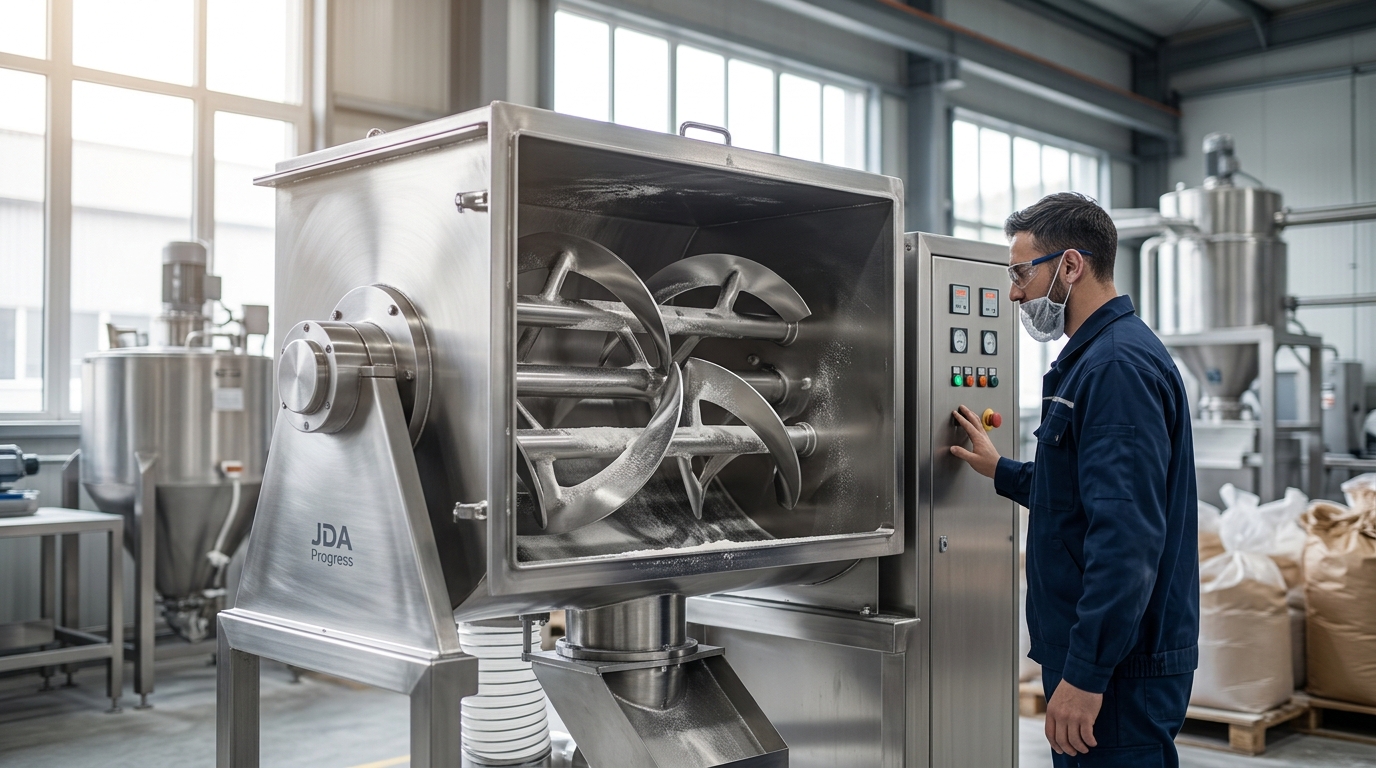
Manufacturers choose stainless steel ribbon blenders because the material ensures hygiene, prevents contamination, and withstands the rigorous demands of industrial powder processing. This durable construction is essential for maintaining product integrity in sensitive sectors like food, pharmaceuticals, and chemicals. JDA Progress designs these systems to deliver consistent mixing while meeting strict industry standards for safety and cleanliness.
Hygiene and Contamination Control
Stainless steel is the preferred material for powder mixing because it is non-porous and resistant to corrosion. This property prevents the absorption of moisture, oils, or chemical residues that could compromise the next batch of product. In industries where cross-contamination is a critical risk, the smooth surface of stainless steel allows for thorough and rapid cleaning between production runs.
For manufacturers in the food and beverage sectors, this material is a regulatory necessity. Health and safety standards require that equipment in contact with consumable goods be made from materials that do not leach harmful substances. By using heavy gauge 304 stainless steel, JDA Progress ensures that the blending area remains a sterile environment. This reduces the risk of microbial growth and ensures that the final product meets consumer safety expectations.
The implication for plant managers is a significant reduction in downtime. Because stainless steel surfaces are easier to sanitize than painted or coated alternatives, cleaning crews can complete their tasks more efficiently. This operational speed allows for more frequent changeovers and higher overall equipment utilization throughout the shift.
Durability and Structural Integrity
Stainless steel ribbon blenders are engineered to handle the mechanical stress of mixing dense and abrasive powders. The material provides the tensile strength required to support the heavy-duty helical agitators and the bulk weight of the ingredients. This structural integrity ensures that the machine maintains its alignment and performance over many years of continuous operation.
At JDA Progress, our ribbon blenders feature heavy gauge 304 stainless steel construction with welded end plates. This design choice eliminates the need for external fasteners that could create crevices where product might accumulate. The use of complete stainless steel construction, without paint, ensures that the machine does not suffer from surface degradation or flaking over time. This longevity protects the manufacturer's capital investment and reduces the frequency of major repairs.
The choice of stainless steel also impacts the machine's ability to handle a wide variety of materials. Whether mixing dry granular substances or semi-dry powders, the robust frame of the blender remains stable. This reliability is crucial for production lines that cannot afford unexpected mechanical failures or shifts in mixing consistency.
Regulatory Compliance and Industry Standards
Compliance with industry regulations is a primary driver for selecting stainless steel in powder processing. In the pharmaceutical and nutraceutical industries, equipment must meet strict guidelines regarding material compatibility and cleanability. Stainless steel is the standard material for these applications because it is inert and does not react with most chemical compounds.
Our ribbon blenders are designed with a PTFE FDA approved shaft seal, which works in tandem with the stainless steel body to prevent external contamination. This specific combination of materials ensures that the internal mixing environment remains isolated from the external plant environment. For manufacturers who must pass rigorous audits, the use of certified stainless steel components provides a clear and defensible position regarding product safety.
Furthermore, the smooth finish of the stainless steel components is critical for meeting Good Manufacturing Practices (GMP). All welds on our machines are ground smooth to achieve a high-quality, uniform finish. This attention to detail ensures that there are no rough edges or pits where bacteria or product residue could hide, making the equipment fully compliant with the highest standards of industrial hygiene.
Operational Efficiency and Maintenance
Stainless steel ribbon blenders offer distinct advantages in terms of daily maintenance and operational efficiency. The material's resistance to wear and tear means that the internal ribbons and trough require less frequent replacement than machines made from less durable materials. This reduces the cost of spare parts and the labor required for maintenance.
JDA Progress incorporates a direct drive heavy duty helicoil drive system into our stainless steel blenders. This system is designed to work seamlessly with the robust frame, providing the torque necessary to mix large volumes of powder efficiently. The standard packing shaft sealing avoids any type of contamination while ensuring that the drive mechanism remains protected from the product being mixed. This design simplifies maintenance tasks and extends the lifespan of critical mechanical components.
The ease of maintenance also translates to better operator safety. Our blenders come with an operator safety grid in stainless steel with a safety sensor as standard. This feature protects the operator while allowing for easy access to the blending area for cleaning or inspection. The combination of safety and ease of access makes stainless steel blenders a practical choice for high-volume production environments.
Versatility Across Industries
Stainless steel ribbon blenders are versatile enough to serve a wide range of industries, from food and chemicals to pharmaceuticals. The material's chemical resistance allows it to handle a diverse portfolio of products without requiring separate machines for each type of powder. This versatility is a key factor in why manufacturers choose these blenders for their production lines.
At JDA Progress, we offer six models of ribbon blenders, ranging from 7 to 70 cubic feet. Each model is constructed from the same high-quality stainless steel, ensuring consistent performance regardless of the batch size. This scalability allows manufacturers to start with a smaller unit and expand their capacity as their business grows, without having to change their equipment provider or material standards.
The ability to mix different types of powders in the same machine is a significant operational benefit. For contract manufacturers who handle multiple client products, the ease of cleaning and the inert nature of stainless steel make it possible to switch between products with minimal risk of cross-contamination. This flexibility is essential for businesses that need to remain competitive in a fast-paced market.
Key Takeaways
- Stainless steel is non-porous and corrosion-resistant, preventing product contamination and ensuring hygiene.
- Heavy gauge 304 stainless steel construction provides the structural strength needed for long-term durability.
- The material meets strict regulatory standards in food, pharmaceutical, and chemical industries.
- Smooth, ground welds and complete stainless steel bodies facilitate rapid and thorough cleaning.
- Stainless steel blenders offer lower maintenance costs and higher operational efficiency over time.
- These machines are versatile and can handle a wide variety of powders across different sectors.
Frequently Asked Questions
Why is 304 stainless steel preferred for ribbon blenders?
Can stainless steel ribbon blenders handle abrasive powders?
Yes, the heavy gauge construction of stainless steel blenders is designed to withstand the wear and tear caused by abrasive powders. The material's durability ensures that the mixing components remain effective over many years of use.
How does stainless steel contribute to food safety?
Stainless steel is non-porous and does not harbor bacteria, making it ideal for food safety. Its smooth surface allows for easy sanitization, which is a critical requirement for preventing contamination in food production.
Is stainless steel more expensive than other materials?
While the initial cost of stainless steel may be higher than painted steel, the long-term savings in maintenance, durability, and compliance often make it a more cost-effective choice for industrial manufacturers.
Do JDA Progress ribbon blenders come with safety features?
Yes, JDA Progress ribbon blenders include an operator safety grid in stainless steel with a safety sensor as standard. This ensures that the machine stops if the safety grid is opened, protecting the operator.
Conclusion
Stainless steel is the definitive choice for manufacturers seeking reliability, hygiene, and compliance in powder mixing. Its inherent properties ensure that your production line remains safe, efficient, and ready for the demands of modern industrial processing. JDA Progress provides high-quality stainless steel ribbon blenders that are built to last and designed to meet the specific needs of your industry. To discuss your requirements and find the right solution for your facility, .