
Why Auger Fillers Are the Best Choice for Packaging Spices Accurately
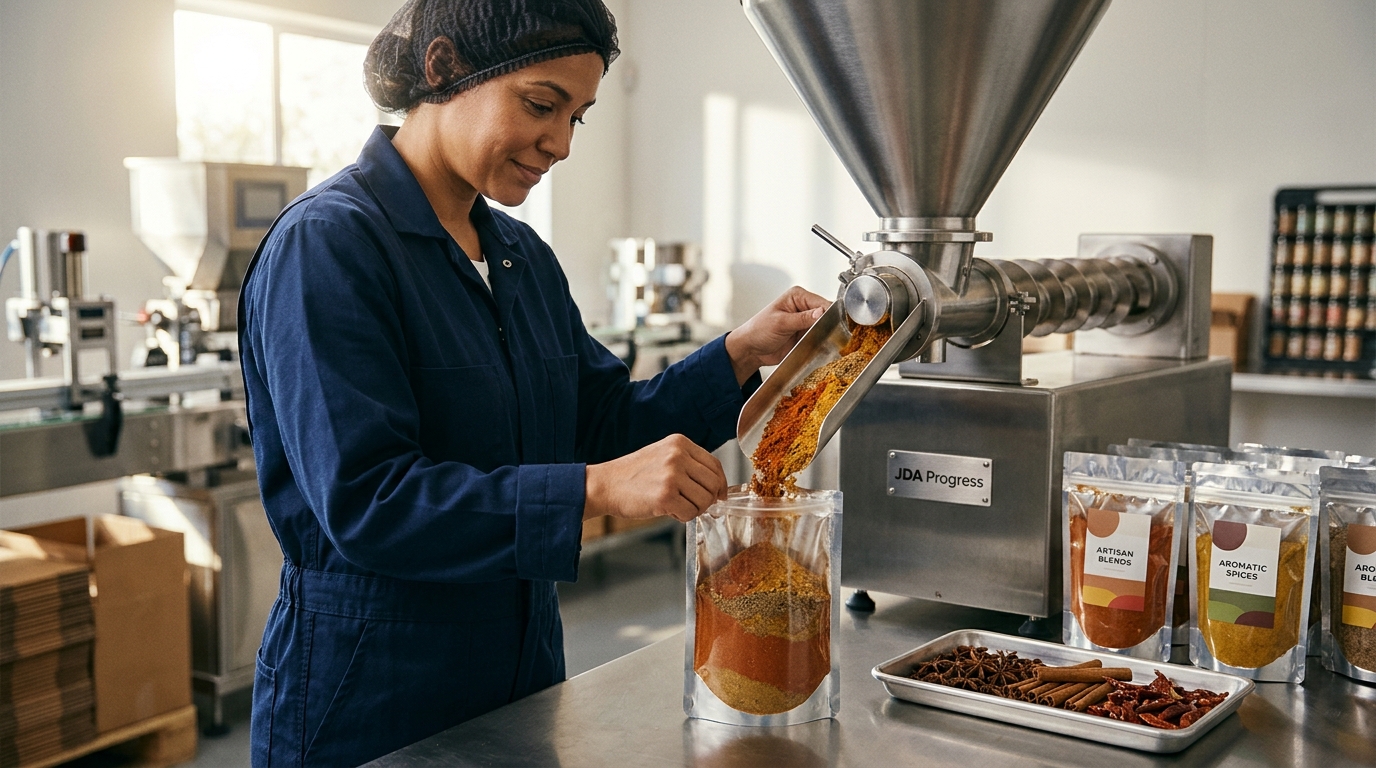
Auger fillers are the best choice for packaging spices accurately because they use a rotating screw mechanism to meter precise volumes of free-flowing and non-free-flowing powders. This mechanical approach eliminates the variability associated with gravity-fed systems, ensuring consistent fill weights for products like ground pepper, paprika, and cinnamon. JDA Progress designs these systems to handle the unique flow characteristics of spice blends, providing manufacturers with reliable, high-speed, and accurate packaging solutions.
The Mechanics of Volumetric Accuracy
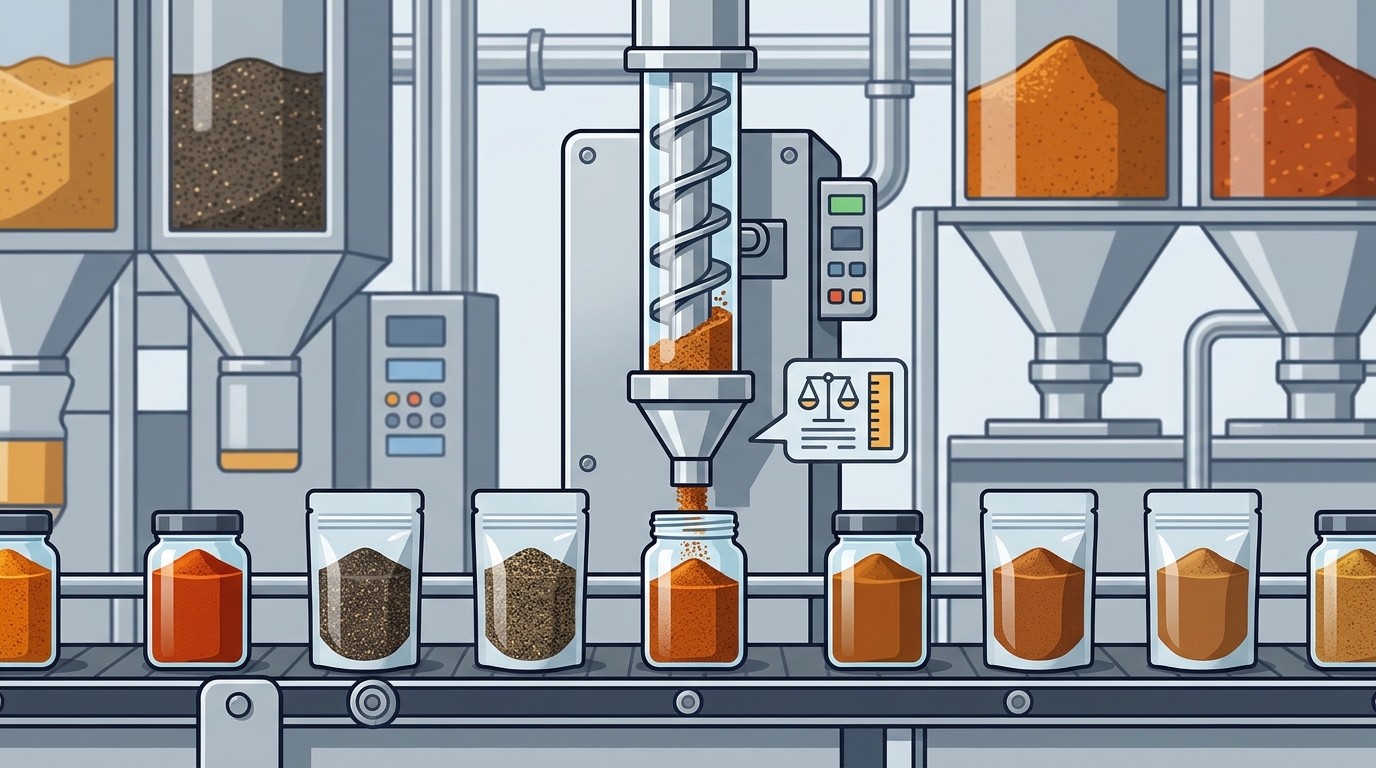
Auger filling is a volumetric filling method where a rotating screw, or auger, pushes a specific amount of product into a container. Unlike gravity fillers that rely on the natural flow of the product, auger fillers use a calibrated screw pitch to control the exact volume dispensed per rotation. This is critical for spices, which can vary in density and flow rate depending on humidity and particle size. By controlling the rotation speed and the number of rotations, the machine ensures that every container receives the same volume of product, regardless of minor changes in the spice's physical state.
The precision of an auger filler is often measured in percentage variance. High-quality auger systems, such as those from JDA Progress, are engineered to maintain accuracy within a 1% margin of error. This level of precision is essential for regulatory compliance and consumer trust. When a customer buys a 100-gram jar of spice, they expect to receive exactly 100 grams. An auger filler ensures that the product is not under-filled, which can lead to customer complaints, or over-filled, which results in unnecessary product giveaway and reduced profit margins.
The mechanical nature of the auger also allows for easy adjustment. Operators can change the fill volume by adjusting the stroke length of the auger or the number of rotations. This flexibility is particularly useful for manufacturers who package multiple spice varieties in the same container size. For example, a facility producing both coarse sea salt and fine black pepper can quickly switch between products by adjusting the auger settings, minimizing downtime and maximizing production efficiency.
Handling Non-Free-Flowing Spice Blends
Many spice blends, particularly those containing anti-caking agents or high-moisture ingredients, do not flow freely. These non-free-flowing products can cause bridging and rat-holing in gravity-fed hoppers, leading to inconsistent fills and frequent line stoppages. Auger fillers are specifically designed to handle these challenging materials. The rotating screw actively pushes the product into the container, breaking up clumps and ensuring a consistent flow even when the spice is sticky or cohesive.
JDA Progress offers auger fillers equipped with agitation systems that further enhance the flow of non-free-flowing products. These systems use a secondary motor to stir the product in the hopper, preventing it from settling and ensuring a steady supply to the auger. This feature is particularly beneficial for manufacturers of gourmet spice blends, which often contain a mix of different particle sizes and textures. By maintaining a consistent flow, the auger filler ensures that every container is filled to the same weight, even when the product is difficult to handle.
The ability to handle non-free-flowing products is a key advantage of auger fillers over other filling methods. Gravity fillers often require the product to be free-flowing, which may not be the case for many spice blends. Vibratory fillers can also struggle with cohesive products, as the vibration can cause the product to clump. Auger fillers, on the other hand, provide a reliable and consistent filling process for a wide range of spice products, from fine powders to coarse blends.
Hygienic Design and Food Safety Compliance
Food safety is a top priority in the spice industry. Spices are susceptible to contamination, and any equipment that comes into contact with the product must be designed to prevent the growth of bacteria and other pathogens. Auger fillers are typically constructed from stainless steel, which is non-porous and easy to clean. This material is resistant to corrosion and does not react with the product, ensuring that the spice remains pure and safe for consumption. according to Filler Identification and
The design of the auger filler also plays a crucial role in food safety. JDA Progress auger fillers feature quick-disconnect components that allow for easy cleaning and maintenance. This design minimizes the risk of product contamination and ensures that the equipment can be thoroughly cleaned between production runs. Additionally, the auger filler is designed to prevent product from accumulating in hard-to-reach areas, which can become a breeding ground for bacteria.
Compliance with food safety regulations is essential for spice manufacturers. The National Institute of Standards and Technology (NIST) publishes the official guide for testing the net contents of packaged products sold in the United States, which includes guidelines for ensuring accurate and consistent fills. By using an auger filler that meets these standards, manufacturers can ensure that their products are compliant with regulatory requirements and that they are providing consumers with a safe and high-quality product.
Integration with Automated Packaging Lines
Auger fillers are not just standalone machines; they are integral components of automated packaging lines. They can be integrated with other equipment, such as baggers, sealers, and labelers, to create a fully automated packaging system. This integration allows manufacturers to increase their production capacity and reduce labor costs. By automating the entire packaging process, manufacturers can achieve higher throughput and greater consistency in their output.
JDA Progress offers a range of auger fillers that can be easily integrated into existing packaging lines. These machines are designed to work seamlessly with other JDA Progress equipment, such as vertical form fill seal (VFFS) machines and premade pouch baggers. This compatibility ensures that the entire packaging line operates smoothly and efficiently, with minimal downtime and maximum productivity. The ability to integrate the auger filler with other equipment is a key advantage for manufacturers looking to scale their operations and meet increasing demand.
The integration of auger fillers with automated packaging lines also allows for real-time monitoring and control. Modern auger fillers are equipped with sensors and controls that provide real-time data on fill weight, speed, and other key performance indicators. This data can be used to optimize the filling process and identify any issues before they become major problems. By leveraging the power of automation, manufacturers can ensure that their packaging line is running at peak efficiency and that their products are being packaged accurately and consistently.
Cost-Effectiveness and Return on Investment
While the initial investment in an auger filler may be higher than that of a gravity filler, the long-term cost savings are significant. Auger fillers are more accurate, which means less product giveaway and higher profit margins. They are also more reliable, which means less downtime and lower maintenance costs. Additionally, auger fillers can handle a wider range of products, which means that manufacturers can use the same machine for multiple products, reducing the need for additional equipment.
The return on investment for an auger filler is typically achieved within a few months of operation. By reducing product giveaway and increasing production efficiency, manufacturers can recoup their initial investment and start seeing a positive return. This makes auger fillers a cost-effective solution for spice manufacturers looking to improve their packaging process and increase their profitability. JDA Progress auger fillers are designed to provide a high return on investment, with a focus on durability, reliability, and ease of use.
When evaluating the cost-effectiveness of an auger filler, it is important to consider the total cost of ownership, which includes the initial purchase price, installation costs, maintenance costs, and operating costs. By choosing a high-quality auger filler from a reputable manufacturer like JDA Progress, manufacturers can ensure that they are getting the best value for their money and that they are making a smart investment in their business.
Key Takeaways
- Auger fillers use a rotating screw to meter precise volumes of product, ensuring consistent fill weights for spices.
- They are ideal for handling non-free-flowing spice blends, preventing bridging and ensuring a steady flow.
- Stainless steel construction and quick-disconnect components make auger fillers easy to clean and maintain, ensuring food safety compliance.
- Auger fillers can be integrated with automated packaging lines to increase production capacity and reduce labor costs.
- The long-term cost savings from reduced product giveaway and increased efficiency make auger fillers a cost-effective investment.
- JDA Progress offers a range of auger fillers designed to meet the specific needs of spice manufacturers, providing reliable and accurate packaging solutions.
Frequently Asked Questions
What is the difference between an auger filler and a gravity filler?
An auger filler uses a rotating screw to push product into a container, while a gravity filler relies on the natural flow of the product. Auger fillers are more accurate and can handle non-free-flowing products, making them ideal for spices.
Can auger fillers handle all types of spices?
Yes, auger fillers can handle a wide range of spices, including fine powders, coarse blends, and non-free-flowing products. They are particularly well-suited for spices that are sticky or cohesive.
How accurate are auger fillers?
High-quality auger fillers, such as those from JDA Progress, can achieve accuracy within a 1% margin of error. This level of precision is essential for regulatory compliance and consumer trust.
Are auger fillers easy to clean?
Yes, auger fillers are typically constructed from stainless steel and feature quick-disconnect components that make them easy to clean and maintain. This design minimizes the risk of product contamination and ensures food safety compliance.
Can auger fillers be integrated with automated packaging lines?
Yes, auger fillers can be easily integrated with other equipment, such as baggers, sealers, and labelers, to create a fully automated packaging system. This integration allows manufacturers to increase their production capacity and reduce labor costs.
What is the return on investment for an auger filler?
The return on investment for an auger filler is typically achieved within a few months of operation. By reducing product giveaway and increasing production efficiency, manufacturers can recoup their initial investment and start seeing a positive return.
Conclusion
Auger fillers are the best choice for packaging spices accurately because they provide precise, consistent, and reliable filling for a wide range of spice products. Their ability to handle non-free-flowing blends, their hygienic design, and their integration with automated packaging lines make them an essential tool for modern spice manufacturers. JDA Progress offers a range of high-quality auger fillers that are designed to meet the specific needs of your business, ensuring that you can package your spices accurately and efficiently. To learn more about how an auger filler can benefit your operation, contact JDA Progress today.