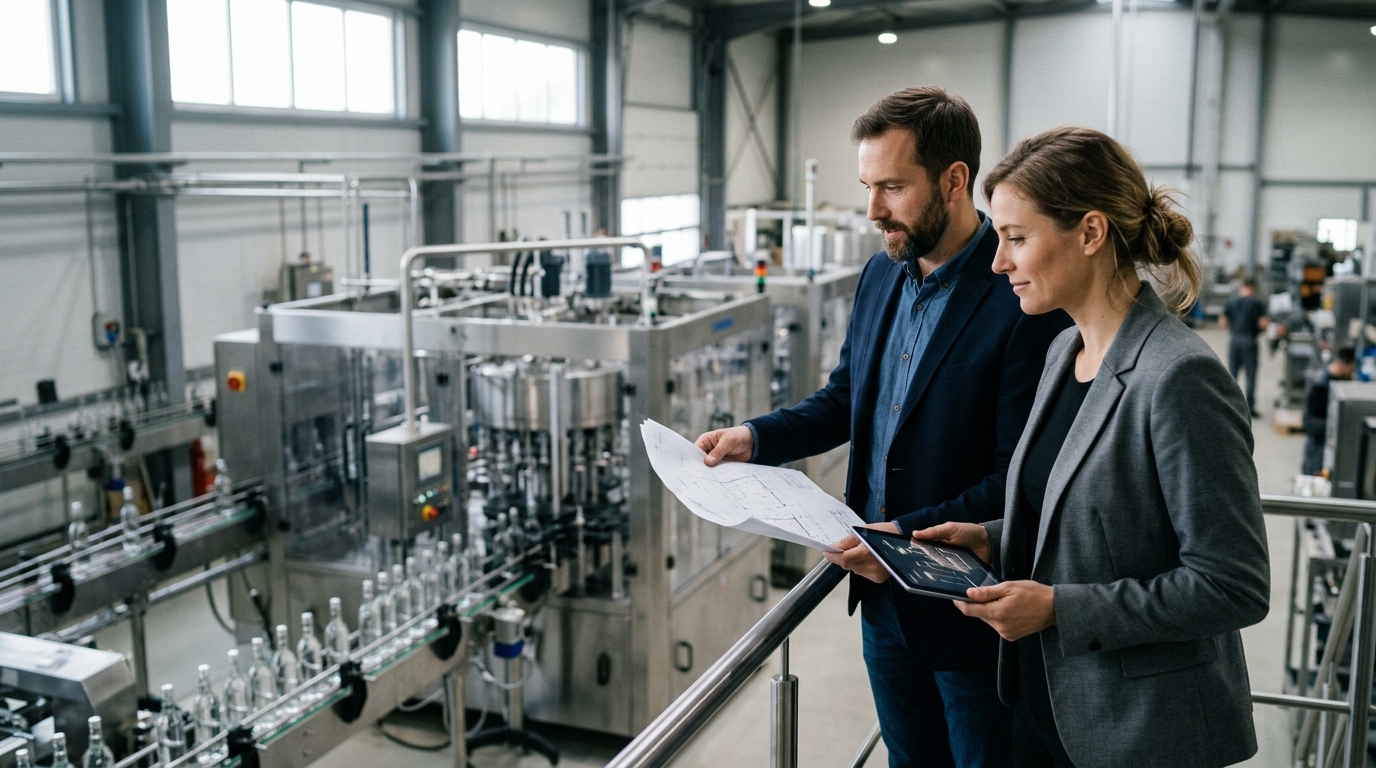
Whether you are launching a craft beverage brand, scaling a water purification plant, or expanding a pharmaceutical operation, one question dominates early planning: who actually has the capability to design and build a complete bottling line from scratch? The answer involves several categories of specialist companies, each with a distinct approach to engineering, fabrication, integration, and after-sales support.
This ultimate guide breaks down the types of providers, the end-to-end process they follow, the core equipment involved, and the criteria you should use to choose the right partner.
Key Takeaways
- Complete bottling lines can be delivered by OEM manufacturers, turnkey integrators, or modular equipment suppliers—each model suits different budgets and production scales.
- The process typically moves through consultation, custom layout design, component sourcing or fabrication, factory acceptance testing, installation, and operator training.
- Choosing a single-source provider simplifies accountability and eliminates compatibility issues between machines.
- Costs range from roughly $25,000 for a small water line to well over $1 million for high-speed beverage operations.
Categories of Companies That Build Bottling Lines from Scratch
1. Large-Scale OEM Line Builders
Global OEMs such as Sidel, Krones, and SIPA offer fully integrated lines for high-volume producers. These firms control the entire value chain—from container design through filling, labeling, and palletizing. Sidel, for instance, brings over 40 years of experience in designing and implementing complete PET line solutions for water, helping producers reach ambitious production targets. SIPA positions itself as a supplier capable of providing know-how for the entire bottling process, from preform and container design all the way to turnkey production lines.
2. Mid-Market Turnkey Integrators
Companies like Liquid Packaging Solutions (LPS), Zarpac (part of ProMach), Van Zyverden, and Zomerdijk Engineering specialize in assembling fully tested lines from a combination of in-house and partner equipment. LPS, for example, designs and manufactures filling and capping machines at its LaPorte, Indiana facility while sourcing complementary labelers and conveyors from trusted partners. ProMach's approach transforms individual pieces of equipment into high-performance production lines, covering every function from filling and capping to robotics and end-of-line systems.
3. Modular Equipment Suppliers
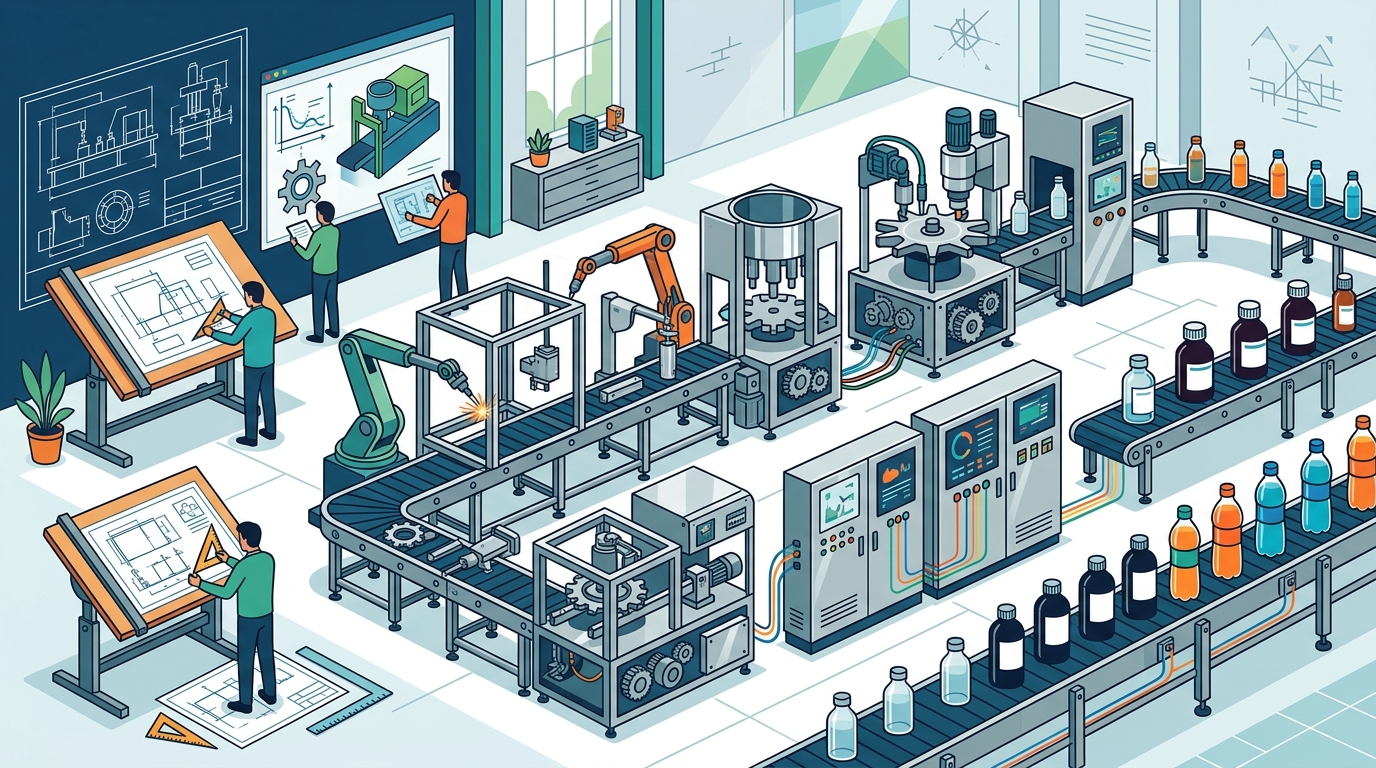
Brands like Kinex Cappers and IC Filling Systems sell individual machines—fillers, cappers, conveyors—that customers can combine into a custom line. This modular approach provides the flexibility to start with the equipment needed today and then expand or upgrade the line as the business grows. IC Filling Systems advises on complex layouts and works with customers to design custom solutions that fit available space and production capacity.
4. Industry-Specific Specialists
Certain providers focus on a single sector. Comac, for example, has manufactured bottling plants since 1990 with deep expertise in wine and beverage lines. When a new line is created, Comac professionals hold an inspection and in-depth interview, draw a detailed design, and select each component for the entire plant. Norland International focuses exclusively on bottled water, providing turnkey facilities that include water treatment, filling, labeling, date coding, and packaging.
5. Pharmaceutical and Cosmetic Line Builders
Regulated industries require validated equipment. HIJ Machinery delivers complete turnkey packaging lines for pharmaceutical, nutraceutical, and cosmetic products, with a project methodology refined over 20 years that ensures cGMP compliance. Their process includes detailed 3D line layouts, electrical schematics, Factory Acceptance Testing (FAT), and Site Acceptance Testing (SAT).
The End-to-End Process of Building a Bottling Line
Step 1: Consultation and Requirements Gathering
Every credible provider begins with an in-depth discovery phase. Engineers analyze production goals, regulatory requirements, available floor space, and budget constraints. HIJ Machinery, for example, starts by deeply understanding the client's User Requirement Specification (URS) to define a clear project scope.
Step 2: Custom Layout Design
Using CAD and 3D modeling tools, the engineering team produces detailed floor plans showing equipment placement, utility connections, and operator workflow. Some firms like iBottling deliver professional layout solutions in as few as 3–7 days by combining advanced 3D modeling with expert analysis.
Step 3: Sourcing and Fabrication
Depending on the provider model, machinery is either built in-house or sourced from vetted partners. Van Zyverden leverages an extensive network of suppliers and manufacturers, sourcing high-quality components and materials while committing to quality that performs reliably under demanding conditions.
Step 4: Factory Acceptance Testing (FAT)
Before shipping, the complete line is staged and tested at the manufacturer's facility. LPS requests bottles, product, caps, labels, and any other components used in packaging to set up and test the turnkey system in their plant, ensuring the entire system works efficiently before it reaches the customer.
Step 5: Installation and Commissioning
Skilled technicians handle on-site installation. Van Zyverden's team conducts thorough testing and provides training, ensuring a smooth transition and seamless operation from day one.
Step 6: Training and After-Sales Support
Ongoing support—spare parts, troubleshooting, upgrades—is a hallmark of quality providers. LPS remains available to packagers for troubleshooting, upgrading, or assistance in acquiring replacement or spare parts long after installation.
Core Equipment in a Complete Bottling Line
| Station | Function | Common Technology |
|---|---|---|
| Bottle Unscrambler / Feeder | Sorts and orients empty bottles onto the conveyor | Centrifugal bowl, elevator feed |
| Rinser / Washer | Cleans and sterilizes containers before filling | Water, air, or steam rinse |
| Filling Machine | Dispenses product into each bottle | Volumetric piston, flow-meter, gravity, vacuum |
| Capping Machine | Applies and secures closures | Chuck capper, snap capper, ROPP |
| Labeling Machine | Applies product labels | Wrap, pressure-sensitive, shrink sleeve |
| Date Coder | Prints batch and expiry data | Laser coder, inkjet |
| Inspection System | Checks fill level, cap torque, label placement | Vision cameras, checkweighers |
| Shrink Wrapper / Case Packer | Groups bottles for shipping | Film wrapper, robotic case packer |
| Palletizer | Stacks cases on pallets | Robotic arm, conventional stacker |
How to Choose the Right Bottling Line Partner
Evaluate Single-Source Capability
A single-source provider eliminates compatibility headaches. As one industry resource notes, a turnkey system that is pre-configured for smooth operation eliminates compatibility issues and boosts efficiency. With one vendor supplying the entire line, installation and testing are faster and operators can start production sooner.
Assess Industry Experience
Sidel has over 60 years of partnership with the beer industry, developing a holistic understanding of everything that contributes to producer performance. That kind of domain depth matters when your product has unique handling, hygiene, or regulatory demands.
Demand Pre-Shipment Testing
Reputable manufacturers stage and run your actual product through the line before it ships. Kinex Cappers, for example, invites customers to send samples so they can test them with the equipment of choice and share videos of containers moving through the line as they are filled and capped.
Consider Scalability
Many manufacturers offer modular lines so you can start with a small configuration and later add capacity. This lets companies build a customized filling and capping line that grows with the business without forcing a complete replacement down the road.
Verify After-Sales Commitment
A bottling line is a long-term relationship with the manufacturer. Choose a supplier with an excellent reputation for product quality and reliability, and confirm that spare parts, remote diagnostics, and field service are included in the proposal.
Typical Investment Ranges
- Small-scale water bottling (2,000 bph): approximately $25,000–$35,000 USD including water treatment, filling, and packaging equipment.
- Mid-range automated line (up to 40 bpm): roughly $41,000–$83,000 USD for filling, capping, and conveying.
- High-speed beverage line (12,000+ bph): typically $500,000 to several million USD depending on complexity, container type, and level of automation.
Frequently Asked Questions
What does “turnkey” mean for a bottling line?
A turnkey bottling line is a complete, ready-to-use system. It is an integrated system that automates the entire bottling process—from bottle feeding and rinsing through filling, capping, labeling, and packing—all in one continuous workflow managed by a single supplier.
Can I build a bottling line by buying individual machines from different vendors?
Yes. Modular equipment suppliers sell individual machines that you can combine into a custom line. However, you take on the integration risk yourself. A turnkey integrator eliminates compatibility issues by pre-configuring all equipment as a unified system.
How long does it take to design and build a bottling line from scratch?
Timelines vary widely. Layout design can take as little as 3–7 days with experienced firms, but fabrication, testing, shipping, and installation typically add 3–9 months for a fully custom line. High-speed or regulated-industry lines may take 12 months or longer.
What industries need custom bottling lines?
Custom bottling lines serve beverages (water, beer, wine, soft drinks, juice), pharmaceuticals, nutraceuticals, cosmetics, chemicals, and food products such as sauces and oils. Each industry has unique hygiene, regulatory, and handling requirements that influence line design.
How much does a complete bottling line cost?
Entry-level small-scale water bottling lines producing around 2,000 bottles per hour start at approximately $25,000–$35,000 USD. Mid-range automated lines running up to 40 bottles per minute range from about $41,000 to $83,000. High-speed lines for large-scale production can exceed $1 million.