

Common Mistakes When Selecting and Operating Spice Filling Machines for Pouches and Bottles
The global spice market is projected to reach significant valuation milestones in the coming years, driven by consumer demand for premium, pre-packaged seasonings. According to recent industry reports, the automated packaging sector for food products has seen a 15% annual growth rate, highlighting the critical need for precision in filling operations. Selecting the wrong machinery can lead to costly downtime, product waste, and inconsistent branding. This guide outlines the most frequent errors businesses make when integrating spice filling technology into their production lines.
Critical Selection Errors
Many manufacturers rush into purchasing decisions without fully analyzing their specific operational needs. The first major mistake is ignoring the physical properties of the spice. Spices vary wildly in density, particle size, and flowability. A machine that works perfectly for coarse black pepper may fail completely with fine paprika or cumin. JDA Progress emphasizes the importance of matching the filling mechanism to the material characteristics. Our spice filling machines are designed with adjustable parameters to handle these variations.
Another common error is underestimating the required speed. Businesses often buy machines that meet current volume needs but lack the scalability for future growth. This leads to premature obsolescence. It is essential to evaluate the machine's maximum output capacity against your projected five-year growth plan. Additionally, neglecting the integration with upstream and downstream equipment, such as conveyors and labelers, can create bottlenecks in the entire production line.
Pouch vs. Bottle Compatibility
Choosing between pouch and bottle packaging involves distinct mechanical challenges. Pouch filling requires precise control over film tension and sealing integrity. Bottles, on the other hand, demand accurate necking and cap placement mechanisms. A frequent mistake is attempting to use a single machine for both formats without proper changeover capabilities. This results in excessive downtime during format changes.
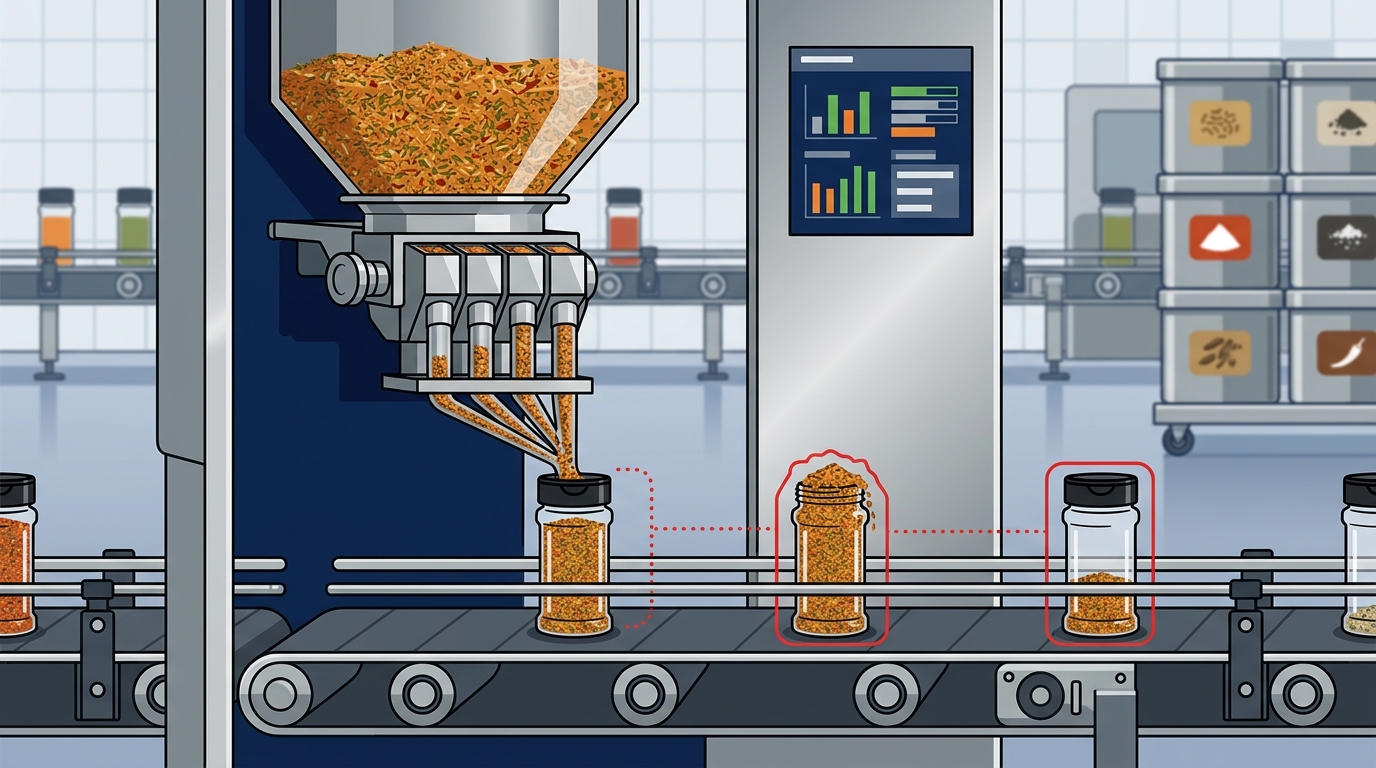
For pouches, the filling nozzle must be designed to prevent powder from adhering to the sealing area. Contamination here leads to weak seals and potential product spoilage. For bottles, the issue is often dust accumulation around the neck, which can interfere with capping. Packaging efficiency is significantly improved when the filling head is specifically optimized for the container geometry. JDA Progress provides tailored solutions that address these specific container requirements.
Understanding Powder Dynamics
Spices are not uniform liquids. They exhibit complex rheological behaviors that affect filling accuracy. Auger fillers are commonly used for spices because they can handle a wide range of viscosities and densities. However, the auger pitch and flighting must be selected based on the specific spice. A mistake here is using a standard auger for highly aerated spices like turmeric, which can lead to overfilling due to air entrapment.
Another critical factor is the flowability of the spice. Cohesive powders may require vibration or air-assist features to ensure consistent flow into the filling chamber. Free-flowing spices may require a different nozzle design to prevent splashing. Understanding these dynamics is crucial for maintaining fill weight accuracy. FDA guidelines on food safety also emphasize the need for clean-in-place systems to prevent cross-contamination between different spice batches.
Maintenance and Calibration
Even the most advanced machine will fail without proper maintenance. A common operational mistake is neglecting regular calibration of the filling weights. Over time, wear and tear on mechanical components can lead to drift in fill accuracy. This results in either product giveaway or underfilled packages, both of which hurt profitability. Regular calibration ensures that the machine continues to meet regulatory standards and customer expectations.
Dust accumulation is another major issue in spice filling operations. Spices are fine powders that can infiltrate sensitive electronic components and mechanical joints. This leads to premature failure of sensors and motors. Implementing a strict cleaning schedule is vital. JDA Progress recommends using machines with sealed components and easy-access cleaning panels to facilitate this process. Ignoring these maintenance needs can lead to costly repairs and extended downtime.
Regulatory and Safety Compliance
Food safety regulations are strict and constantly evolving. Manufacturers must ensure that their filling machines comply with local and international standards. This includes materials of construction, which must be food-grade and corrosion-resistant. Stainless steel 304 or 316 is typically required for contact parts. Using inferior materials can lead to contamination and regulatory fines.
Safety is also a paramount concern. Spice dust can be explosive in certain concentrations. Machines must be equipped with appropriate dust collection systems and explosion-proof electrical components. Failure to address these safety issues can result in severe accidents and legal liabilities. OSHA standards provide detailed requirements for handling combustible dust in industrial settings. Compliance is not just a legal obligation but a moral responsibility to your workforce.
Key Takeaways
- Material Specificity: Always match the filling mechanism to the specific density and flowability of the spice being processed.
- Scalability: Choose a machine with capacity for future growth to avoid premature replacement.
- Format Optimization: Use specialized nozzles and heads for pouches versus bottles to prevent contamination and sealing issues.
- Regular Calibration: Implement a strict schedule for calibrating fill weights to maintain accuracy and reduce waste.
- Dust Management: Invest in robust dust collection and cleaning systems to protect equipment and ensure safety.
- Regulatory Compliance: Ensure all machine components meet food-grade and safety standards, such as FDA and OSHA requirements.
- Expert Consultation: Work with experienced providers like JDA Progress to identify the best solution for your specific needs.
Frequently Asked Questions
What is the most common mistake in spice filling machine selection?
The most common mistake is ignoring the physical properties of the spice, such as density and flowability, leading to inaccurate fills and machine jams.
How do I choose between a pouch and bottle filling machine?
Choose based on your packaging strategy. Pouch fillers require precise film handling, while bottle fillers need accurate necking and capping integration. JDA Progress can help assess your specific needs.
Why is regular calibration important for spice fillers?
Regular calibration ensures fill weight accuracy, preventing product giveaway and ensuring compliance with net weight regulations.
What materials should contact parts be made of?
Contact parts should be made of food-grade stainless steel, typically 304 or 316, to prevent corrosion and contamination.
How can I prevent dust explosions in spice filling?
Implement proper dust collection systems and use explosion-proof electrical components as per NFPA standards.
What is an auger filler and when should it be used?
An auger filler uses a rotating screw to dispense powder. It is ideal for spices with varying densities and flow characteristics.
How does JDA Progress support machine maintenance?
JDA Progress offers comprehensive support, including spare parts, technical guidance, and training to ensure optimal machine performance.
Contact JDA Progress
Do not let common mistakes disrupt your production line. Partner with JDA Progress for expert guidance on selecting and operating the right spice filling machines. Our team is dedicated to helping you achieve maximum efficiency and compliance. Contact us today to schedule a consultation and discuss your specific packaging needs.