
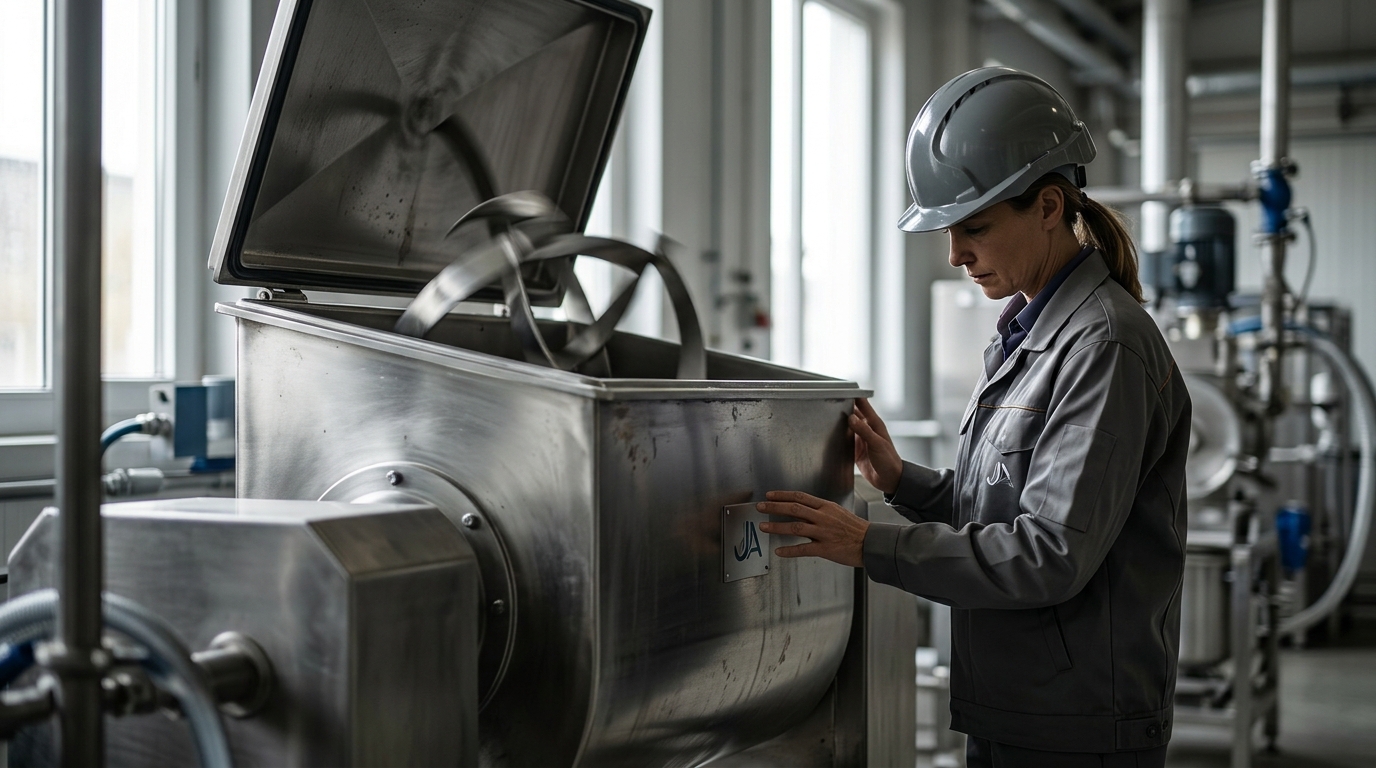
Common Mistakes When Selecting and Operating Ribbon Blenders for Powder Mixing
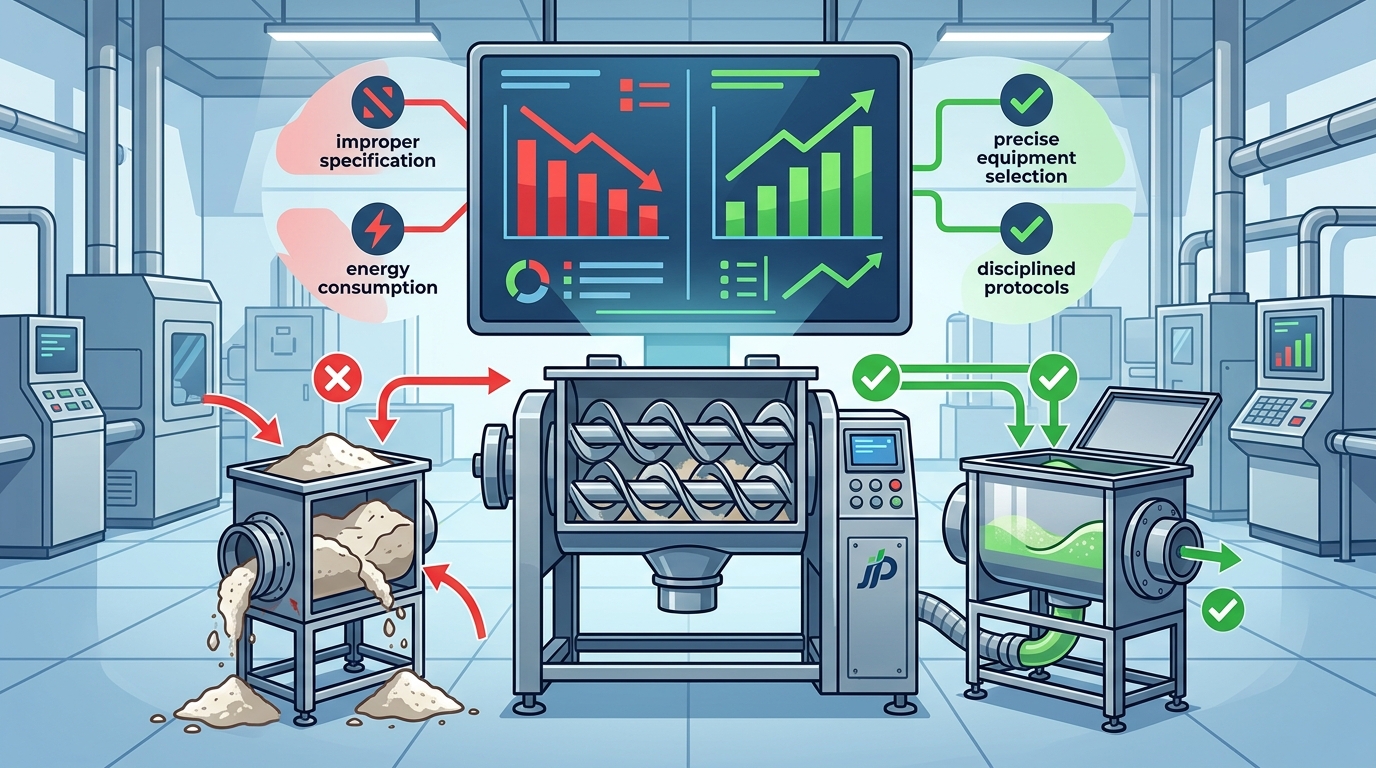
Industrial powder mixing efficiency is directly tied to the precision of equipment selection and the discipline of operational protocols. According to recent industry benchmarks, improper mixer sizing can reduce batch throughput by up to 40 percent while increasing energy consumption significantly. This statistic highlights why understanding the mechanical nuances of ribbon blenders is critical for manufacturing leaders. At JDA Process, we have observed that many facilities face recurring downtime not because of equipment failure, but due to fundamental errors in the initial specification phase. This guide details the most frequent pitfalls in selecting and operating ribbon blenders, providing actionable insights to optimize your powder blending processes.
Understanding Ribbon Blender Mechanics
A ribbon blender is a horizontal mixing vessel that utilizes a double-helix ribbon agitator to move material. The inner ribbon pushes material toward the center, while the outer ribbon moves material toward the ends. This opposing motion creates a convective mixing pattern that is highly effective for dry powders and granules. The JDA Process design philosophy emphasizes that this mechanical action must match the specific rheology of your powder. Many operators assume that all ribbon blenders function identically, but the pitch and width of the ribbon blades drastically alter the mixing dynamics.
When evaluating a ribbon blender, you must consider the fill volume. Unlike vertical mixers, horizontal blenders rely on gravity and mechanical agitation. If the fill level is too low, the powder does not cascade properly, leading to dead zones. If it is too high, the motor may stall or the mixing action becomes turbulent rather than laminar. Understanding these mechanical basics is the first step in avoiding costly selection errors. (About)
Critical Sizing and Volume Errors
One of the most prevalent mistakes in powder mixing is incorrect volumetric sizing. Engineers often calculate the required tank volume based solely on the dry bulk density of the material. However, this approach ignores the critical factor of bulk density variation between raw ingredients. If you are mixing materials with significantly different densities, the final volume of the blend will differ from the initial volume of the components. This discrepancy can lead to overfilling or underutilization of the blender capacity.
Another sizing error involves ignoring the discharge mechanism. Ribbon blenders typically use a bottom discharge valve or a pneumatic gate. If the valve diameter is too small for the material's flow characteristics, bridging and rat-holing can occur. This results in incomplete discharge and material degradation due to prolonged residence time. At JDA Process, we recommend conducting a flowability test to determine the correct valve size and discharge angle for your specific powder blend.
Furthermore, many facilities fail to account for the motor power requirements relative to the load. A common mistake is selecting a motor that is too small, assuming that the mixer will run empty most of the time. However, if the material bridges or clumps during mixing, the peak torque requirement can exceed the motor's capacity. This leads to frequent tripping and potential damage to the gearbox. Always size the motor for the worst-case loading scenario, not the average.
Material Compatibility and Contamination
The choice of construction material is a critical decision that is often overlooked during the initial procurement phase. Using standard carbon steel for corrosive or hygienic applications can lead to rapid degradation and product contamination. For food-grade or pharmaceutical applications, stainless steel grades such as 304 or 316L are mandatory. The surface finish of the interior walls also plays a vital role in preventing material adhesion. A polished interior reduces the risk of cross-contamination between batches and simplifies cleaning procedures.
Seal integrity is another area where mistakes frequently occur. The shaft seals at the drive end and discharge end are vulnerable points for leakage. Using the wrong type of seal for your operating pressure and temperature can result in powder egress or lubricant ingress. Mechanical seals are generally preferred for their reliability, but they require proper flushing and cooling systems to function correctly. JDA Process engineers always specify seals based on the specific chemical compatibility of the powder being mixed.
Additionally, the ribbon blade design must be tailored to the material's abrasiveness. Highly abrasive powders can wear down standard ribbon blades quickly, leading to inefficient mixing and potential metal contamination. Hard-facing or using wear-resistant alloys for the ribbon blades can extend the service life of the equipment. Ignoring this factor can lead to frequent maintenance shutdowns and increased operational costs over the lifespan of the blender.
Common Operational Mistakes
Operational errors often stem from a lack of standardized procedures. One major mistake is inconsistent batch loading. Operators may load materials in a random order, leading to segregation before mixing even begins. The correct approach is to load materials in a specific sequence that promotes uniform distribution. For example, loading the largest volume component first, followed by smaller additives, ensures better initial dispersion.
Another common error is improper mixing time determination. Operators often rely on fixed timers rather than monitoring the actual mixing quality. Over-mixing can lead to particle attrition, breaking down granules into fine dust and altering the product's physical properties. Under-mixing results in non-uniform blends, which can cause quality control failures in downstream processes. JDA Process recommends using sampling protocols to determine the optimal mixing time for each specific formulation.
Vibration and noise levels are also indicators of operational issues. Excessive vibration can signal misalignment of the drive chain or gearbox, or an imbalance in the load. Ignoring these signs can lead to catastrophic equipment failure. Regular monitoring of vibration levels helps identify potential problems before they cause downtime. Additionally, ensuring that the blender is properly leveled during installation is crucial for smooth operation and even wear of the internal components.
Maintenance and Longevity Strategies
Preventive maintenance is essential for maximizing the lifespan of a ribbon blender. One frequent mistake is neglecting the lubrication schedule for the gearbox and bearings. Using the wrong type of lubricant or failing to change it at regular intervals can lead to premature wear and overheating. JDA Process provides detailed maintenance manuals that specify the correct lubrication points and intervals for each model.
Inspection of the ribbon blades and interior walls is another critical maintenance task. Over time, the blades can become worn or damaged, reducing mixing efficiency. Regular visual inspections can identify these issues early, allowing for timely repairs or replacements. Additionally, checking the integrity of the seals and gaskets prevents leakage and maintains the hygiene of the mixing chamber.
Electrical system maintenance is often overlooked but is equally important. Loose connections, worn cables, and faulty sensors can lead to erratic operation and safety hazards. Regular testing of the electrical components ensures that the blender operates within its designed parameters. JDA Process emphasizes the importance of a comprehensive maintenance program that includes both mechanical and electrical checks to ensure optimal performance and safety.
Key Takeaways
- Incorrect volumetric sizing based on dry bulk density is a primary cause of inefficiency and overfilling.
- Material compatibility must be assessed to prevent corrosion and cross-contamination in sensitive applications.
- Inconsistent batch loading leads to segregation and non-uniform mixing results.
- Over-mixing can cause particle attrition, altering the physical properties of the final product.
- Proper seal selection is critical to prevent leakage and maintain hygiene standards.
- Regular lubrication and inspection of the gearbox and bearings extend equipment lifespan.
- JDA Process designs ribbon blenders with optimized ribbon geometry for superior mixing efficiency.
Frequently Asked Questions
What is the optimal fill volume for a ribbon blender?
The optimal fill volume is typically between 30 and 60 percent of the total tank capacity. This range ensures that the powder cascades properly without causing excessive turbulence or motor overload.
How do I determine the correct motor size for my ribbon blender?
Motor size should be calculated based on the worst-case loading scenario, including the density and abrasiveness of the material. It is essential to account for peak torque requirements to prevent stalling.
What are the signs of improper mixing in a ribbon blender?
Signs include non-uniform product quality, excessive dust generation, and increased mixing times. Sampling and testing the blend at different intervals can help identify these issues.
How often should the gearbox be lubricated?
The lubrication frequency depends on the operating hours and the type of lubricant used. JDA Process recommends following the specific maintenance schedule provided in the equipment manual.
Can ribbon blenders handle wet or pasty materials?
Ribbon blenders are primarily designed for dry powders and granules. While they can handle slightly moist materials, they are not suitable for highly viscous or pasty substances, which require different mixing technologies.
What materials are used in JDA Process ribbon blenders?
JDA Process ribbon blenders are constructed from high-quality stainless steel or carbon steel, depending on the application requirements. The interior surfaces are polished to prevent material adhesion and facilitate cleaning.
How does JDA Process ensure mixing efficiency?
JDA Process optimizes the ribbon geometry and agitator speed to create a convective mixing pattern that ensures uniform blending. We also provide custom solutions tailored to specific material properties.
Optimize Your Powder Mixing Process Today
Avoiding these common mistakes in selecting and operating ribbon blenders can significantly improve your manufacturing efficiency and product quality. At JDA Process, we specialize in designing and manufacturing high-performance powder mixing equipment tailored to your specific needs. Our team of experts is ready to help you optimize your blending operations and achieve superior results. Contact JDA Process today to schedule a consultation and learn more about our ribbon blender solutions.