
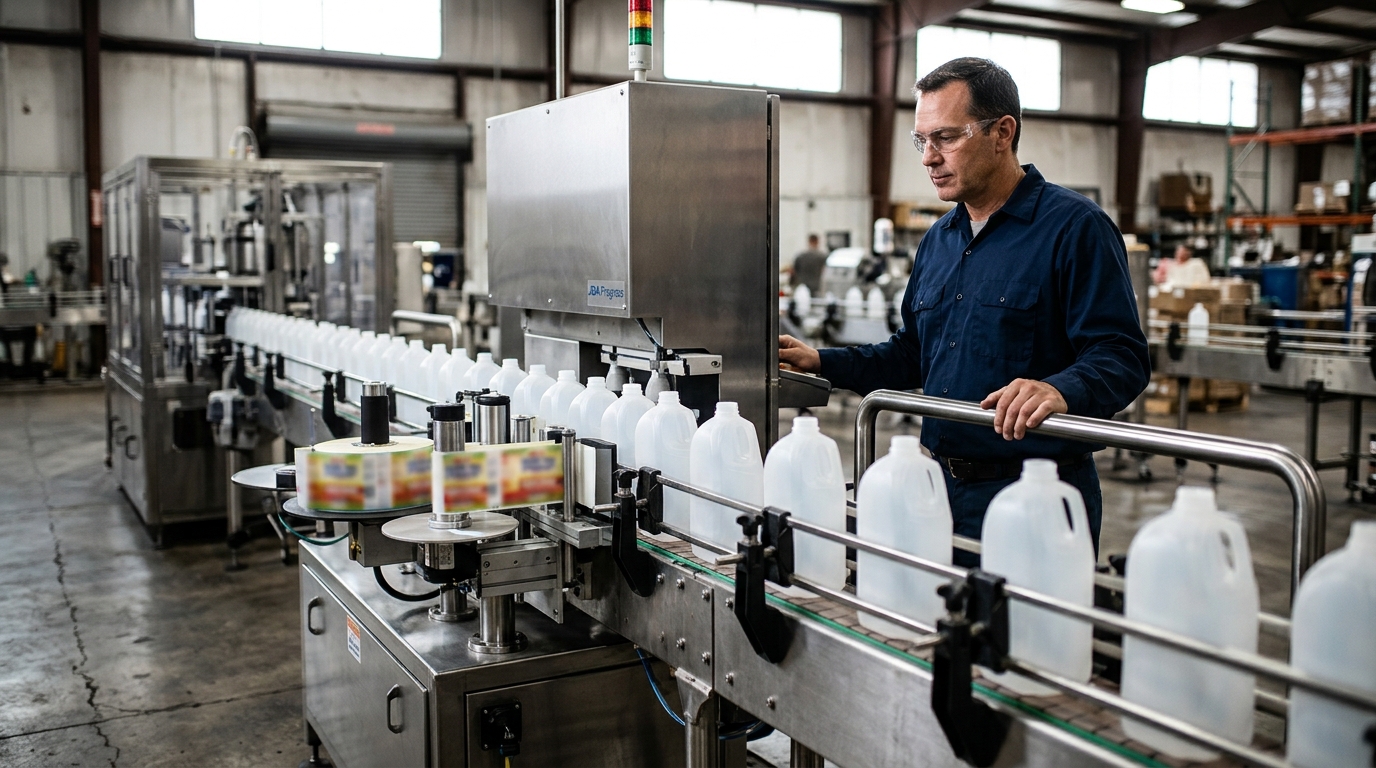
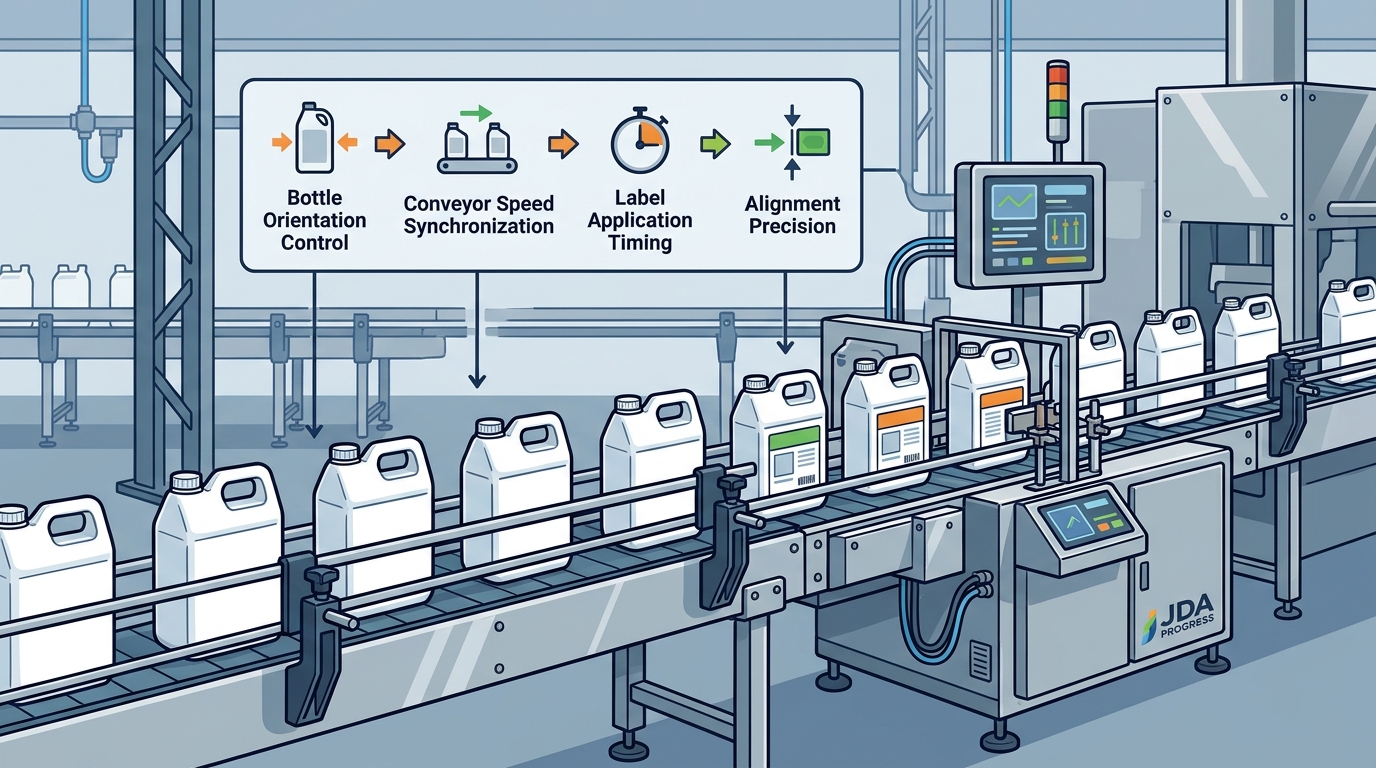
Integrating conveyor systems with front and back labelers for F-style bottles requires precise alignment of bottle orientation, conveyor speed, and label application timing. F-style bottles, which feature a flat front and back surface, demand that the conveyor maintains a consistent lane width and prevents bottle rotation. This ensures the labeler applies labels to the correct surfaces without skewing or missing the target area.
Understanding F-Style Bottle Geometry
F-style bottles are distinct from cylindrical containers because they possess two flat faces separated by curved sides. This geometry is common in the food and beverage industry for products like sauces, dressings, and certain spirits. The flat surfaces provide a large, stable area for branding, but they also introduce a specific challenge for automated labeling. The bottle must be oriented so that the flat faces are perpendicular to the label application path.
When a bottle enters the labeling station, its orientation is critical. If the bottle rotates even slightly, the label may be applied at an angle, resulting in a skewed appearance. This is where the conveyor system plays a vital role. The conveyor must not only transport the bottle but also stabilize it. JDA Progress offers industrial labeling machines designed to handle these specific container shapes with high precision.
Conveyor Lane Width and Bottle Spacing
The width of the conveyor lane is a primary factor in successful integration. For F-style bottles, the lane width must be slightly wider than the bottle's maximum dimension to allow for minor variations in bottle placement. However, it cannot be too wide, or the bottle may shift laterally during transit. This lateral shift can cause the label to miss the center of the flat face.
Bottle spacing is equally important. The distance between bottles on the conveyor must be consistent to match the cycle time of the labeler. If the spacing is inconsistent, the labeler may apply a label to the wrong bottle or fail to apply one at all. A well-designed conveyor system includes guides or rails that keep the bottles aligned in a single file. These guides should be adjustable to accommodate different bottle sizes without requiring a full line changeover.
Speed Synchronization and Timing
Speed synchronization between the conveyor and the labeler is essential for high-speed production. The conveyor speed must match the labeler's application speed exactly. If the conveyor is faster than the labeler, the bottle will move past the label application point before the label is applied. If the conveyor is slower, the labeler may apply multiple labels to the same bottle or skip bottles entirely.
Modern labeling systems often use sensors to detect the presence of a bottle and trigger the label application. These sensors must be positioned correctly on the conveyor to ensure accurate timing. The type of sensor used, such as photoelectric or inductive, depends on the material of the bottle and the environment of the production line. JDA Progress provides bottle conveyors that are engineered to integrate seamlessly with their labeling equipment, ensuring that speed and timing are perfectly aligned.
Handling Bottle Rotation and Stability
These features can include side guides, star wheels, or other mechanical devices that hold the bottle in place while allowing it to move forward. The goal is to minimize any rotational movement while maintaining a smooth flow. Additionally, the surface of the conveyor should be non-slip to prevent the bottles from sliding. This is particularly important for bottles with a low coefficient of friction, such as those made from certain types of plastic.
Changeover and Flexibility
Production lines often handle multiple product SKUs, each with different bottle sizes and shapes. The conveyor system must be flexible enough to accommodate these changes quickly. A long changeover time can result in significant downtime and lost production. Therefore, the conveyor should have adjustable components that can be modified without tools or with minimal effort.
Modular conveyor designs are ideal for this purpose. They allow operators to swap out sections of the conveyor or adjust the width of the lane to fit different bottles. This flexibility ensures that the line can adapt to changing production needs without major reconfiguration. JDA Progress designs its equipment with this flexibility in mind, ensuring that customers can maximize their return on investment.
Key Takeaways
- F-style bottles require precise orientation to ensure labels are applied to the flat faces.
- Conveyor lane width must be carefully calibrated to prevent lateral shifting of bottles.
- Consistent bottle spacing is critical for matching the labeler's cycle time.
- Speed synchronization between the conveyor and labeler prevents missed or double labels.
- Mechanical stabilizers on the conveyor help prevent unintended bottle rotation.
- Modular conveyor designs allow for quick changeovers between different bottle sizes.
Frequently Asked Questions
What is an F-style bottle?
An F-style bottle is a container with two flat faces and curved sides, commonly used for products like sauces and dressings.
Why is conveyor alignment important for F-style bottles?
Conveyor alignment ensures that the flat faces of the bottle are oriented correctly for label application, preventing skewed labels.
How does bottle spacing affect labeling accuracy?
Consistent bottle spacing ensures that the labeler applies labels at the correct intervals, preventing missed or double labels.
What types of sensors are used for labeler timing?
Photoelectric and inductive sensors are commonly used to detect the presence of bottles and trigger label application.
Can conveyors be adjusted for different bottle sizes?
Yes, modular conveyors with adjustable guides and lane widths can be quickly adapted for different bottle sizes.
How does JDA Progress support conveyor integration?
JDA Progress provides conveyors and labelers that are designed to work together, ensuring seamless integration and high performance.
Conclusion
Integrating conveyor systems with front and back labelers for F-style bottles requires attention to detail in alignment, speed, and stability. By understanding the specific challenges posed by F-style geometry, manufacturers can design a line that delivers consistent, high-quality labeling. JDA Progress offers a range of packaging machines that are built to meet these demands, ensuring that your production line runs smoothly and efficiently. To discuss your specific integration needs, for a consultation. Learn more: Contact Us JDA Progress.