
Common Labeling Mistakes with F-Style Containers and Prevention Strategies
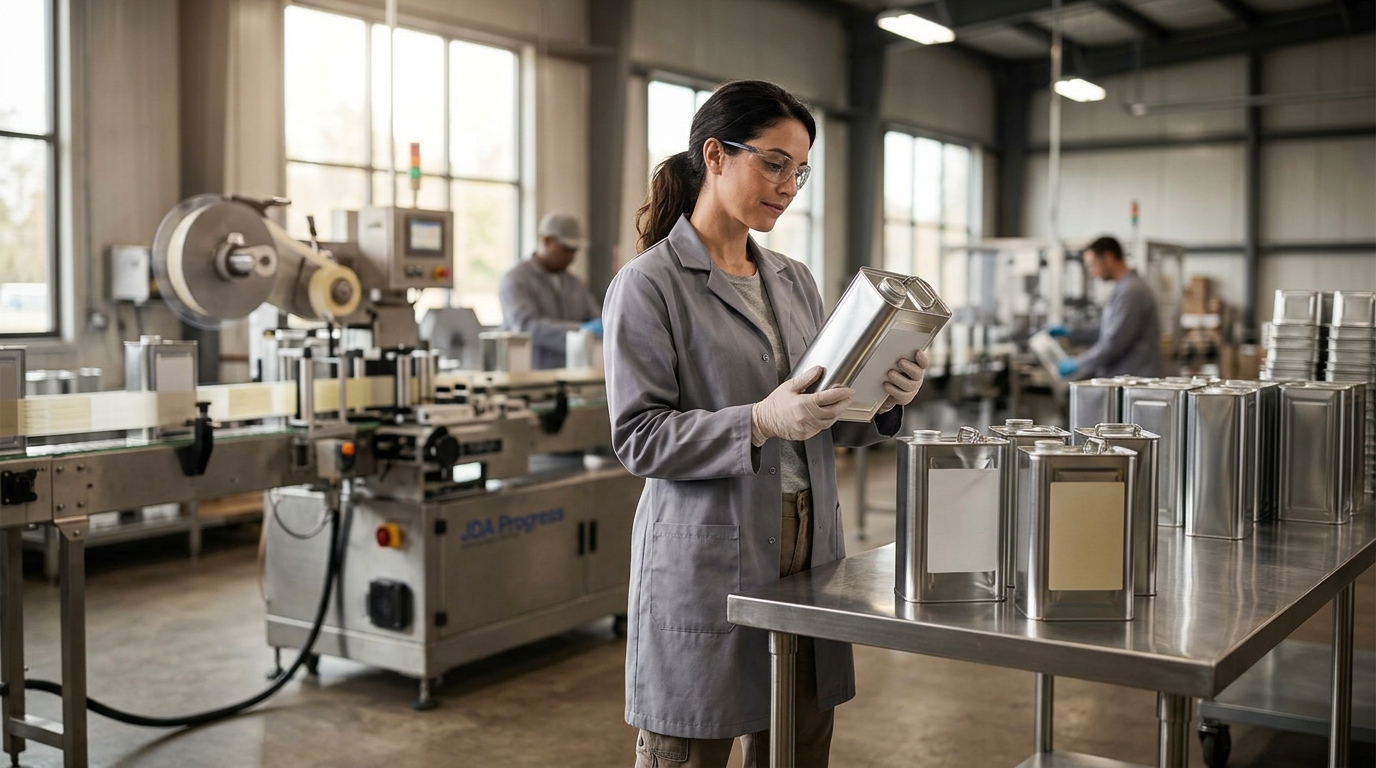
Labeling errors on F-style containers can cost manufacturers thousands in waste, rework, and compliance fines. According to recent industry data, labeling defects account for nearly 30% of all packaging line stoppages in the food and beverage sector. This statistic highlights the critical need for precision in automated labeling processes. F-style containers, known for their ergonomic grip and distinct shoulder design, present unique challenges for label application. The curved surfaces and recessed areas often lead to misalignment, wrinkling, or adhesion failures if not handled correctly. Understanding these pitfalls is essential for maintaining brand integrity and operational efficiency. (Trusted Packaging Equipment Manufacturer)
Understanding F-Style Container Challenges
F-style containers are designed for easy gripping, but this geometry complicates the labeling process. The transition from the flat front panel to the curved shoulders creates a discontinuity that standard labeling heads often struggle to navigate. When a label crosses this boundary, tension can cause it to shift or tear. Additionally, the recessed area near the base of the label often traps air, leading to bubbles that compromise the seal.
Many manufacturers overlook the importance of label material compatibility with the container surface. F-style containers are typically made from PET or HDPE, both of which have low surface energy. This characteristic makes adhesion difficult without proper surface treatment or specialized adhesives. Ignoring these material properties leads to labels peeling off during shipping or storage. JDA Progress has observed that companies using generic labeling solutions often face higher rejection rates on high-speed lines. For more insights into our manufacturing philosophy, visit our About Us page.
Preventing Label Misalignment
Misalignment is the most visible and costly error in F-style container labeling. It occurs when the label is applied off-center, resulting in uneven margins on the left and right sides. This issue is often caused by inconsistent container spacing or unstable conveyor systems. If the container moves laterally during application, the label will follow the error. To prevent this, ensure your conveyor guides are properly adjusted and that containers are spaced correctly.
Another common cause is the lack of a registration system. Advanced labeling machines use optical sensors to detect the container edge and adjust the label position in real-time. Without this feedback loop, the machine relies on fixed settings that may drift over time. Regular calibration of these sensors is crucial for maintaining precision. We recommend scheduling routine maintenance checks to verify sensor accuracy. You can learn more about our service capabilities at Service & Parts.
Addressing Adhesion Failures
Adhesion failure manifests as labels peeling, lifting, or falling off the container. This is rarely a machine error and more often a material or environmental issue. The low surface energy of plastic containers requires adhesives with high tack and penetration power. Using the wrong adhesive type can lead to immediate failure or gradual degradation over time.
Environmental factors also play a significant role. Labels applied in cold or humid conditions may not bond properly. The adhesive needs time and the right temperature to cure and form a strong bond. If your facility experiences temperature fluctuations, consider using adhesives designed for broader thermal ranges. Testing label samples in your specific storage conditions is a best practice. For detailed specifications on our labeling machines, check out our Labelers page.
Eliminating Wrinkling and Bubbling
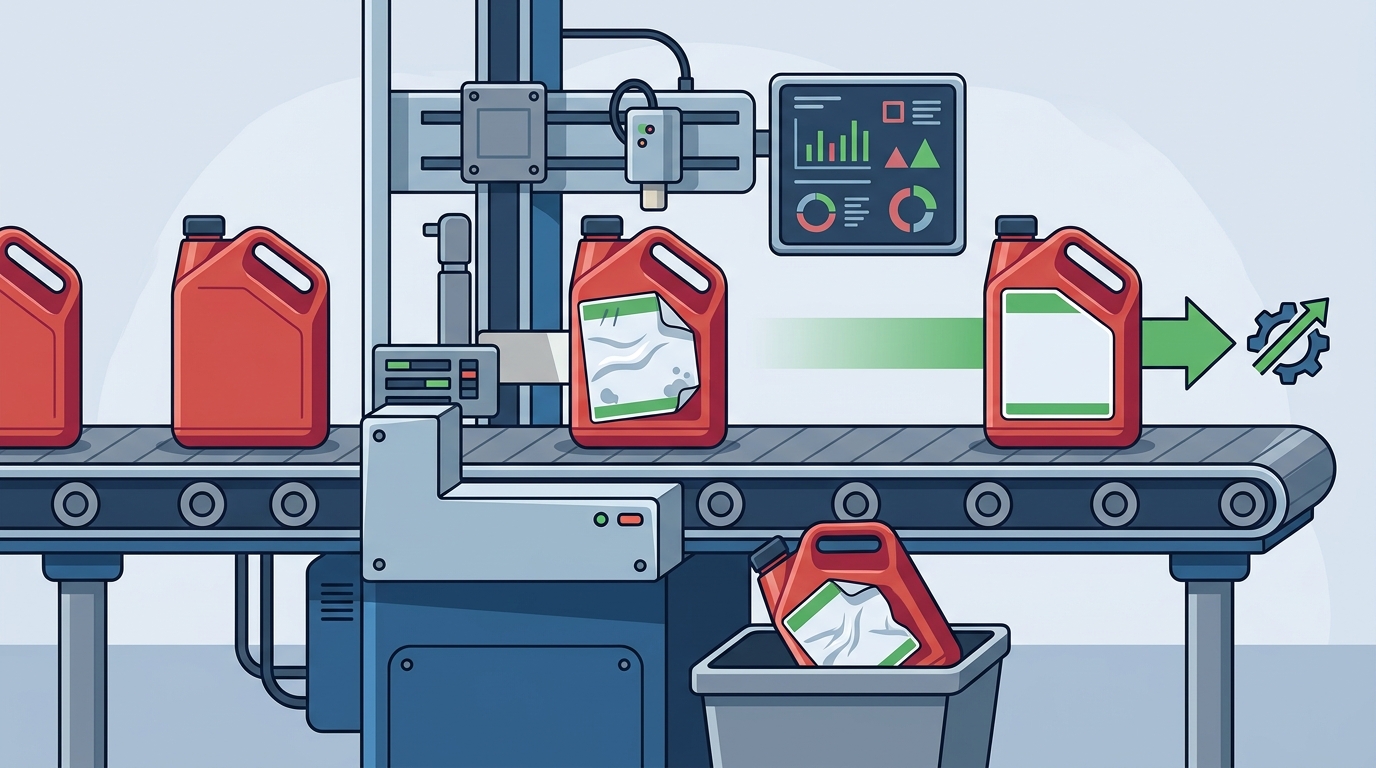
Wrinkling and bubbling occur when air is trapped between the label and the container surface. This is particularly common on the curved shoulders of F-style containers. As the label is applied, it must stretch and conform to the shape. If the application pressure is uneven or the label material is too stiff, it will not lay flat. This results in unsightly wrinkles that can obscure critical information like barcodes or ingredients.
To eliminate these defects, use labels with appropriate flexibility and conformability. Soft-touch films or thinner materials often work better on curved surfaces. Additionally, ensure that the labeling head applies consistent pressure across the entire label width. A tamper-eject mechanism can help remove any air pockets during application. Proper tension control on the label roll is also essential to prevent slack that leads to wrinkles. Explore our range of Packaging Machines to find the right fit for your needs.
Choosing the Right Labeling Equipment
Selecting the correct labeling machine is critical for success with F-style containers. Not all labelers are created equal. Some machines are designed for flat surfaces and will struggle with the complex geometry of F-style bottles. Look for equipment with adjustable application heads and flexible labeling arms that can conform to the container shape.
Speed is another factor. High-speed lines require labelers with rapid application cycles and precise registration systems. Slower lines may have more flexibility in machine choice but still need reliability. Consider the volume of your production and the variety of container sizes you handle. Modular systems that allow for quick changeovers are ideal for mixed production runs. JDA Progress offers a variety of labeling solutions tailored to different operational needs. Visit our Demo Centre to see our equipment in action.
Comparison of Labeling Approaches
| Labeling Method | Best For | Pros | Cons |
|---|---|---|---|
| Wrap-Around Labeler | High-speed F-style bottles | Full coverage, professional look | Higher cost, complex setup |
| Front/Back Labeler | Smaller labels, lower speed | Cost-effective, easy changeover | Limited coverage, potential misalignment |
| Top/Bottom Labeler | Secondary labeling | Simple application | Does not address main label issues |
Key Takeaways
- F-style containers present unique labeling challenges due to their curved shoulders and recessed areas.
- Label misalignment is often caused by inconsistent container spacing and lack of real-time registration systems.
- Adhesion failures are primarily due to low surface energy of plastics and incorrect adhesive selection.
- Wrinkling and bubbling result from trapped air and insufficient label conformability on curved surfaces.
- Choosing the right labeling equipment is crucial for maintaining quality and efficiency on high-speed lines.
- Regular maintenance and calibration of labeling sensors are essential for long-term precision.
- JDA Progress has over 35 years of experience in providing reliable packaging solutions.
Frequently Asked Questions
What is the best label material for F-style containers?
Soft-touch films or thinner materials with high conformability are best for F-style containers. They adapt well to the curved shoulders and reduce the risk of wrinkling.
How do I prevent label peeling on plastic bottles?
Use adhesives designed for low surface energy plastics like PET or HDPE. Ensure the label is applied at the correct temperature and allow adequate curing time.
Can I use a standard labeler for F-style bottles?
Standard labelers may struggle with the complex geometry. It is recommended to use a labeler with adjustable application heads and flexible arms designed for curved surfaces.
What causes label misalignment on high-speed lines?
Inconsistent container spacing, unstable conveyors, and lack of real-time registration systems are common causes. Regular calibration and proper conveyor maintenance can help.
How often should labeling machines be calibrated?
Calibration should be performed regularly, ideally before each production run or shift change, to ensure precision and prevent drift.
What is the role of a tamper-eject mechanism?
A tamper-eject mechanism removes any labels that are not applied correctly, preventing them from jamming the machine or contaminating the product.
Why is JDA Progress a trusted partner for labeling solutions?
JDA Progress offers in-stock equipment, expert support, and a 1-year warranty on all machines. Our team helps you choose the right solution for your specific needs.
Contact JDA Progress for Expert Labeling Solutions
Don't let labeling mistakes slow down your production. JDA Progress provides high-quality labeling equipment and expert support to help you achieve precision and efficiency. Our team is ready to assist you in selecting the right machine for your F-style container needs. Visit our Contact Us page to request a quote or schedule a demo at our Vaughan showroom. Experience the difference of working with a trusted packaging equipment manufacturer.