
What Bottle Sizes Can an Automatic Round Labeler Actually Handle?
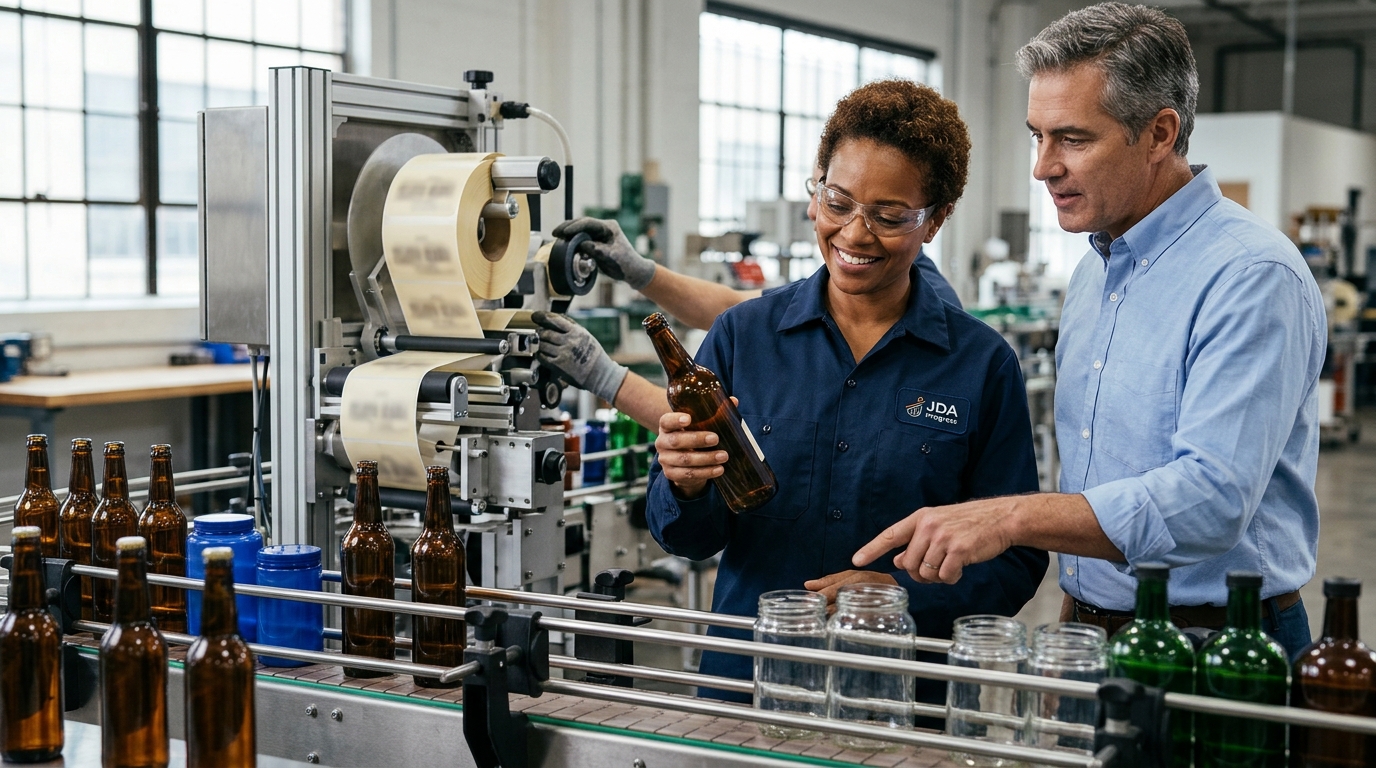
Automatic round labelers typically handle bottle diameters ranging from 20 mm to 150 mm, depending on the specific machine model and its adjustment range. This compatibility ensures that manufacturers can apply labels to a wide variety of container shapes without requiring multiple machines. At JDA Progress, we design labeling systems that adapt to these dimensional variations, ensuring consistent application across your production line.
Understanding Diameter Ranges in Labeling
Bottle diameter is the primary constraint for any automatic labeling machine. A bottle diameter is the measurement of the widest part of the container where the label is applied. Most standard inline and vertical labelers are engineered to accommodate diameters starting from approximately 20 mm up to 150 mm. This range covers the vast majority of glass, plastic, and metal containers used in the food, beverage, and cosmetic industries.
When selecting a machine, it is crucial to verify the minimum and maximum diameter specifications. If your product line includes very small vials or very large jugs, you must ensure the labeler's mechanical arms and label feeders can physically reach and apply the label without interference. JDA Progress offers industrial product labeling machines that are matched to specific container formats, ensuring that every unit in your batch receives a precise application.
Impact of Bottle Height on Label Placement
While diameter is the most critical factor, bottle height also plays a significant role in labeling accuracy. A bottle height is the vertical distance from the base of the container to the top of the neck or cap. Labelers must have adjustable vertical positioning to place labels at the correct height, whether that is on the body, the neck, or the shoulder of the bottle.
For example, a 330 ml soda bottle has a different height profile than a 1-liter juice jug. Machines that lack sufficient vertical adjustment range may struggle to apply labels consistently across different heights. At JDA Progress, our bottling lines are integrated with labelers that feature precise vertical and horizontal adjustments, allowing operators to dial in the exact placement for each container size.
Material and Shape Considerations
The material of the bottle can influence how the label is applied and how the machine must be configured. A container material is the substance from which the bottle is made, such as glass, PET plastic, or aluminum. Different materials may require different label adhesives or application pressures to ensure the label stays in place.
Additionally, the shape of the bottle matters. While this article focuses on round bottles, slight variations in roundness, such as elliptical or faceted designs, can affect label tension and alignment. JDA Progress specializes in automatic labeling machines that can handle these variations, ensuring that labels are applied smoothly without wrinkles or air bubbles, regardless of the container's specific geometry.
Changeover Speed and Flexibility
For manufacturers who run multiple product lines, the ability to switch between different bottle sizes quickly is essential. A changeover time is the duration required to adjust a machine from one container size to another. Modern automatic labelers are designed to minimize this time, often allowing for adjustments in minutes rather than hours.
At JDA Progress, we prioritize ease of operation in our machine design. Our labelers feature simple controls and quick-adjust mechanisms that allow operators to change bottle diameter and height settings without extensive technical training. This flexibility is particularly important for businesses that produce small batches or seasonal products, as it reduces downtime and increases overall production efficiency.
Key Takeaways
- Automatic round labelers generally handle bottle diameters from 20 mm to 150 mm.
- Bottle height must be within the machine's vertical adjustment range for accurate label placement.
- Container material and shape can affect label application and require specific machine configurations.
- Quick changeover capabilities are vital for manufacturers running multiple product lines.
- JDA Progress offers labeling solutions that are tailored to specific container sizes and shapes.
- Verifying machine specifications against your product dimensions is essential before purchase.
Frequently Asked Questions
What is the minimum bottle diameter for an automatic labeler?
The minimum bottle diameter for most automatic labelers is approximately 20 mm, though this can vary by model. Smaller vials may require specialized labeling equipment.
Can a single labeler handle different bottle heights?
Yes, most modern automatic labelers have adjustable vertical positioning that allows them to handle a range of bottle heights. The specific range depends on the machine's design.
How does bottle material affect labeling?
Bottle material can influence the type of adhesive needed and the pressure required for application. Glass, plastic, and metal may require different settings to ensure a secure label.
What is a typical changeover time for a labeler?
Changeover times for modern automatic labelers can be as short as a few minutes, depending on the complexity of the adjustments required for the new bottle size.
Does JDA Progress offer labelers for large jugs?
Yes, JDA Progress offers labeling machines that can handle larger containers, including jugs, provided they fall within the machine's specified diameter and height ranges.
Where can I find more information about JDA Progress labelers?
You can find detailed information about our labeling machines on our labelers page, where we list various models and their specifications.
Conclusion
Selecting the right automatic round labeler requires a careful assessment of your bottle sizes, including diameter, height, and material. By understanding these factors, you can ensure that your labeling machine will perform reliably and efficiently. JDA Progress is committed to providing packaging solutions that meet the specific needs of your business. To discuss your labeling requirements, today. Learn more: Contact Us JDA Progress.