
Common Mistakes When Testing Packaging Equipment With Your Own Products
Testing packaging machinery with your actual product is the single most critical step in the capital expenditure process. JDA Progress has observed that many manufacturers skip this phase or rush it, leading to costly production delays after installation. Data shows that up to 40% of post-installation bottlenecks stem from inadequate pre-purchase validation. This guide outlines the precise errors to avoid during your demo to ensure your line runs smoothly from day one.
Mistake 1: Ignoring Product Variability
One of the most frequent errors occurs when clients test with a single, perfect batch of product. Real-world manufacturing involves fluctuations in density, particle size, and moisture content. If you only test with one sample, you will miss how the machine handles variance.
Fillers are particularly sensitive to these changes. A liquid that flows perfectly at room temperature may become too viscous when cooled or too thin when heated. Powder fillers can bridge or rat-hole if the humidity changes. You must bring multiple samples of your product to the demo center to simulate these conditions.
According to industry standards, a successful validation requires testing at least three different batches of your product. This ensures the equipment can handle the full spectrum of your manufacturing reality. JDA Progress engineers are trained to adjust PLC settings on the fly to accommodate these shifts during your visit.
Mistake 2: Incorrect Viscosity and Temperature Parameters
Viscosity is the resistance of a fluid to flow. Many clients fail to control the temperature of their product during testing. A change of just a few degrees can drastically alter the flow rate of sauces, oils, or chemical adhesives.
When testing liquid fillers, ensure your product is at the exact temperature it will be at during production. If you test a warm syrup, it will fill faster than a cold syrup. This discrepancy leads to overfilling or underfilling once the line is installed. Always use a thermometer and a water bath if necessary to maintain consistent viscosity.
For powders, the flowability is determined by particle size distribution. If your powder is too fine, it may require a different auger design or vibration settings. Testing with the exact powder you will use prevents costly retrofits later. The blenders and feeders must also be tested with your specific material to ensure accurate dosing.
Mistake 3: Using Non-Representative Containers
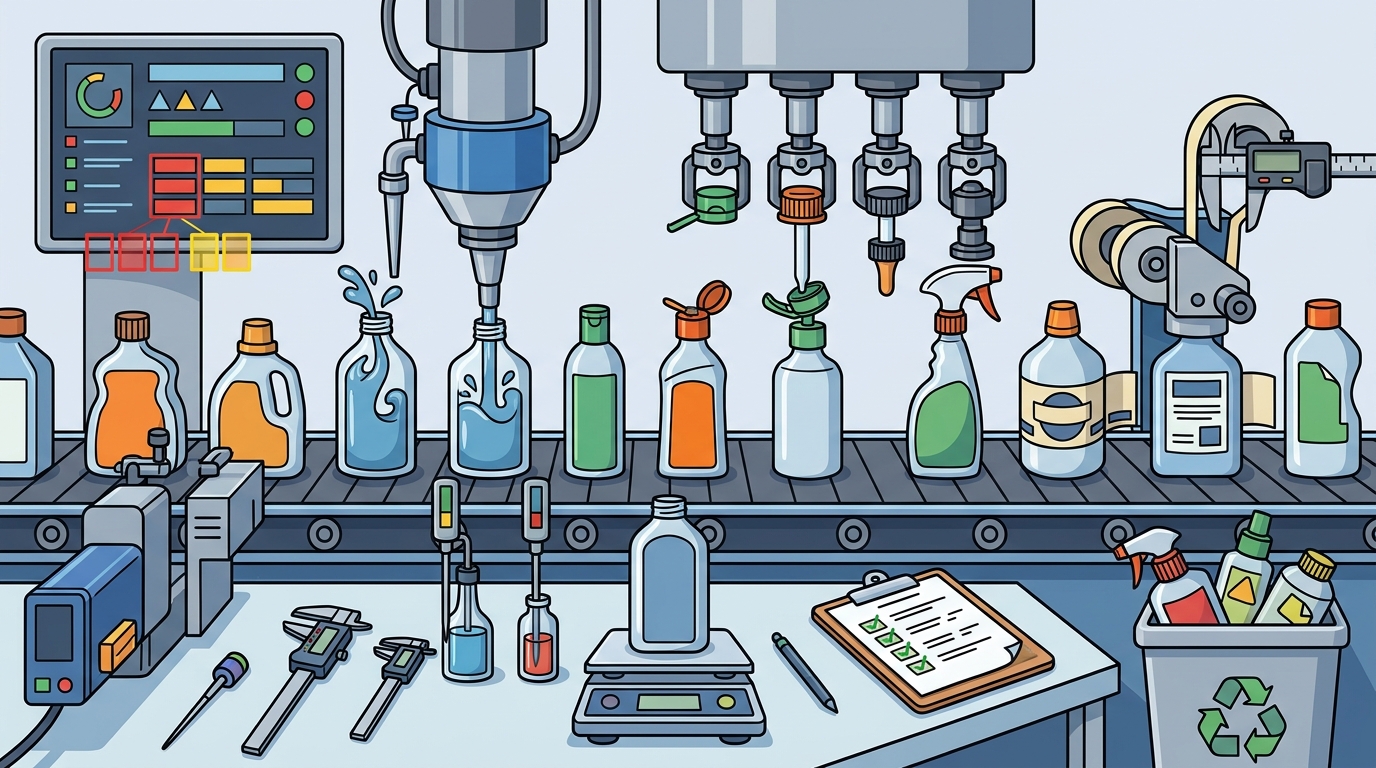
Using generic or new containers for testing is a major pitfall. New containers often have tighter tolerances and smoother surfaces than mass-produced ones. They may slide through conveyors or unscramblers differently than your actual packaging.
Bring your actual bottles, jars, or pouches to the demo. If you are using baggers, test with the exact film roll you plan to purchase. The friction coefficient of the film affects how the bag forms and seals. A film that works in the demo might jam in production if the friction is not matched.
Additionally, test the labelers with your actual labels. The adhesive type and label material can cause sticking or misalignment if not properly calibrated. This step ensures that the mechanical grip and application pressure are correct for your specific packaging materials.
Mistake 4: Prioritizing Speed Over Stability
It is tempting to ask the engineer to run the machine at maximum speed during the demo. However, maximum speed often hides mechanical issues. A machine that runs perfectly at 60 cycles per minute may fail at 120 cycles per minute due to vibration or timing errors.
Request a speed ramp-up test. Start at your target production speed and gradually increase it. Observe the machine for stability, noise, and product integrity. If the product spills, the label wrinkles, or the cap is loose at higher speeds, you have identified a limitation. Capping machines are especially prone to torque issues at high speeds.
Stability is more important than peak speed. A machine that runs reliably at 80% of its maximum capacity is often more profitable than one that runs at 100% but requires constant adjustment. JDA Progress prioritizes robust engineering over theoretical maximums to ensure long-term uptime.
Mistake 5: Overlooking After-Sales Support
Many buyers focus solely on the machine and forget to evaluate the support structure. Packaging equipment requires regular maintenance and occasional part replacements. If you cannot get timely support, your production line stops.
Ask about the availability of service and parts. JDA Progress maintains an extensive inventory of in-stock parts to minimize downtime. Verify the response time for technical support and the availability of remote diagnostics. A strong support network is as valuable as the hardware itself.
Review the warranty terms carefully. A one-year warranty on all machines and parts is standard for high-quality manufacturers. Ensure that the warranty covers both labor and materials. This protection is crucial for your return on investment and risk management.
Key Takeaways
- Bring Multiple Samples: Test with at least three batches of your product to account for variability in density and viscosity.
- Control Temperature: Maintain the exact production temperature during testing to ensure accurate flow rates for liquids.
- Use Real Packaging: Test with your actual bottles, jars, and film rolls to identify friction and tolerance issues.
- Ramp Up Speed: Gradually increase speed during the demo to test stability and identify mechanical limits.
- Evaluate Support: Verify the availability of in-stock parts and the responsiveness of the technical support team.
- Check Warranty: Ensure the warranty covers both labor and materials for a full year.
- Document Results: Record all settings and observations during the demo to compare different machine models objectively.
Frequently Asked Questions
How long should a packaging equipment demo take?
A comprehensive demo typically takes between two and four hours. This allows time for setup, testing with your specific products, and troubleshooting any issues that arise. JDA Progress schedules ample time to ensure you are satisfied with the performance.
Can I bring my own product to the demo center?
Yes, you are encouraged to bring your own products. In fact, it is required for an accurate assessment. The demo center in Vaughan is equipped to handle a wide variety of liquids, powders, and packaging materials.
What is the difference between VFFS and premade pouch baggers?
Vertical Form Fill Seal (VFFS) machines create the bag from a roll of film, fill it, and seal it. Premade pouch baggers pick, open, and load pre-made bags. VFFS is often more cost-effective for high volumes, while premade pouches offer higher aesthetic appeal.
Does JDA Progress offer training after installation?
Yes, JDA Progress provides comprehensive training for your operators and maintenance staff. This includes PLC programming basics, routine maintenance, and troubleshooting procedures to ensure your team can run the line efficiently.
What industries does JDA Progress serve?
JDA Progress serves the food and beverage, cosmetics, chemicals, and nutraceutical industries. The equipment is designed to meet the specific hygiene and regulatory requirements of each sector.
How do I request a demo?
You can request a demo by contacting the JDA Progress team directly through their website or by calling their sales office. They will help you schedule a time that works for your team and prepare the necessary equipment for your specific products.
What is the warranty period for JDA Progress machines?
JDA Progress offers a one-year warranty on all machines and parts. This warranty covers defects in materials and workmanship, providing peace of mind for your investment.
Ready to Optimize Your Packaging Line?
Don't let common testing mistakes cost you time and money. Schedule a personalized demo at the JDA Progress Vaughan showroom to see their equipment in action with your specific products. Their team of experts will help you find the perfect solution for your business needs.
Contact JDA Progress today to book your demo and start maximizing your efficiency.