
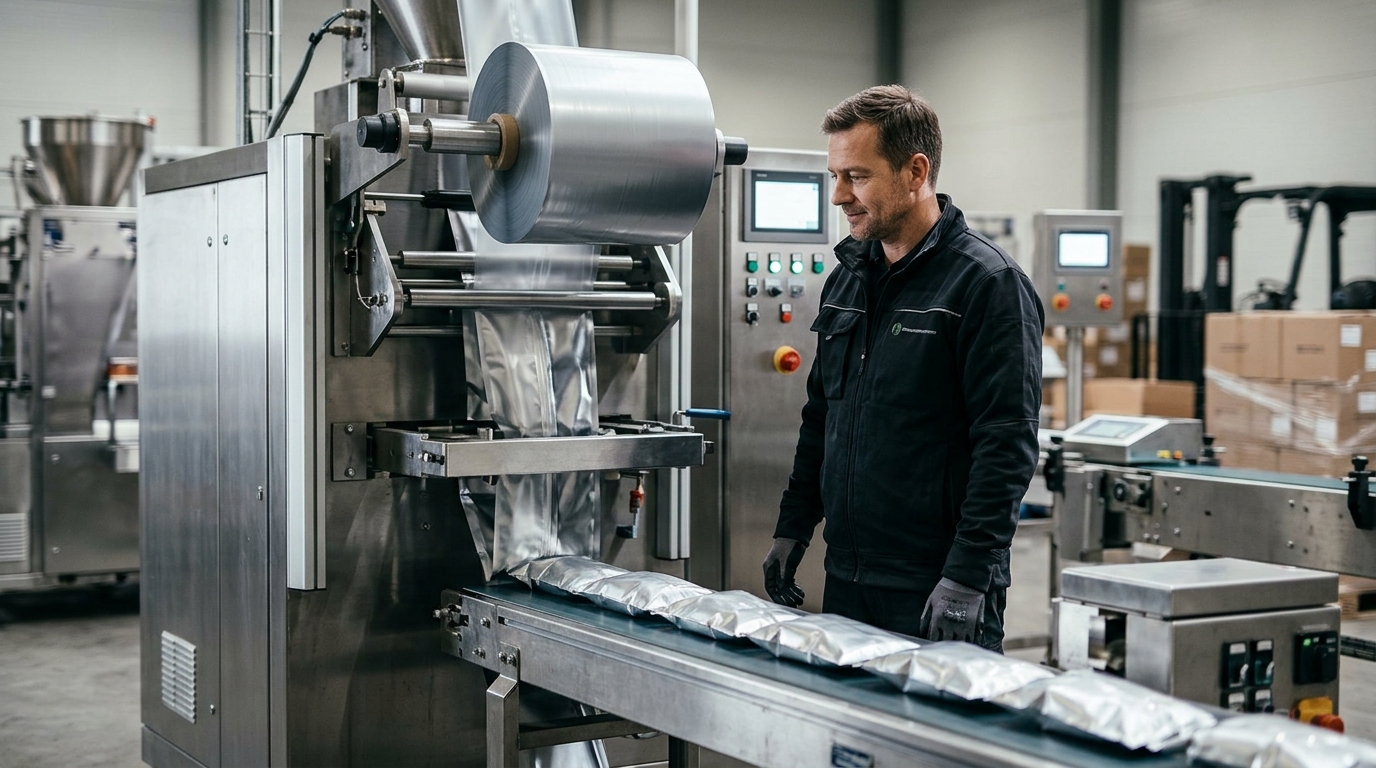
How Much Output Speed Do You Actually Need From a VFFS Pouch Machine?
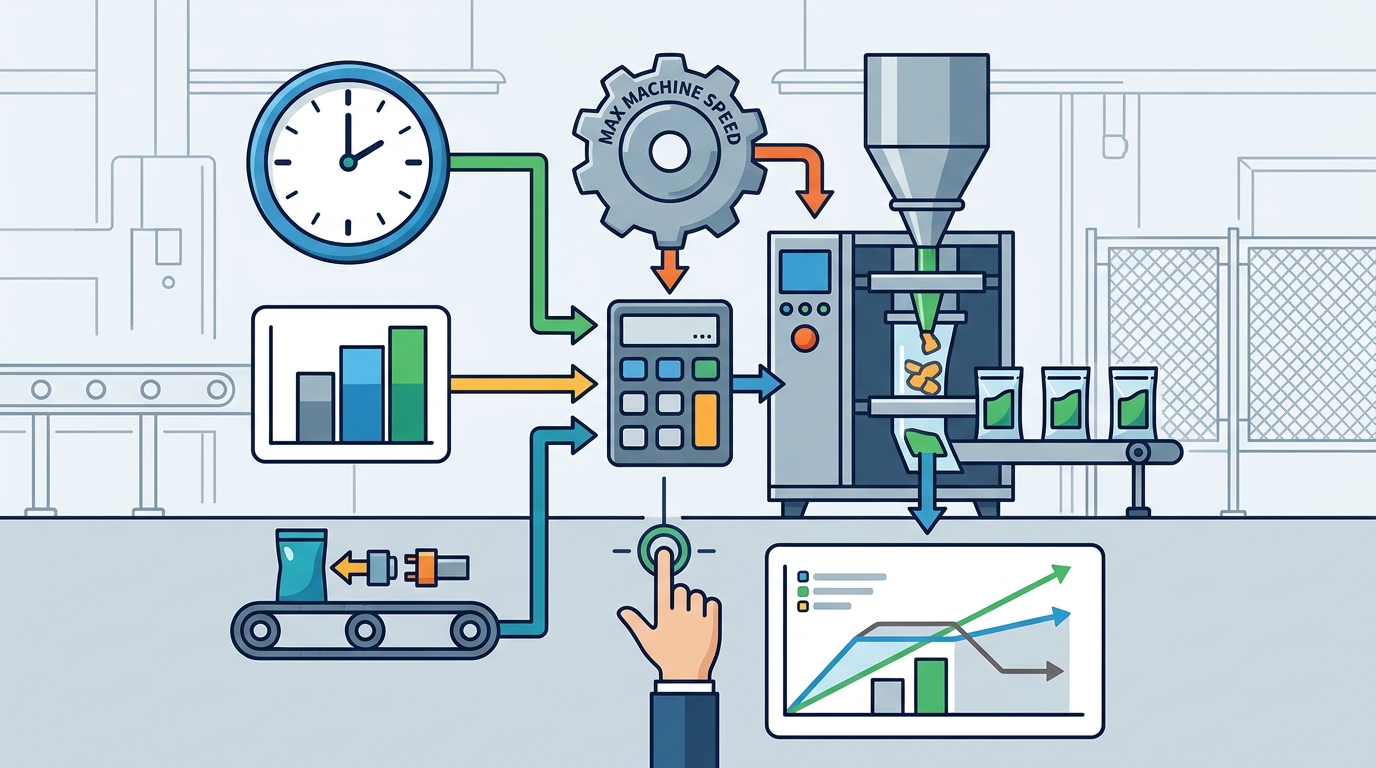
Vertical form fill seal (VFFS) machine speed is determined by your daily production volume, shift length, and product changeover frequency, not by the maximum speed listed in a spec sheet. JDA Progress helps manufacturers calculate the true required output by analyzing your facility's operational constraints. This approach prevents overpaying for unnecessary speed while ensuring your line meets demand without bottlenecks.
Calculating Required Bags Per Minute
To determine the necessary speed, divide your target daily output by the number of productive minutes in a shift. For example, if you need to pack 10,000 pouches in an 8-hour shift with 30 minutes of downtime, you have 450 productive minutes. Dividing 10,000 by 450 yields a required speed of approximately 22 bags per minute. This baseline calculation provides the minimum speed your machine must sustain to meet production goals.
Accounting for Downtime and Changeovers
Real-world production includes time for cleaning, film changes, and product transitions. If you run three different products per shift, each changeover might take 15 to 20 minutes. Subtracting this time from your total shift hours reduces your available production window. A machine rated for 30 bags per minute might only achieve an average of 25 bags per minute when changeovers are factored in. Planning for this variance ensures your line remains efficient even during complex production schedules.
The Impact of Product Viscosity and Type
Product characteristics significantly influence achievable speed. Free-flowing powders and granules typically allow for faster filling cycles compared to viscous liquids or pastes. A VFFS machine processing a dry powder might operate at 40 bags per minute, while the same machine handling a thick sauce may need to slow down to 15 bags per minute to ensure accurate fill weights. Understanding your product's flow properties is essential for selecting the right machine configuration.
Fill Mechanism Considerations
The type of filler attached to the VFFS machine also dictates speed limits. Auger fillers are ideal for powders and can operate at higher speeds, whereas piston fillers for viscous products require more time per cycle. JDA Progress offers various filling options, including automatic filling machines designed for specific product types. Matching the filler mechanism to your product ensures that the machine's speed rating is realistic and achievable in your facility.
Machine Specifications and Real-World Performance
Manufacturer specifications often list maximum speeds under ideal conditions. However, real-world performance depends on factors like film quality, product consistency, and operator skill. A machine rated for 50 bags per minute might consistently run at 40 bags per minute in a typical production environment. It is crucial to evaluate machines based on their sustained output rather than peak performance. This distinction helps avoid purchasing equipment that cannot maintain the required speed over long production runs.
Stainless Steel Construction and Durability
Durable construction supports consistent speed over time. Machines built with stainless steel frames and high-quality components maintain their performance characteristics longer than those made with less robust materials. JDA Progress machines, such as the Redeepac 430/Powders, are designed for reliability and ease of maintenance. This durability ensures that your machine can sustain the required speed shift after shift without frequent breakdowns or performance degradation.
Scaling for Future Growth
When selecting a VFFS machine, consider your future growth plans. If you anticipate increasing production volume by 20% to 30% in the next few years, choosing a machine with a higher speed capability can provide flexibility. However, it is important to balance this with cost and space constraints. A machine that is too fast for your current needs may be underutilized, while one that is too slow may become a bottleneck as your business grows. Planning for scalability ensures that your investment remains valuable as your production demands evolve.
Integration with Existing Lines
The speed of your VFFS machine must align with the rest of your production line. If your downstream packaging or labeling equipment operates at a slower pace, a faster VFFS machine will not increase overall output. Conversely, if your VFFS machine is slower than the rest of the line, it will limit production. Coordinating speeds across all equipment ensures a balanced and efficient workflow. JDA Progress can help you design a complete line that integrates seamlessly, including bottling lines and other automated systems.
Key Takeaways
- Calculate required speed by dividing daily output by productive minutes, accounting for downtime.
- Product viscosity and type significantly impact achievable speed and fill accuracy.
- Real-world performance is often lower than maximum specification speeds due to changeovers and maintenance.
- Durable construction and reliable components support consistent speed over time.
- Consider future growth when selecting machine speed to avoid bottlenecks. according to 2609 32991 What
- Ensure VFFS machine speed aligns with the rest of your production line for optimal efficiency.
Frequently Asked Questions
What is the average speed of a VFFS machine?
The average speed of a VFFS machine varies widely depending on the product and machine model, typically ranging from 10 to 60 bags per minute.
How does product type affect VFFS speed?
Free-flowing products like powders allow for faster speeds, while viscous liquids or pastes require slower cycles to ensure accurate filling.
Should I buy a machine faster than my current needs?
It is advisable to choose a machine with some speed headroom for future growth, but avoid overpaying for excessive speed that will not be utilized.
How do changeovers impact production speed?
Changeovers reduce the total productive time in a shift, lowering the average output speed. Planning for changeover time is essential for accurate speed calculations.
Can I increase the speed of an existing VFFS machine?
In some cases, upgrading components or optimizing settings can increase speed, but this is limited by the machine's design and product characteristics.
Where can I find a VFFS machine that fits my speed requirements?
JDA Progress offers a range of VFFS machines and can help you determine the right speed for your specific production needs.
Conclusion
Determining the right output speed for your VFFS pouch machine requires a careful analysis of your production volume, product characteristics, and operational constraints. By calculating your required bags per minute and accounting for real-world factors like downtime and changeovers, you can select a machine that meets your current needs while allowing for future growth. JDA Progress provides expert guidance and high-quality equipment to help you optimize your packaging line for efficiency and reliability. to discuss your specific production requirements and find the ideal VFFS solution for your business.