
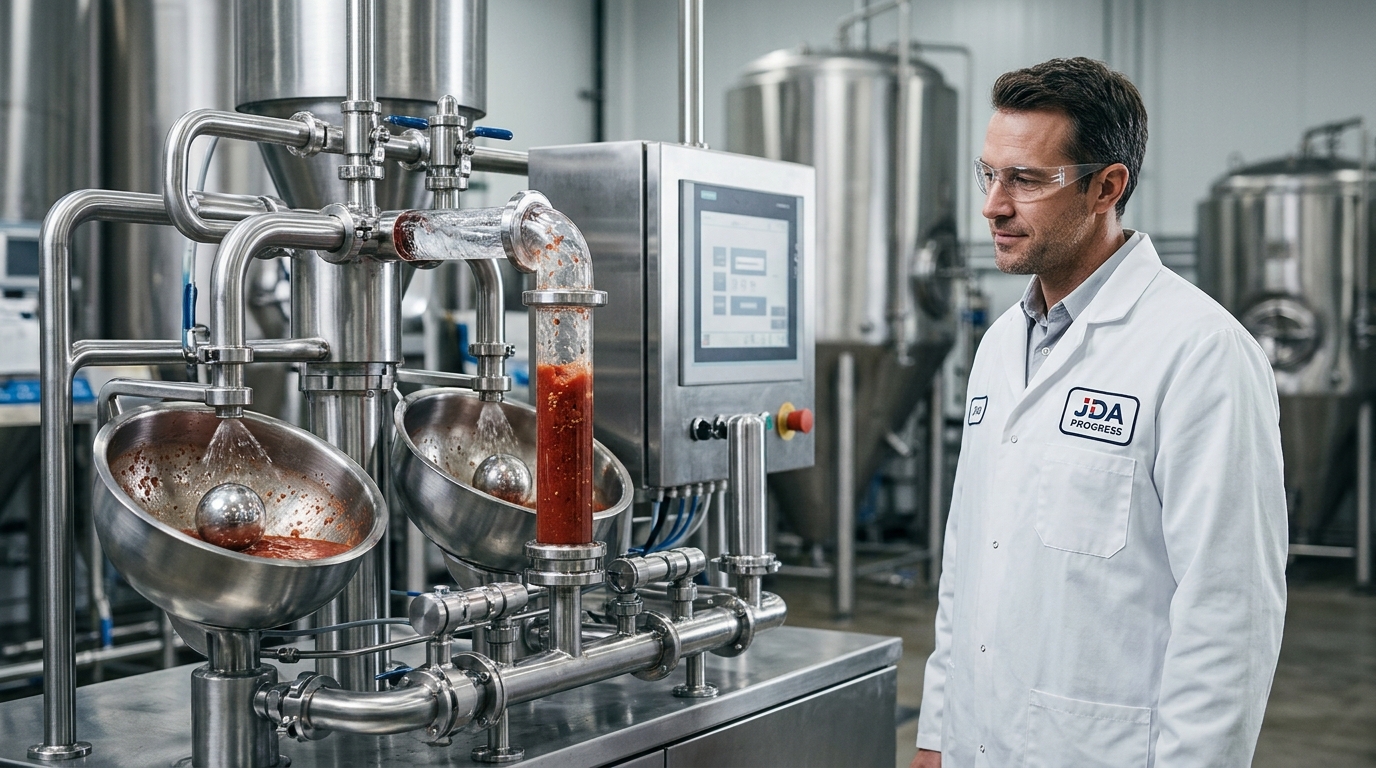
Clean-in-place (CIP) technology improves automatic sauce filling machine performance by eliminating manual disassembly, reducing downtime, and ensuring consistent hygiene. For manufacturers handling viscous, particulate-heavy products, CIP systems allow for rapid changeovers and continuous operation. This capability is critical for maintaining product integrity and meeting strict food safety standards in high-volume production environments. For additional details, review the About JDA Progress Packaging.
Hygiene and Product Integrity
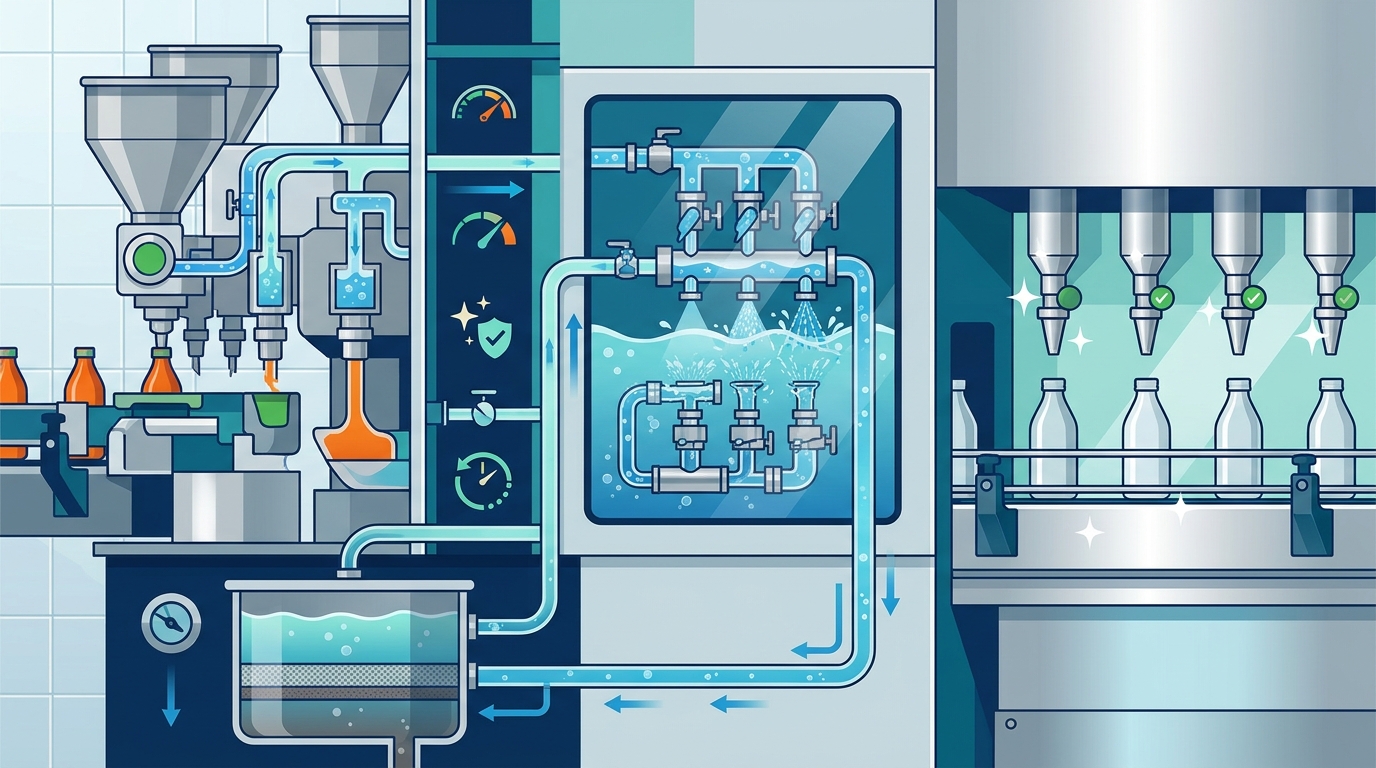
Clean-in-place is a method of cleaning the interior surfaces of process equipment without disassembly. In sauce filling, where products like ketchup, salsa, or BBQ sauce contain solids and oils, residue buildup is a primary risk. Manual cleaning often misses internal valves and nozzles, leading to cross-contamination or microbial growth. CIP systems use high-pressure sprays and chemical solutions to reach every internal surface, ensuring a sterile environment for the next batch. For additional details, review the Service and Parts JDA.
For manufacturers, this means fewer rejected batches and lower risk of recall. By automating the cleaning cycle, the machine maintains a consistent baseline of hygiene. This is particularly important for brands that prioritize shelf life and consumer safety. The ability to verify cleaning efficacy through conductivity or temperature monitoring adds a layer of quality control that manual methods cannot match.
Reducing Downtime and Changeovers
Downtime is the enemy of production efficiency. Traditional cleaning methods require operators to disassemble fillers, wash parts, and reassemble the unit. This process can take hours, during which the line is idle. CIP technology reduces this time significantly by allowing the machine to clean itself while the line is still assembled. This shift from hours to minutes transforms the production schedule.
Consider a facility running multiple sauce varieties. Without CIP, switching from a thick tomato sauce to a thin vinegar-based dressing requires a full teardown. With CIP, the changeover is a matter of running a pre-programmed cycle. This agility allows manufacturers to respond to demand fluctuations and produce smaller batches without sacrificing throughput. The result is a higher overall equipment effectiveness (OEE) and better utilization of capital assets.
Consistency in Viscous Product Handling
Sauces are notoriously difficult to fill due to their viscosity and particulate content. CIP systems are designed to handle these challenges by using specific spray patterns and flow rates that clear nozzles and valves completely. Inconsistent cleaning leads to clogs, which in turn cause fill inaccuracies. A clogged nozzle may drip, leading to overfilling or underfilling. CIP ensures that the filling mechanism remains clear and responsive.
This consistency extends to the product itself. When the machine is thoroughly cleaned, the first batch of the next run is as pure as the last. There is no risk of previous product residue altering the taste, color, or texture of the new batch. For brands where flavor profile is a key differentiator, this level of precision is non-negotiable. CIP technology supports the high standards required for premium sauce products.
Operator Safety and Ergonomics
Manual cleaning of industrial filling equipment is physically demanding and often hazardous. Operators must work in tight spaces, use harsh chemicals, and handle sharp or hot components. This increases the risk of injury and chemical exposure. CIP systems remove the operator from the cleaning process entirely. The machine is sealed, and the cleaning cycle is automated, reducing human error and safety risks.
From an ergonomic perspective, CIP improves the working environment. Operators are no longer required to perform repetitive, strenuous tasks. This can lead to higher job satisfaction and lower turnover. For manufacturers, a safer workplace is not just a moral imperative but a business advantage. It reduces liability and ensures that skilled workers are focused on value-added tasks rather than manual scrubbing.
Implementing CIP in Your Facility
Integrating CIP into an existing filling line requires careful planning. The system must be compatible with the specific filler model and the types of sauces being produced. JDA Progress offers filling machines designed with CIP compatibility in mind, ensuring that the cleaning cycle is efficient and effective. Their team can help assess your current setup and recommend the best approach for your needs.
When evaluating CIP options, consider the type of cleaning agents required, the water and energy consumption, and the integration with your existing control systems. A well-designed CIP system is not just an add-on but a core component of the production line. It should be viewed as an investment in long-term reliability and quality. By choosing equipment that supports automated cleaning, you position your facility for future growth and efficiency.
Key Takeaways
- CIP eliminates manual disassembly, significantly reducing cleaning time.
- Automated cleaning ensures consistent hygiene, reducing the risk of contamination.
- Rapid changeovers allow for greater flexibility in producing multiple sauce varieties.
- CIP prevents nozzle clogs, maintaining fill accuracy and product consistency.
- Reduced manual labor improves operator safety and ergonomics.
- Investing in CIP-compatible equipment enhances overall equipment effectiveness.
Frequently Asked Questions
What is clean-in-place (CIP) technology?
Clean-in-place is a method of cleaning the interior surfaces of process equipment without disassembly, using automated sprays and chemical solutions.
Why is CIP important for sauce filling?
Sauces are viscous and contain particulates that can clog nozzles. CIP ensures thorough cleaning, preventing cross-contamination and maintaining fill accuracy.
How much time does CIP save compared to manual cleaning?
CIP can reduce cleaning time from hours to minutes, allowing for faster changeovers and increased production capacity.
Can CIP be added to existing filling machines?
While some retrofits are possible, it is often more efficient to choose a filler designed with CIP compatibility in mind from the start.
What types of sauces benefit most from CIP?
Thick, particulate-heavy sauces like salsa, BBQ, and ketchup benefit most, as they are prone to residue buildup and clogging.
Does CIP affect product quality?
Yes, by ensuring thorough cleaning, CIP prevents residue from previous batches, maintaining the purity and consistency of the product.
Conclusion
Clean-in-place technology is a critical component of modern sauce filling operations. It addresses the unique challenges of viscous products by ensuring hygiene, reducing downtime, and improving consistency. For manufacturers looking to optimize their production lines, investing in CIP-compatible equipment is a strategic move. JDA Progress provides filling solutions that integrate seamlessly with CIP systems, helping you achieve peak performance and quality. To discuss how CIP can be integrated into your facility, .