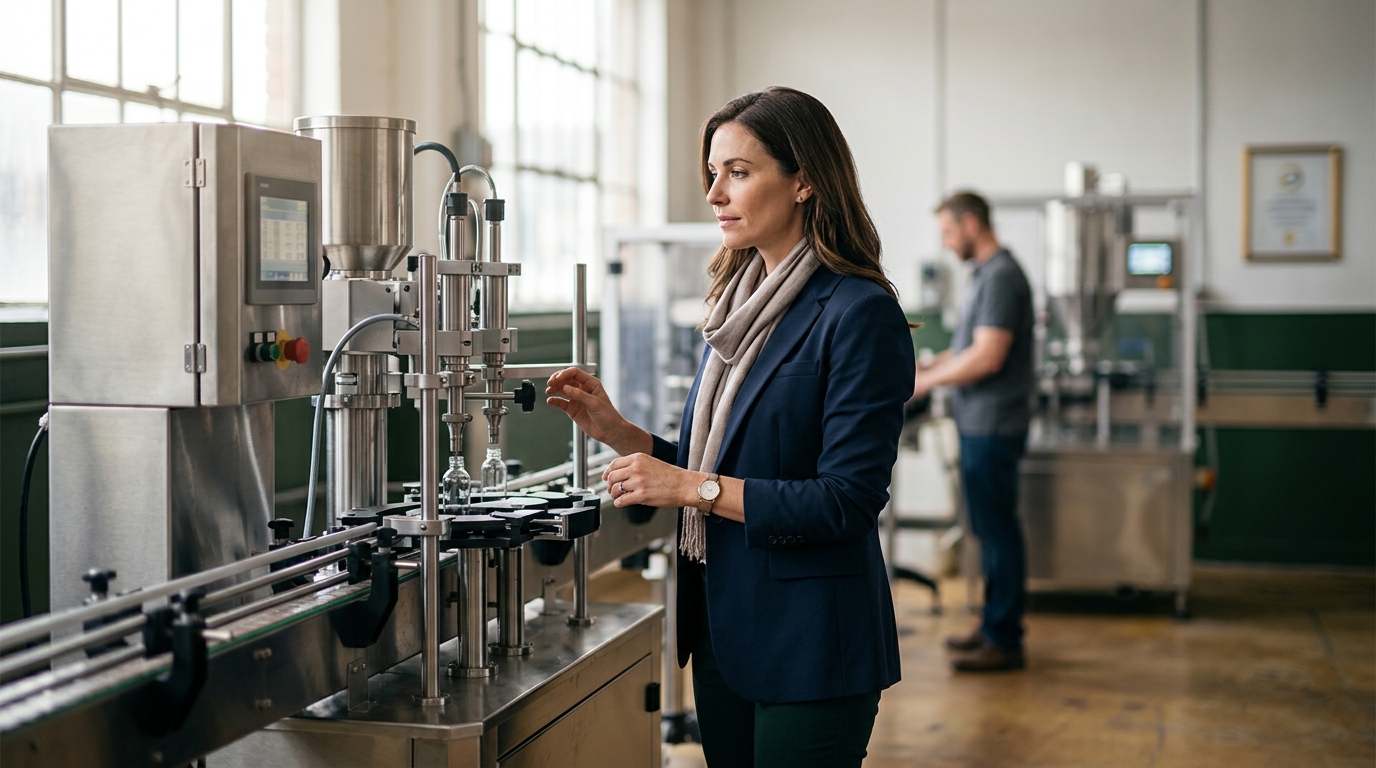
Selecting a filling machine can feel overwhelming when dozens of options exist across liquid, powder, and paste categories. The right machine depends on your product's viscosity, your container type, your target output speed, and your budget. With over 35 years in the packaging equipment industry, JDA Progress has helped thousands of manufacturers find the perfect match. This guide walks you through every critical decision point so you can confidently invest in a filling machine that grows with your business and keeps your production line running smoothly.
1. Understand Your Product Characteristics
Before you browse equipment catalogs, document three things about your product: viscosity, particle content, and temperature requirements. A thin, water-like liquid behaves very differently in a filler than a thick cream loaded with particulates.
Viscosity Matters Most
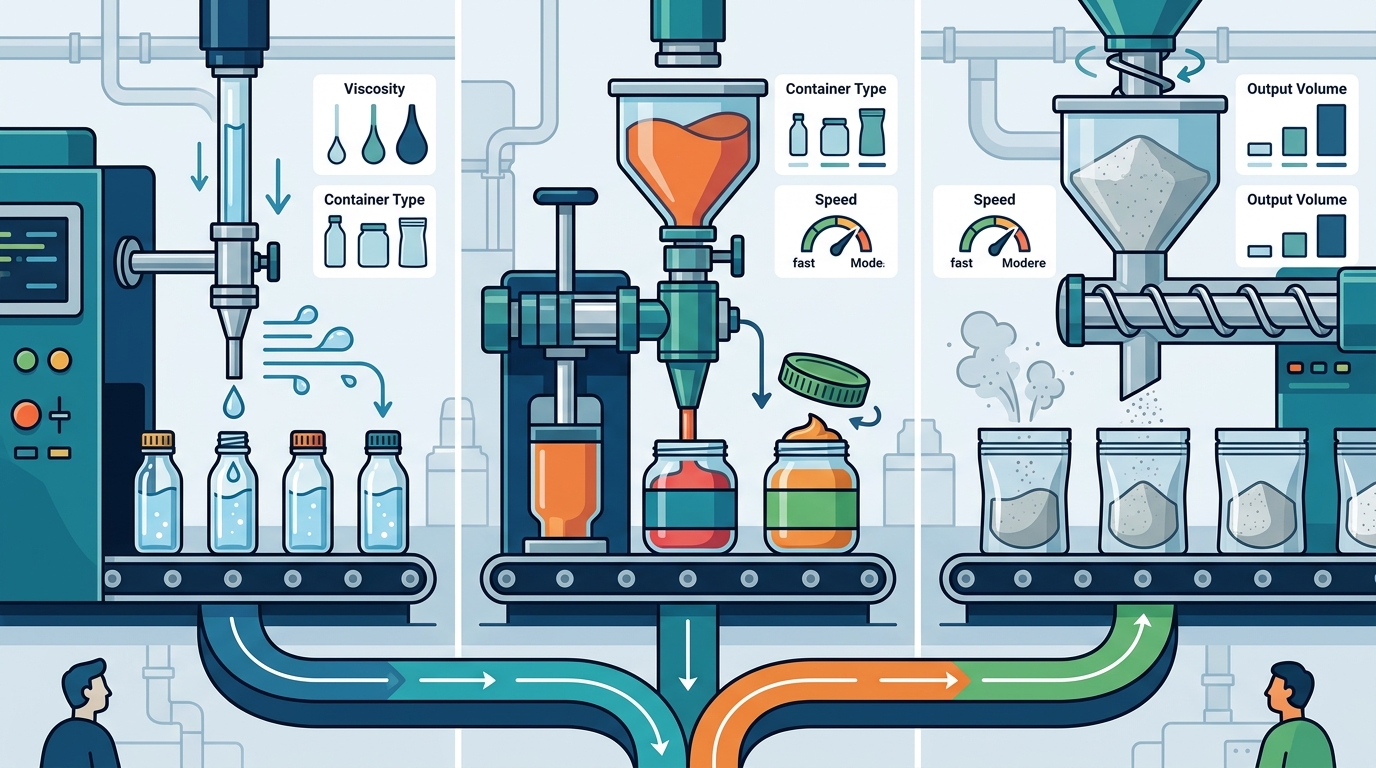
Viscosity is the measure of a fluid's resistance to flow, typically expressed in centipoise (cP). Water sits at about 1 cP, honey at around 10,000 cP. Low-viscosity products like juices and cleaning solutions work well with pressure overflow fillers, while thick creams and sauces need positive-displacement technology such as a piston filler.
Particulates and Temperature
Products with chunks, seeds, or granules require larger valve openings and gentler pumping action. If you fill hot sauces straight from the kettle, your machine must handle elevated temperatures without seal degradation. JDA Progress offers inline pump bottle fillers rated for high-temperature cooked sauces.
2. Types of Filling Machines Explained
A filling machine is a piece of packaging equipment designed to dispense a precise amount of product into a container. Different filling technologies suit different product types. The table below summarizes the most common options.
| Filler Type | Best For | Accuracy | Speed Range |
|---|---|---|---|
| Piston Filler | Creams, gels, sauces with particulates | ±0.5% | 20-120 BPM |
| Pump Filler | Shampoo, lotions, detergents, lubricants | ±0.5-1% | 20-100 BPM |
| Pressure Overflow | Thin, foamy liquids (water, juice) | Level fill | 30-150 BPM |
| Auger Filler | Powders (spices, flour, pharmaceuticals) | ±1% | 10-60 BPM |
| Vibratory Weigh Filler | Granules, snacks, candy, frozen food | ±0.1-1% | 10-40 BPM |
| Tube Filler/Sealer | Cosmetics, ointments, toothpaste | ±0.5% | 15-30 TPM |
JDA Progress manufactures a full range of filling machines covering each category above, from entry-level semi-automatic units to high-speed inline systems.
3. Semi-Automatic vs. Fully Automatic
An automation level is the degree to which a machine operates without human intervention. Your choice here directly affects labor costs, throughput, and floor-space requirements.
Semi-Automatic Fillers
Semi-automatic machines require an operator to place containers and trigger each fill cycle. They are ideal for startups, contract packagers running short batches, or companies filling fewer than 30 bottles per minute. The semi-automatic powder auger filler from JDA Progress, for example, handles fills from 100 mg up to 50 lb with accuracy averaging 1% or better.
Fully Automatic Fillers
Fully automatic systems integrate with conveyors, sensors, and PLCs to run continuously. They suit mid-to-high volume operations targeting 60+ bottles per minute. JDA's inline piston bottle filler delivers precise, consistent volumes and can expand to 14 filling heads as demand grows.
4. Container Considerations
Your container shape, material, and size influence which filler you need. Most JDA Progress filling machines work with plastic, glass, and metal containers without requiring change parts. For tubes, the SUPER-30 automatic tube filler and sealer handles both plastic and metal tubes up to 200 mm in length.
If you package into pouches rather than bottles, consider a vertical form fill seal (VFFS) machine that forms, fills, seals, and cuts bags in one continuous motion. VFFS is ideal for powders, granules, snacks, and liquids in flexible packaging.
5. Production Speed and Throughput
Calculate your required output in units per minute (UPM) or bottles per minute (BPM). Factor in planned growth over the next 3-5 years. A machine that barely meets today's demand will bottleneck your line within a year.
According to Grand View Research, the global packaging machinery market is projected to grow at a CAGR of over 5% through 2030, driven by rising automation demand. Investing in scalable equipment now positions you ahead of that curve.
Adding peripheral equipment like bottle unscramblers and conveyors ensures your filler never waits for containers, maximizing uptime.
6. Budget, ROI, and Total Cost of Ownership
Total cost of ownership (TCO) is the complete cost of purchasing, operating, and maintaining equipment over its useful life. Look beyond the sticker price. Factor in energy use, maintenance intervals, spare-parts availability, and warranty coverage.
JDA Progress includes a 1-year warranty on all machines and parts, plus unlimited phone technical support. Their in-stock equipment and parts program means faster delivery and less downtime waiting for replacements. You can request a quote with no obligation to compare pricing across your shortlisted options.
Key Takeaways
- Start by profiling your product: viscosity, particle content, and fill temperature determine the filler type.
- Piston fillers handle thick, particulate-laden products; overflow fillers suit thin, foamy liquids.
- Auger fillers and vibratory weigh fillers cover dry goods from fine powders to chunky snacks.
- Choose semi-automatic for low volumes or short runs and fully automatic for 60+ BPM targets.
- Ensure your filler accommodates your container type without expensive change parts.
- Calculate 3-5 year throughput needs so your investment scales with growth.
- Evaluate total cost of ownership, including warranty, support, and parts availability.
Frequently Asked Questions
What is a filling machine?
A filling machine is packaging equipment that dispenses a measured quantity of liquid, powder, paste, or granular product into bottles, pouches, tubes, or other containers. It ensures consistent fill volumes and speeds up production compared to manual filling.
How do I know which filler type suits my product?
Match your product's viscosity and composition to the filler technology. Thin liquids pair with overflow or pump fillers. Thick creams and sauces with particulates need piston fillers. Dry powders require auger fillers, and granular solids call for vibratory weigh fillers.
Can one filling machine handle different container sizes?
Yes. Most modern fillers, including those from JDA Progress, accept a range of container diameters and heights with simple adjustments rather than costly change parts. The inline piston bottle filler, for instance, works with plastic, glass, and metal containers.
What is the difference between semi-automatic and automatic filling?
A semi-automatic filler needs an operator to place each container and initiate the fill. An automatic filler integrates with conveyors and sensors to run continuously with minimal human input, achieving higher throughput.
How much does a filling machine cost?
Prices vary widely based on technology, speed, and automation level. Semi-automatic tabletop units can start in the low thousands, while fully automatic inline systems range significantly higher. Requesting a customized quote ensures you get accurate pricing for your specific requirements.
Do I need other equipment besides a filler?
Most production lines also need cappers, labelers, conveyors, and sometimes sealers or unscramblers. JDA Progress offers complete bottling lines that integrate all these machines into a single, efficient workflow.
How long does it take to receive a filling machine?
Lead times depend on the manufacturer and model. JDA Progress keeps popular models and parts in stock for fast delivery, reducing typical wait times compared to custom-build-only suppliers.
What maintenance does a filling machine require?
Routine maintenance includes cleaning contact surfaces, inspecting seals and gaskets, lubricating moving parts, and calibrating fill volumes. Stainless steel construction, standard on JDA Progress machines, simplifies cleaning and resists corrosion.
Ready to Find Your Ideal Filling Machine?
JDA Progress has spent over 35 years helping manufacturers across food and beverage, cosmetics, chemicals, and pharmaceuticals select the right filling equipment. Take the next step: request a free, no-obligation quote and let our team recommend the perfect filler for your product, containers, and production goals.