
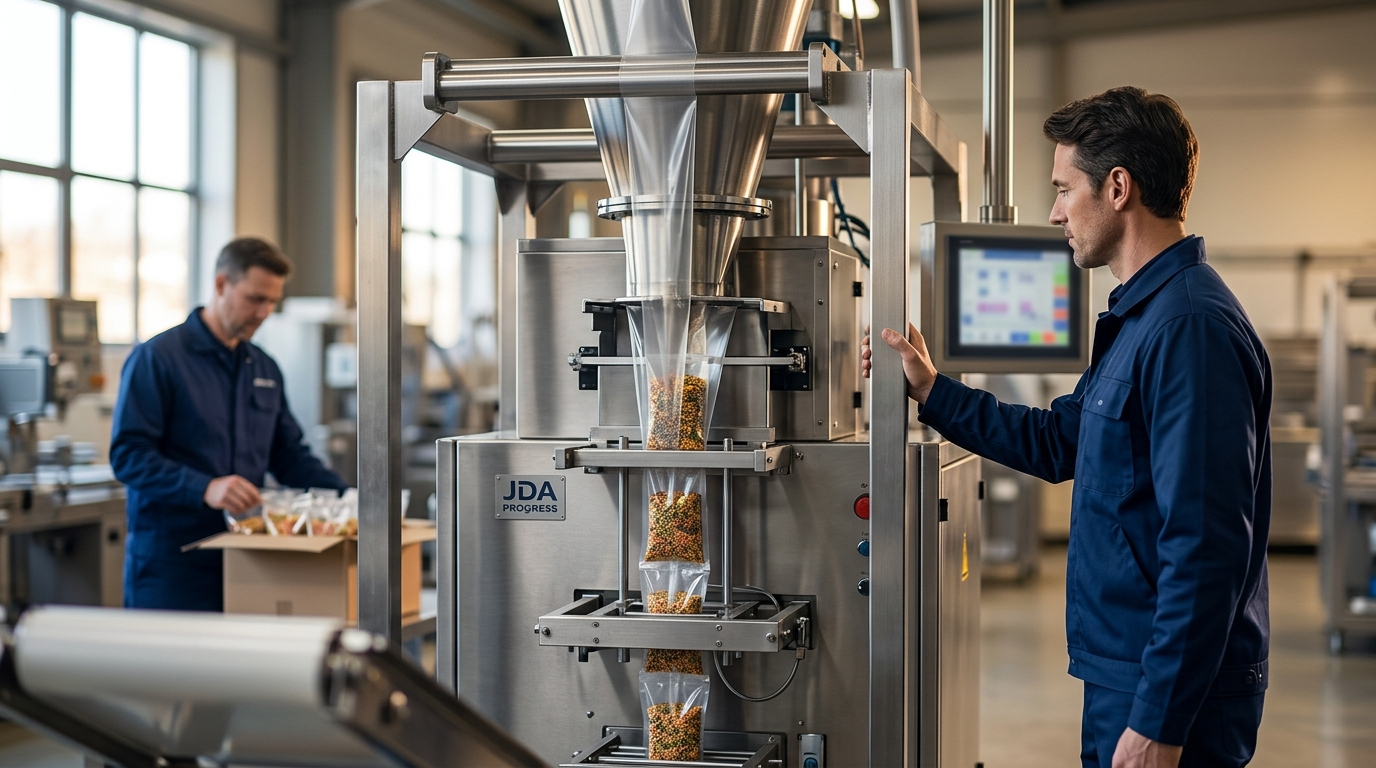
Vertical Form Fill Seal (VFFS) technology has fundamentally transformed how manufacturers handle dry and liquid products. According to recent industry analysis, automated pouch packing systems can increase production speeds by up to 80% compared to manual methods while significantly reducing material waste. This shift is not merely about speed; it is about precision, consistency, and the ability to scale operations without proportional labor increases. For business owners in the food, beverage, and chemical sectors, selecting the right VFFS machine is a critical capital decision that impacts long-term profitability. (About JDA Progress Packaging)
Understanding VFFS Technology
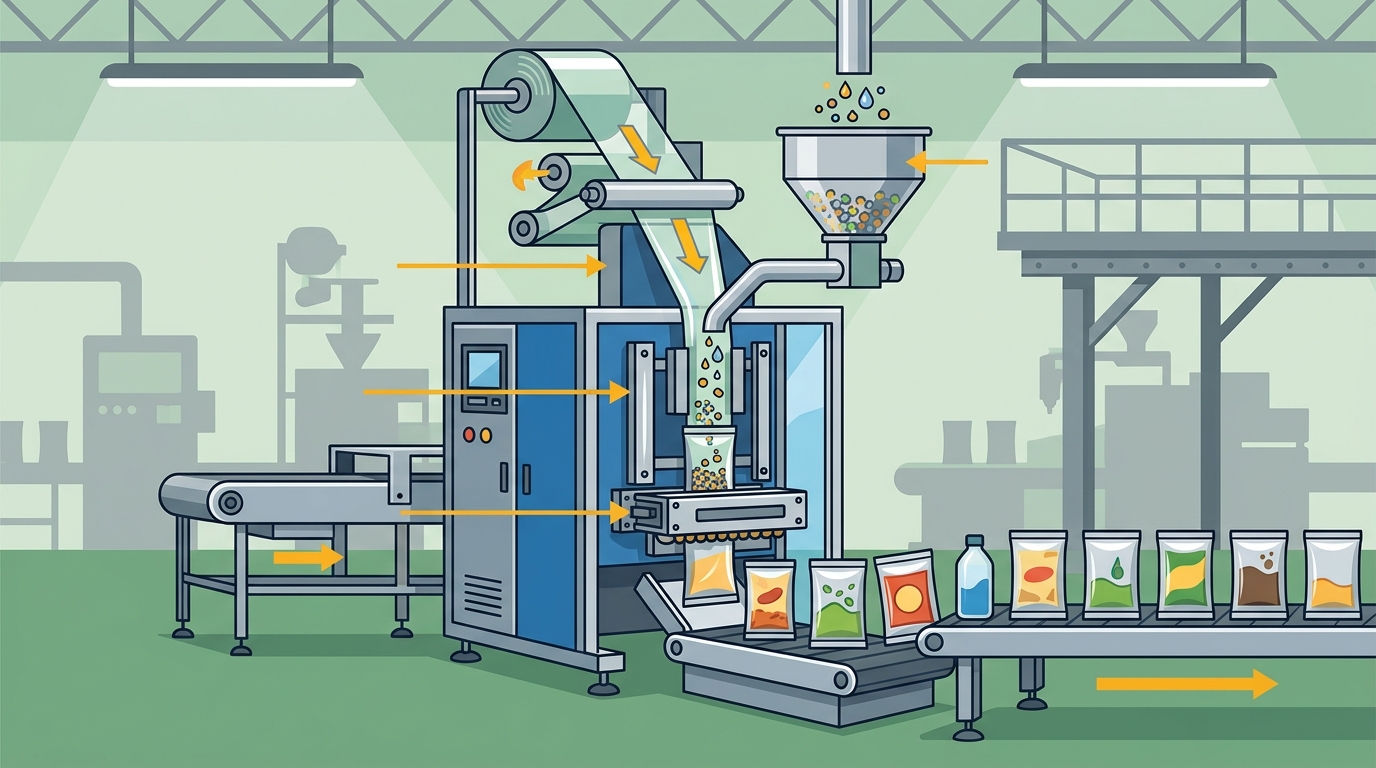
A Vertical Form Fill Seal machine is an automated packaging system that creates pouches from a roll of flexible packaging film. The process begins with the film being fed vertically through a forming collar. As the film moves down, it is shaped into a tube. The product is then injected into this tube through a filling auger or piston system. Finally, the machine seals the bottom of the pouch, advances the film, and seals the top, cutting the pouch from the roll. This continuous process allows for high-speed production with minimal human intervention.
VFFS machines are particularly effective for products that are free-flowing or semi-free-flowing. This includes items like coffee, sugar, flour, nuts, and even liquids such as sauces or oils. The ability to use a single roll of film reduces inventory complexity and allows for quick changes in pouch size and design. This flexibility is a major advantage for brands that frequently launch new products or seasonal variations.
Key Features to Evaluate
When evaluating VFFS machines, several technical features determine the machine's suitability for your specific needs. These features directly impact the quality of the final package and the efficiency of your production line.
1. Filling Mechanism Compatibility
The filling mechanism must match the product's physical properties. For powders, an auger filler is standard. It uses a rotating screw to dispense precise amounts of product. For liquids, a piston filler or gravity flow filler is often used. The machine must accommodate the viscosity and flow rate of your product. Incompatibility can lead to inaccurate fills, product waste, and messy operations.
2. Sealing Quality and Integrity
The integrity of the seal is paramount for product safety and shelf life. Look for machines with precise temperature control systems for the sealing jaws. Consistent heat ensures a strong seal that prevents leakage and contamination. Some advanced models offer gas flushing capabilities to extend the shelf life of sensitive products like coffee or nuts by displacing oxygen.
3. Film Handling and Forming Collar
The forming collar shapes the film into a tube. Its design affects the pouch's appearance and the ease of operation. A well-designed collar minimizes film wrinkles and ensures smooth feeding. The machine should also handle various film types, including laminates and mono-materials, which are increasingly popular for sustainability reasons.
4. Control System and User Interface
Modern VFFS machines feature programmable logic controllers (PLCs) with intuitive touch-screen interfaces. These systems allow operators to store multiple recipes for different pouch sizes and products. Quick changeovers are essential for maximizing uptime. The interface should provide real-time diagnostics and error messages to help troubleshoot issues quickly.
VFFS vs. Premade Pouch Machines
While VFFS machines form pouches from a roll, premade pouch machines use pre-formed bags. Each has distinct advantages depending on your packaging goals.
| Feature | VFFS Machines | Premade Pouch Machines |
|---|---|---|
| Packaging Material | Roll film | Pre-made bags |
| Cost Efficiency | Lower material cost | Higher material cost |
| Pouch Design | Standard shapes | Custom shapes and structures |
| Speed | Very high | Moderate to high |
| Changeover Time | Fast | Slower |
VFFS machines are generally more cost-effective for high-volume production due to lower film costs. However, premade pouch machines offer greater design flexibility, allowing for unique pouch shapes and premium finishes that can enhance brand visibility. If your brand relies on distinctive packaging to stand out on shelves, premade pouches might be worth the higher material cost.
Selection Criteria for Your Operation
Choosing the right VFFS machine requires a thorough assessment of your operational needs. Consider the following criteria to make an informed decision.
Production Volume and Speed
Determine your required output in pouches per minute. High-speed VFFS machines can produce hundreds of pouches per minute, suitable for large-scale operations. Smaller businesses may opt for semi-automatic or lower-speed models to reduce initial investment. Ensure the machine's speed aligns with your current and future production goals.
Product Characteristics
Analyze your product's density, particle size, and flowability. Some products require specialized filling heads or vibration systems to ensure accurate filling. For example, sticky products may need heated sealing jaws to prevent adhesion. Consult with equipment manufacturers to verify compatibility with your specific product.
Regulatory Compliance
Ensure the machine meets relevant safety and hygiene standards, such as those set by the FDA or local health authorities. Stainless steel construction is often required for food and pharmaceutical applications to prevent corrosion and facilitate cleaning. Look for machines with easy-to-clean designs that minimize dead zones where product residue can accumulate.
After-Sales Support and Warranty
Reliable after-sales support is crucial for minimizing downtime. Choose a manufacturer that offers comprehensive warranty coverage, readily available spare parts, and responsive technical support. A company with a long history in the industry, such as one operating for over 35 years, is likely to have established robust support networks. Check customer reviews and testimonials to gauge the quality of their service.
Maintenance and Support
Regular maintenance is essential for keeping your VFFS machine running efficiently. Daily cleaning of sealing jaws and film path components prevents buildup that can affect seal quality. Lubricate moving parts according to the manufacturer's schedule to reduce wear and tear. Keep a log of maintenance activities to track performance and predict future needs.
Investing in training for your operators is equally important. Properly trained staff can identify minor issues before they become major problems, reducing the risk of costly breakdowns. Many manufacturers offer on-site training and factory acceptance tests to ensure your team is proficient in operating and maintaining the equipment.
Key Takeaways
- VFFS machines form pouches from roll film, offering high speed and cost efficiency.
- Key features include compatible filling mechanisms, precise sealing systems, and user-friendly PLC controls.
- VFFS machines are ideal for high-volume production, while premade pouch machines suit custom designs.
- Selection criteria should include production speed, product characteristics, and regulatory compliance.
- Reliable after-sales support and warranty coverage are critical for long-term operational success.
- Regular maintenance and operator training minimize downtime and extend machine life.
- Companies with decades of experience often provide more robust support and proven reliability.
Frequently Asked Questions
What is a VFFS machine?
A Vertical Form Fill Seal (VFFS) machine is an automated packaging system that creates pouches from a roll of flexible film by forming, filling, and sealing them in a continuous vertical process.
What products are suitable for VFFS machines?
VFFS machines are suitable for a wide range of products, including powders like coffee and flour, granules like sugar and nuts, and liquids like sauces and oils, provided the filling mechanism is appropriately matched.
How does a VFFS machine differ from a premade pouch machine?
VFFS machines create pouches from a roll of film, which is generally more cost-effective for high volumes. Premade pouch machines use pre-formed bags, allowing for more complex designs but at a higher material cost.
What maintenance is required for VFFS machines?
Regular maintenance includes daily cleaning of sealing jaws and film paths, lubrication of moving parts, and periodic inspection of wear components. Proper training for operators is also essential.
How can I ensure the right VFFS machine for my business?
Evaluate your production volume, product characteristics, and budget. Consult with manufacturers to verify compatibility and request demonstrations to see the machine in action with your specific products.
What warranty is typically offered on VFFS machines?
Most reputable manufacturers offer a one-year warranty on machines and parts. It is important to review the warranty terms to understand what is covered and the process for claiming service.
Why is after-sales support important?
After-sales support ensures quick resolution of technical issues, access to spare parts, and ongoing maintenance guidance, which minimizes downtime and protects your investment.
Ready to Optimize Your Packaging Line?
Choosing the right VFFS machine is a strategic decision that impacts your efficiency, product quality, and bottom line. JDA Progress offers a comprehensive range of packaging solutions tailored to your specific needs. With over 35 years of experience, we provide high-quality equipment backed by expert support and a robust warranty. Visit our Demo Centre to see our machines in action or Contact Us to discuss your requirements. Explore our Baggers and Fillers to find the perfect solution for your business.