
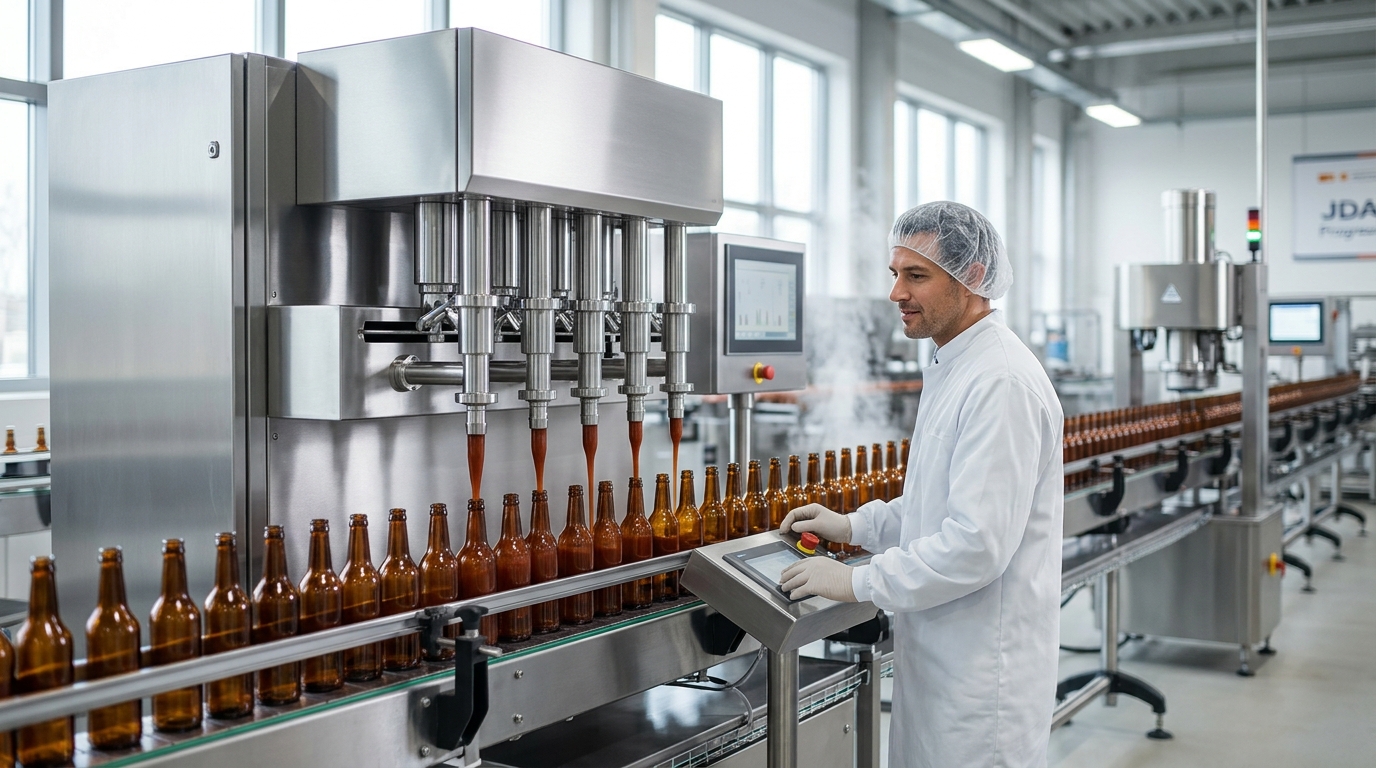
Best Fully Automatic Filling Solutions for Sauces, Condiments, and Liquids
The global market for automated packaging machinery is expanding rapidly as food producers seek to eliminate bottlenecks in high-viscosity production lines. According to recent industry analysis, the adoption of automated filling systems has increased by over 20% annually among mid-sized food manufacturers aiming to scale output without proportional labor costs. This shift is driven by the need for precision, hygiene, and speed in handling complex fluid dynamics. For businesses producing hot sauces, ketchup, salad dressings, or industrial lubricants, selecting the right filling technology is not merely an operational upgrade but a critical strategic decision that impacts long-term profitability and product consistency.
Understanding Viscosity and Filling Technology
Before investing in capital equipment, it is essential to define the rheological properties of your product. Viscosity, which measures a fluid's resistance to flow, dictates the mechanical approach required for accurate dispensing. Viscosity is the measure of a fluid's resistance to gradual deformation by shear stress. Products like water or vinegar fall into the low-viscosity category, while honey, peanut butter, and heavy cream syrups are classified as high-viscosity or non-Newtonian fluids.
Incorrect machine selection often leads to dripping, inconsistent fill weights, and excessive downtime for cleaning. JDA Progress has spent over 35 years engineering solutions that handle these variations. Their facility in Vaughan, Ontario, serves as a hub for testing these exact parameters. When you visit the demo centre, you can observe how different machines handle the same product under varying conditions. This practical demonstration is crucial for verifying that a machine can handle your specific gravity and flow rate requirements.
Piston Fillers: The Gold Standard for Thick Sauces
For heavy sauces, condiments, and pastes, the piston filler is widely regarded as the most reliable filling technology. This machine operates on a principle similar to a medical syringe. A rotating cam drives a piston back and forth within a cylinder. As the piston retracts, it creates a vacuum that draws product into the chamber. When the piston advances, it pushes the exact volume of product through a nozzle into the container.
Piston fillers are mechanical devices that dispense precise volumes of viscous fluids using a reciprocating cylinder and piston mechanism. This method is ideal for products like ketchup, mustard, and chili paste because it does not rely on gravity alone, which would be too slow or inconsistent for thick substances. The accuracy of these machines is exceptional, often achieving fill weight tolerances within plus or minus one gram.
JDA Progress offers advanced models like the PF-14 inline piston bottle filler. This machine is designed for high-speed operations where consistency is paramount. The PF-14 allows for quick changeovers between different bottle sizes, reducing waste during production shifts. For businesses dealing with abrasive ingredients, such as chunky salsas or pepper relishes, the robust construction of these piston fillers ensures durability and minimal wear on internal components.
Pump Fillers for High-Flow Condiments
When your product is less viscous, such as liquid soap, thin sauces, or chemical cleaners, a pump filler may be more appropriate. These machines use a rotary or peristaltic pump to move product from a bulk tank to the filling nozzle. The speed of the pump determines the flow rate, while a timer or encoder controls the volume.
Pump fillers are automated systems that utilize rotating or peristaltic mechanisms to transfer low-to-medium viscosity fluids with high speed and precision. They are particularly effective for products that are free-flowing but may foam or aerate if handled roughly. The gentle handling of peristaltic pumps makes them suitable for delicate emulsions found in salad dressings or cosmetic lotions.
However, pump fillers require regular maintenance to ensure seals and gaskets remain intact. Any leakage in the pump housing can lead to significant product loss and hygiene issues. JDA Progress engineers emphasize the importance of selecting the correct pump material based on the chemical composition of your product. For acidic sauces, stainless steel or specialized polymers are necessary to prevent corrosion and contamination.
Gravity vs. Pressure Fillers
The choice between gravity and pressure filling often depends on the carbonation level and viscosity of your product. Gravity fillers rely on the natural force of gravity to push product from a tank into containers. This method is simple and cost-effective for non-carbonated, low-viscosity liquids like water or juice.
Pressure fillers, on the other hand, use compressed air to push product into the container. This method is essential for carbonated beverages to prevent foaming and loss of carbonation. It is also used for high-viscosity products where gravity alone is insufficient to achieve the desired fill speed. In a pressure filling system, the container is sealed against the nozzle, and pressure is applied to force the product in. This ensures a consistent fill level regardless of the bottle shape or height.
For condiments and sauces, pressure filling is often preferred because it allows for faster cycle times. The controlled environment also minimizes exposure to air, which can affect the shelf life and quality of sensitive products. JDA Progress provides detailed guidance on which filling method aligns with your production goals. You can explore their full range of fillers to see how these technologies are integrated into complete packaging lines.
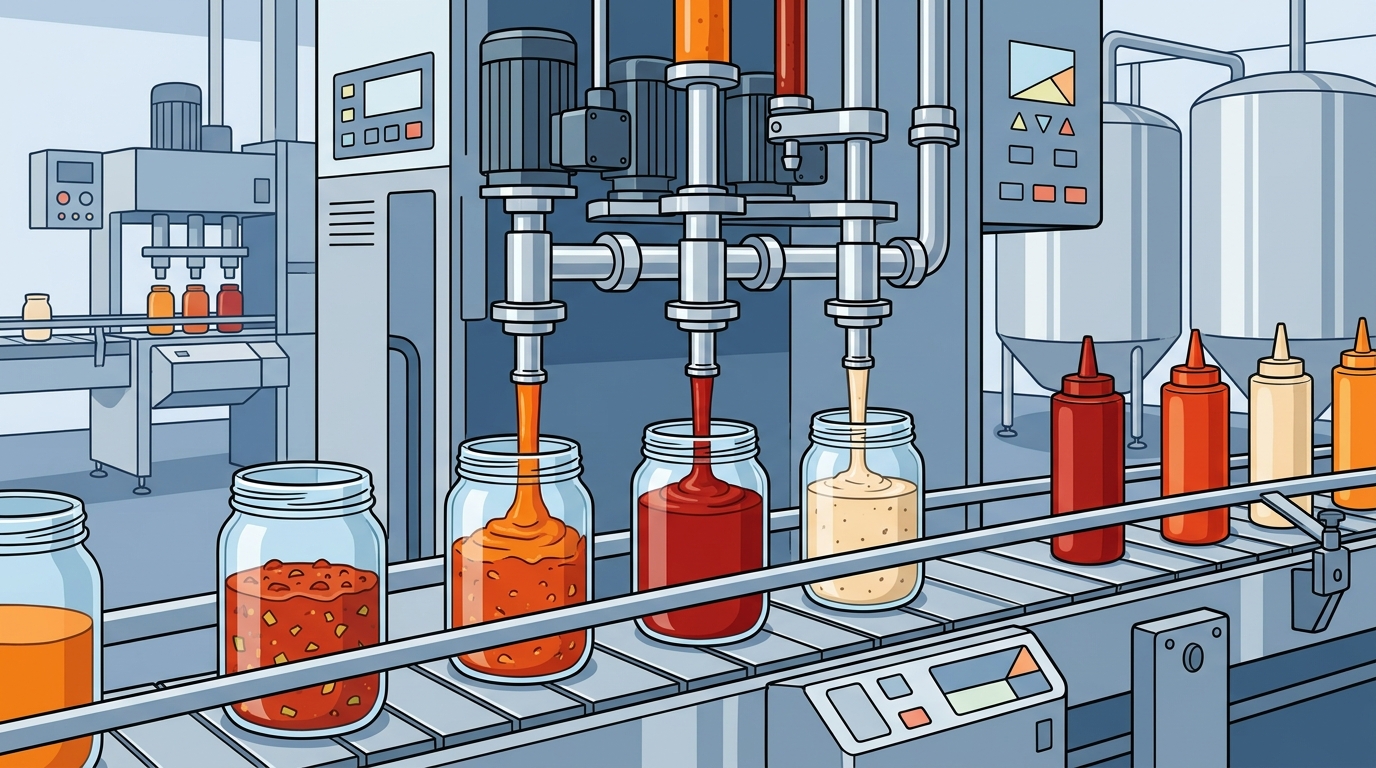
Comparing Filling Machine Types
To assist in your decision-making process, the following table compares the primary filling technologies available for sauces and liquids. This comparison highlights the operational strengths and ideal use cases for each machine type.
| Machine Type | Best For | Viscosity Range | Accuracy | Key Benefit |
|---|---|---|---|---|
| Piston Filler | Thick sauces, pastes, chunky items | High | Very High | Handles abrasive and viscous products effectively |
| Pump Filler | Thin liquids, lotions, chemicals | Low to Medium | High | High speed for free-flowing fluids |
| Gravity Filler | Non-carbonated beverages, water | Very Low | Medium | Simple design, low maintenance |
| Pressure Filler | Carbonated drinks, high-viscosity | Variable | High | Prevents foaming, fast cycle times |
Key Takeaways for Buyers
- Viscosity is Critical: Always test your product's flow characteristics before purchasing. JDA Progress offers machine demonstrations to verify compatibility.
- Piston Fillers Dominate Sauces: For ketchup, mustard, and heavy creams, piston fillers provide the necessary force and precision.
- Hygiene Matters: Choose machines with easy-clean designs. Stainless steel construction is standard for food-grade applications.
- Support is Vital: JDA Progress provides a 1-year warranty and extensive service and parts support to minimize downtime.
- Scalability: Consider future growth. Modular systems allow you to add labelers, cappers, and baggers later.
- Inventory Availability: JDA Progress keeps most machines and spare parts in stock for fast delivery, reducing lead times.
- Expert Consultation: Their engineers help you select the right model based on your specific production volume and product type.
Frequently Asked Questions
What is the best filling machine for thick sauces like ketchup?
Piston fillers are the industry standard for thick sauces. They use a reciprocating cylinder to push the product out, ensuring consistent fill weights even for highly viscous materials that do not flow easily.
How do I choose between a piston and a pump filler?
Choose a piston filler for high-viscosity products like pastes and chunky sauces. Choose a pump filler for low-viscosity liquids like water, vinegar, or thin oils that flow freely.
Does JDA Progress offer machine demonstrations?
Yes, JDA Progress has a permanent showroom in Vaughan, Ontario. You can bring your product to test it on their machines and receive a personalized recommendation from their engineers.
What industries do JDA Progress machines serve?
JDA Progress serves the food and beverage, cosmetics, chemicals, and nutraceutical industries. Their machines are designed to meet the specific hygiene and durability standards of these sectors.
Are spare parts readily available?
Yes, JDA Progress maintains an extensive inventory of in-stock packaging equipment and spare parts. This ensures that repairs can be made quickly to minimize production downtime.
What warranty is provided with the equipment?
JDA Progress provides a 1-year warranty on all machines and parts. They also offer comprehensive after-sales support and training to ensure your team can operate the equipment effectively.
Can I integrate a filler with my existing bottling line?
Yes, JDA Progress designs their fillers to be compatible with standard bottling lines. They can help you integrate new filling technology with existing conveyors and labelers for a seamless workflow.
Contact JDA Progress for Your Filling Solution
Choosing the right fully automatic filling solution requires expert guidance and practical testing. JDA Progress has been a trusted manufacturer for over 35 years, helping businesses in North America and around the world optimize their packaging operations. Their team of engineers is ready to help you find the perfect solution for your specific needs.
Do not leave your production efficiency to chance. Visit the demo centre to see the machines in action, or contact JDA Progress today to request a quote. Their commitment to quality, value, and support ensures that your investment in automation will deliver a strong return on investment for years to come.